Kozan City Hotel
Izmir - 1367 Sk No:1 Basmane
Book now
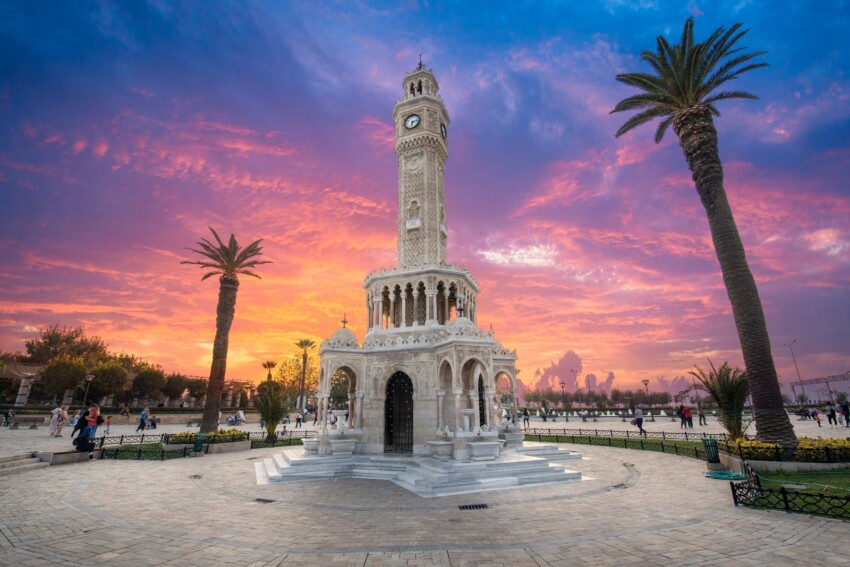
Izmir, also known as Smyrna, is a city on the Aegean Sea with a long history dating back to the third millennium BC, though the first proper settlement here is believed to have been established by the Greeks. They gave it the name “Smyrna” (Smyrna in ancient Greek), a term meaning “myrrh” due to the abundance of this shrub in the area. Because of its strategic location, Smyrna has always played an important commercial role, particularly on trade routes between Europe and Asia, and was long a meeting point for diverse cultures and religions.
The city was rebuilt twice—first by Alexander the Great and later by the Roman Emperor Marcus Aurelius—and subsequently came under Byzantine rule before being ceded to the Genoese, who exploited its commercial position for centuries. In the fifteenth century, Smyrna was conquered by the Ottoman Turks, and the city continued to grow not only as a trading hub but also as a crossroads of peoples and cultures.
Over time, it became known as “Infidel Smyrna” due to its substantial non-Muslim population (Jews, Greeks, Armenians and others) who were largely involved in commercial activities. Testament to its long and turbulent history, Smyrna preserves numerous archaeological sites, ancient mosques, museums and historically significant buildings.
Smyrna is an intimate, walkable city where the centre can be comfortably explored on foot, starting from the main square, Konak Square, where you’ll find the Clock Tower—considered the symbol of Smyrna—along with several historic buildings, restaurants, cafés and small shops. The seafront area, known as Alsancak, is equally charming, with restaurants, venues and bars offering outdoor dining and fine sea views.
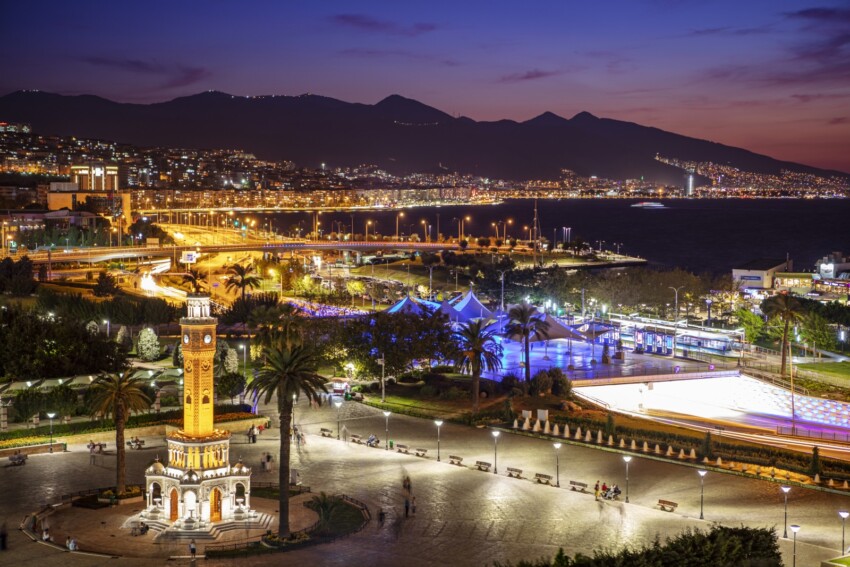
Konak Square (Konak Meydanı) is the heart of Smyrna and has been a gathering place and hub of city life for centuries. Here you’ll find the Government Building, constructed in the late nineteenth century and which played an important role during the Turkish War of Independence, the Municipality Building and the Clock Tower, built in 1901.
In the centre of the square stands the statue of Hasan Tahsin, a journalist and patriot who was one of the key figures in the Turkish War of Independence. Konak Square comes alive especially in the evening when it becomes a popular meeting spot, animated by numerous bars and restaurants and beautiful lighting installations.
As mentioned, the Clock Tower in Konak Square is Smyrna’s symbol and was a gift presented in the early twentieth century by German Emperor Wilhelm II to Ottoman Sultan Abdul Hamid I in commemoration of 25 years of his reign. The tower, with its Oriental design, stands 25 metres high, is constructed of marble and stone and features an octagonal footprint. At its top are four clock faces, and its circular base is embellished with four elegant fountains. It’s worth viewing the tower both by day and in the evening when it’s beautifully illuminated.
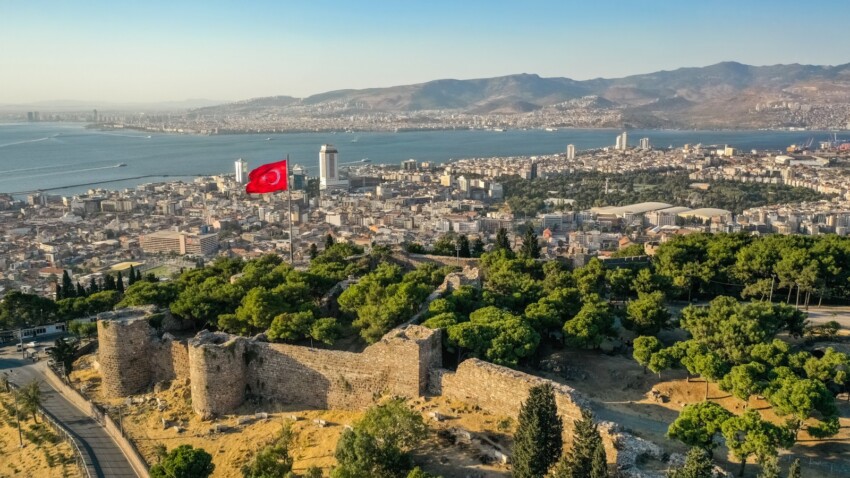
Kadifekale—meaning “Velvet Castle”—refers to a fortress built during the time of Alexander the Great on a hilltop overlooking the city, formerly known as Mount Pagus. When the castle was built, the aim was to relocate the city centre to the hilltop for enhanced protection, as the elevated position allowed for early detection of approaching enemies and better defensive capabilities.
The castle has been rebuilt and expanded several times, and the fortress remains visible today date from medieval reconstructions, though Roman cistern ruins are still visible in the area. When the Ottomans conquered Smyrna, a small mosque was also built here, later called “the Fortress Mosque,” of which only ruins remain. Beyond its historical significance, the site is well worth visiting for the magnificent views across the surrounding landscape.
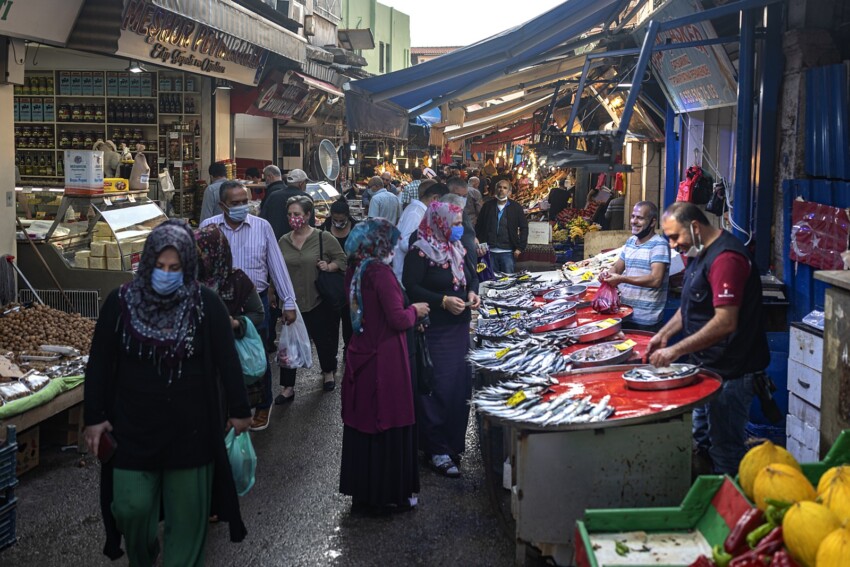
Smyrna’s oldest and most important market, also called “Kemeraltı Çarşısı,” sits just a stone’s throw from Konak Square. Built around the seventeenth century as a covered market in Ottoman architectural style, the complex has steadily expanded to become a vast bazaar with thousands of shops inside.
For many, it evokes Istanbul’s Grand Bazaar, with merchants selling various local goods and an area filled with cafés and small venues where you can sit and enjoy excellent Turkish coffee. This is an absolute must during a visit to the city and definitely the right place if you’re looking to purchase travel gifts or souvenirs!
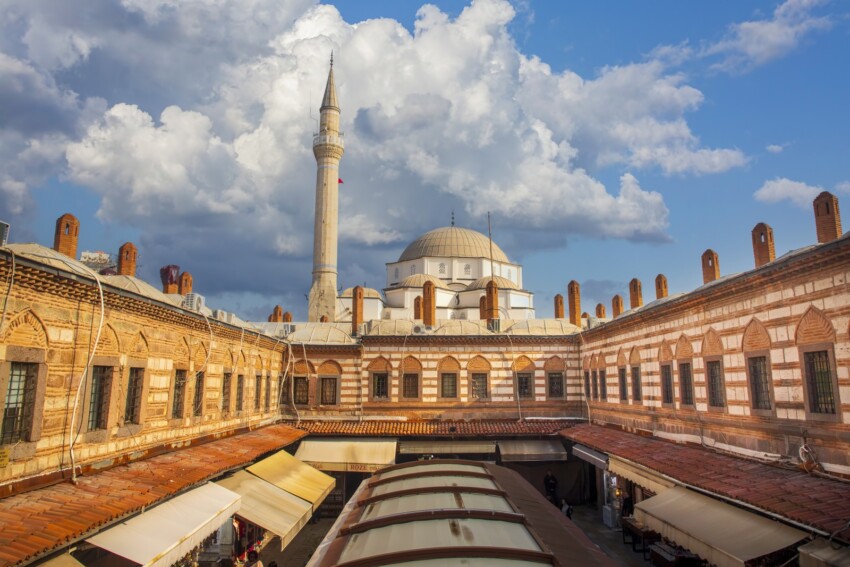
Hisar Camii, or the Grand Mosque, is one of Smyrna’s largest mosques and was constructed towards the end of the sixteenth century. Located in a lively shopping area near Konak Square, what’s remarkable about this place is how the serene calm and quiet inside contrasts with the bustle outside. The mosque is open to visitors of all faiths, who can admire its beautifully ornamented interiors in Ottoman Arab style and elegant decorations. When visiting, remember to wear appropriate clothing—women should cover their heads and avoid low-cut or revealing garments.
Asansör, or the Lift, is a facility designed in the early twentieth century by Nesim Levi, a citizen of Jewish descent who wanted to help local residents reach the hilltop neighbourhood more easily. To spare residents from walking kilometres uphill to reach the summit, Nesim funded the construction of this special lift that carries you to the top of the hill.
Originally powered by a water-based mechanism, the facility has since evolved and now features two lifts—one ascending and one descending. Taking the lift to the hilltop makes for an excellent activity, especially at sunset to watch the sun dip from above. The area has also seen the opening of various bars and restaurants serving local cuisine.
The city centre is also home to the site of an ancient agora originally built by the Greeks in the fourth century BC but destroyed by a severe earthquake. Later rebuilt first by Alexander the Great and then by the Roman Emperor Marcus Aurelius, the agora was the centre of civic life and you can still observe some of its principal buildings and important sites. Notable features include the Faustina Gate, constructed at the end of Faustina Street which connected the harbour area to the agora, the covered market and the Basilica, where you can still see an extensive collection of inscriptions in ancient Greek.
The Archaeological Museum of Izmir (İzmir Arkeoloji Müzesi) houses an extensive collection of archaeological finds from the region spanning different periods. The exhibition features artefacts ranging from the Bronze Age to the Ottoman period, including Greco-Roman and Byzantine eras.
The museum spans two floors plus an internal courtyard displaying a lapidary and items from the early Ottoman period recently uncovered. The displays comprise finds from around Smyrna and western Anatolia, as well as objects from the cities of Ephesus, Miletus and Pergamon.
Smyrna is a city with a vibrant, multicultural atmosphere, and the best area to stay to make the most of it is certainly the centre, where you’ll also find bars, restaurants and shops. Numerous hotels and boutique hotels, often housed in converted historic buildings, have opened around Konak Square, offering visitors an excellent experience. Alternatively, especially in the seafront area (Alsancak), you’ll find hotels from well-known international chains and large establishments offering all amenities.
Smyrna is easily accessible by air from both Istanbul and Ankara thanks to flights from Turkish Airlines and Pegasus Airlines to Izmir Adnan Menderes Airport. During the summer months, direct flights are also available from major European airports via SunExpress. Izmir Adnan Menderes Airport is less than 20 km from the city centre and is connected by bus or taxi. Alternatively, Smyrna can be easily reached by car from nearby cities such as Ephesus (via the E87) or Bursa (via the O-5).
What's the weather at Izmir? Below are the temperatures and the weather forecast at Izmir for the next few days.
Izmir is a port city in central-western Turkey overlooking the Aegean Sea, situated just under 500 km from Istanbul and approximately 600 km from the capital, Ankara.
 Hotel
Hotel 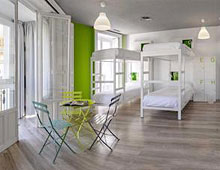 Budget accommodations
 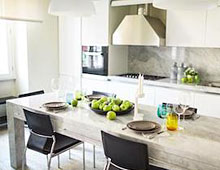 Apartments
  Family Hotel
 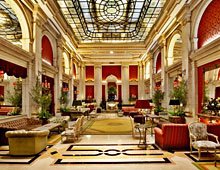 Luxury Hotel