Bestseller
Cappadocia: Goreme Hot Air Balloon Flight at Sunrise
From 120,00 €
Buy the ticket
Cappadocia is a region of Turkey located in the heart of the Anatolian peninsula, north of the Taurus Mountains, and is renowned for its splendid historical, cultural and natural heritage. The position of this territory has made it, since ancient times, a crossroads of trade routes and a meeting point of peoples and cultures between the West and the East.
The region also played a central role in the spread of Christianity, as many believers during the years of persecution, and subsequently, exploited the caves and caverns present in its mountains not only as places of prayer but also as places to live in hiding. The area where Cappadocia is located has always been highly coveted and was therefore subject to repeated invasions by foreign peoples over the centuries.
Today, Cappadocia is a destination we absolutely recommend visiting during a trip to Turkey, as the region is truly fascinating and boasts not only cities with a long history but also incredible rock formations, underground cities and extraordinary landscapes.
Cappadocia is a region that truly captivates all its visitors with the spectacular views it offers, its ancient traditions and the hospitality of its people. Some areas can be explored using alternative methods such as hot air balloon rides at dawn, horseback excursions to visit the numerous valleys, or quad tours to explore more remote areas.
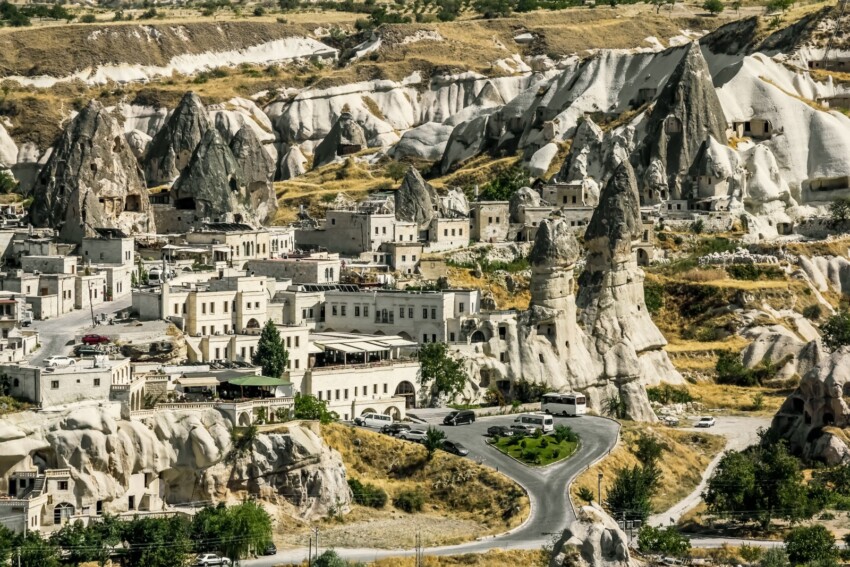
The Goreme National Park is a unique and enchanting place that hosts the famous “Fairy Chimneys”, distinctive rock formations that have been created and shaped over thousands of years by wind and other natural phenomena. The name of these creations derives from the fact that they are a kind of towers of volcanic rock, clay or tufa, which stand tall and, according to popular legends, were the homes of fairies and other mythical and magical creatures. In reality, they were formed approximately 8 million years ago following the deposition of eruptive material after eruptions from two volcanoes, Hasan Dağı and Erciyes Dağı. Subsequent erosion then shaped these formations, giving them their characteristic appearance today. Some of these towers were later carved out and used first as hermit refuges and for ascetics, and then as shelter for Christians during persecutions.
Over time, between the eleventh and twelfth centuries, many rock formations were converted into rock-cut churches, chapels or monasteries that house exceptional frescoes, well-preserved and vibrant in colour, considered excellent examples of post-Iconoclastic Byzantine art. These rock compositions form a true open-air museum that is wonderful to explore through dedicated routes. Among the most famous is certainly the Dark Church of Göreme (Karanlık Kilise), whose name is due to its dark interior caused by the little light entering from a single small window. The very absence of light, however, allowed the frescoes created here to resist over the centuries and to be admired today. The beauty and uniqueness of these landscapes led to Goreme National Park being declared a UNESCO World Heritage Site.
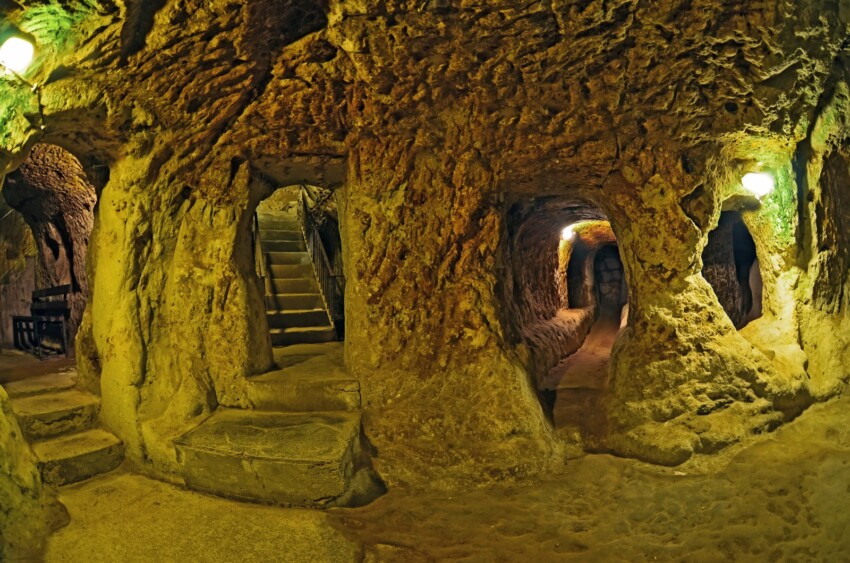
As already mentioned, Cappadocia had become an important centre for many Christians seeking to escape persecution, and for this reason it is home to numerous underground cities that were used by the faithful to hide. These arose throughout the Cappadocia region between the sixth and tenth centuries, and among the many present, only about thirty have been brought to light so far.
Among the most famous are Derinkuyu2 and Kaymaklı3, with the latter considered the largest in all of Cappadocia – it is said it could accommodate up to 30,000 people. These underground towns were true subterranean labyrinths that extended up to 85 metres below ground level and often sprawled across multiple levels. Within them, everything necessary for living was constructed: from dwellings to prayer chapels, from stables to storage rooms for provisions.
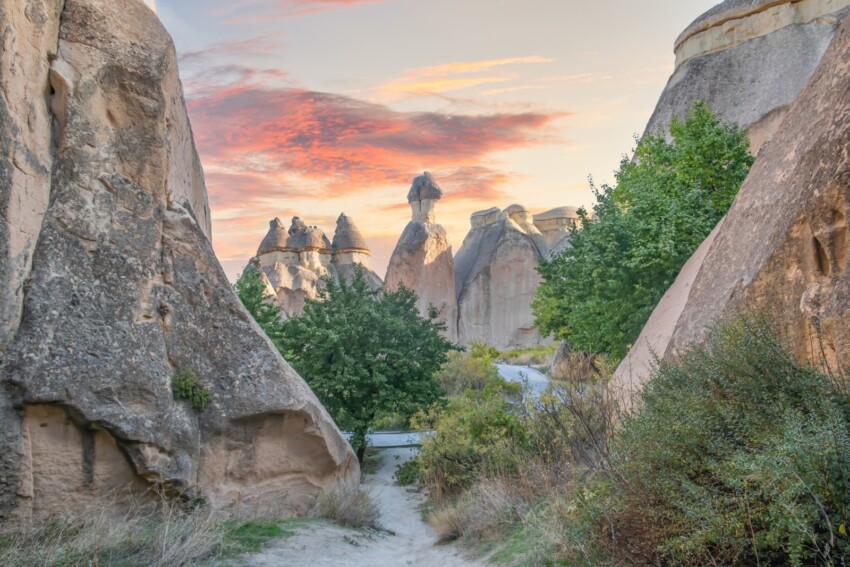
Cappadocia is an exceptional example of particularly unique human settlements that have survived for millennia. Not far from Göreme lies the Zelve Valley, which houses the eponymous Open Air Museum featuring dwellings, rock-cut churches and chapels decorated with frescoes dating back to the early centuries of Christianity. These also served as shelter for Christians during the period of persecution and continued to do so during times when Arab and Persian raids were frequent.
With the arrival of the Ottomans, Zelve was incorporated into the territories of the empire, and here Christians and Muslims learned to coexist peacefully in harmony, so much so that among the structures present are both churches and a mosque. The village of Zelve was inhabited by the local population until the 1950s, when the government, deeming these dwellings unsafe, decided to relocate the inhabitants to a nearby urban centre.
Cappadocia is rich in valleys, canyons and plateaus to explore through excursions and trekking, preferably accompanied by a local guide who can explain the history and introduce you to the best routes. Ihlara is a town located 80 km south of Goreme and once housed nearly 100 rock-cut churches and chapels carved into the rock, many of which are now partially in ruins or destroyed.
Of these, only about fifteen are now visitable, and inside them you can still admire beautiful ancient frescoes. In the Ihlara valley, many come to explore the gorge, 16 km long and carved into volcanic rock by the flow of the Melendiz stream. Here you walk surrounded by an idyllic atmosphere accompanied by the chirping of birds until you reach the village of Belisirma, where there are restaurants and cafés along the river.
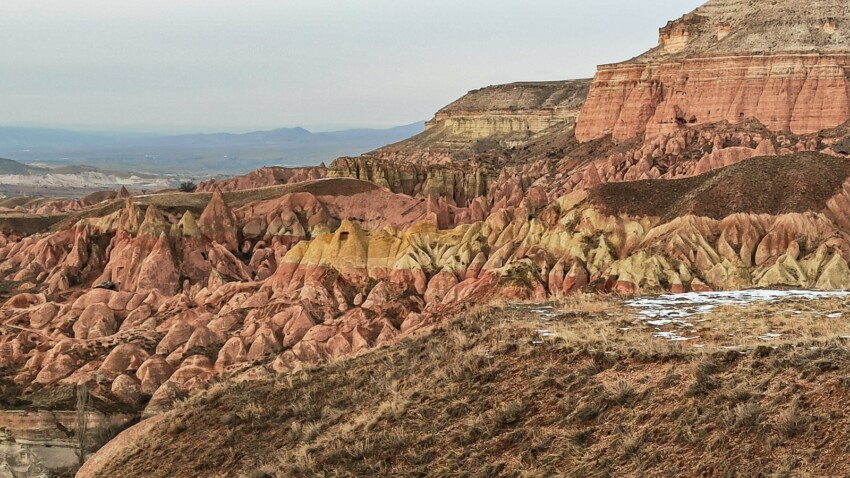
Cappadocia is full of valleys that offer spectacular natural views and safeguard truly ancient stories and traditions. Two of the most famous valleys are certainly Rose Valley6 and Red Valley7, whose names derive from the colour their rocks take on, especially at sunset.
These valleys are also famous for their striking rock formations and rock-cut churches, so much so that various tours are organised, both by quad and on horseback, to explore the area and reach the best viewpoints. To best appreciate the colours and nuances of these areas, the best times are certainly sunrise and sunset.
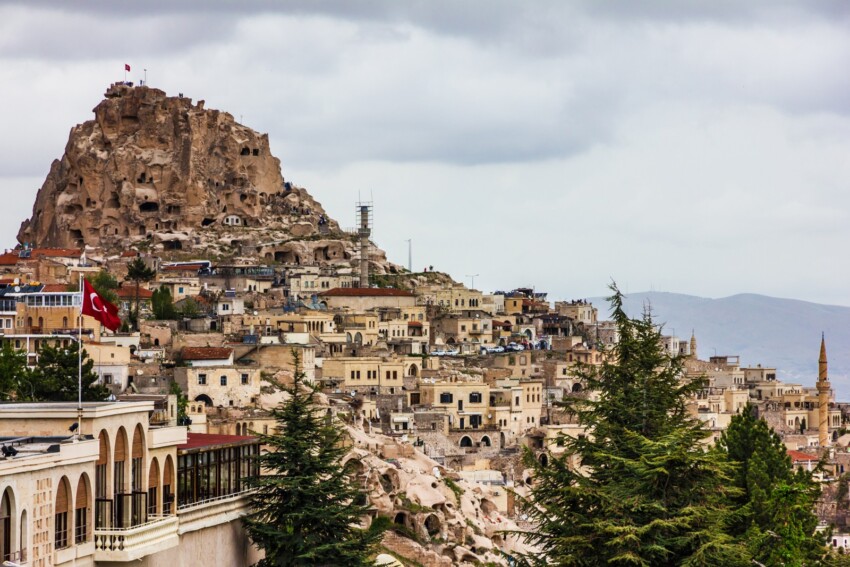
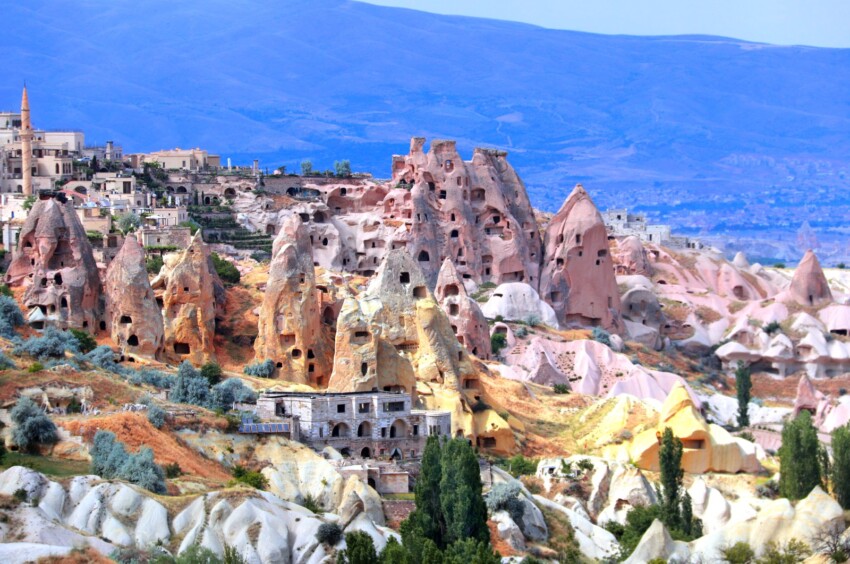
Another enchanting town in Cappadocia is Uchisar, a peaceful village located 5 km from Goreme and carved almost entirely into tufa. In addition to walking through the narrow streets of the citadel where many houses have been converted into shops, boutiques or boutique hotels, you can also visit the Uchisar Castle (Kale). The fortress was built on top of a rocky outcrop and from there dominates the town territory, offering its visitors spectacular panoramic views across the entire surrounding area.
In the following map you can see the location of the main places of interest mentioned in this article.
If there is one activity you absolutely must do in Cappadocia, it is a hot air balloon flight, usually scheduled at dawn (around 4-4:30) and allowing you to admire the Fairy Chimneys and other natural wonders from above. In Goreme there are many agencies offering this activity, but despite this demand is always very high, so it is best to book your balloon flight well in advance.
The best town to stay in when visiting Cappadocia is undoubtedly Goreme, a location that can be chosen for its position as a base from which to explore other areas of the region. Goreme boasts a large number of facilities at various price points, some of which have been opened by converting ancient rock structures into hotels. Another alternative is to stay in Uchisar, a town that has been growing significantly from a tourism perspective in recent years and boasts several hotels and accommodations at lower prices than Goreme.
To visit Cappadocia, the best solution is to fly into Kayseri Airport, the main city in the region, although there are no direct flights from most countries, so you will need to make a stop in Istanbul. Kayseri Erkilet International Airport is then less than 80 km from Goreme and is connected to it by taxi or bus. Another alternative is to fly to the smaller Nevşehir Airport, which is 40 km from Goreme. Goreme can also be reached by a 4-5 hour bus journey from the capital Ankara, which is approximately 300 kilometres away. There are also bus connections from Istanbul, though the journey takes about 11-12 hours.
Cappadocia is a region in central Turkey, situated north of the Anti-Taurus Mountains in the heart of the Anatolian Peninsula. The region encompasses parts of the provinces of Kayseri, Aksaray, Niğde and Nevşehir.

 Hotel
Hotel  Budget accommodations
  Apartments
  Family Hotel
 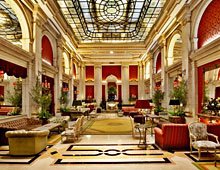 Luxury Hotel