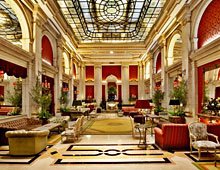
Bursa Grand Family HOTEL
Bursa - İnebey Caddesi tahtakale mah inebey cad no 48
Book now
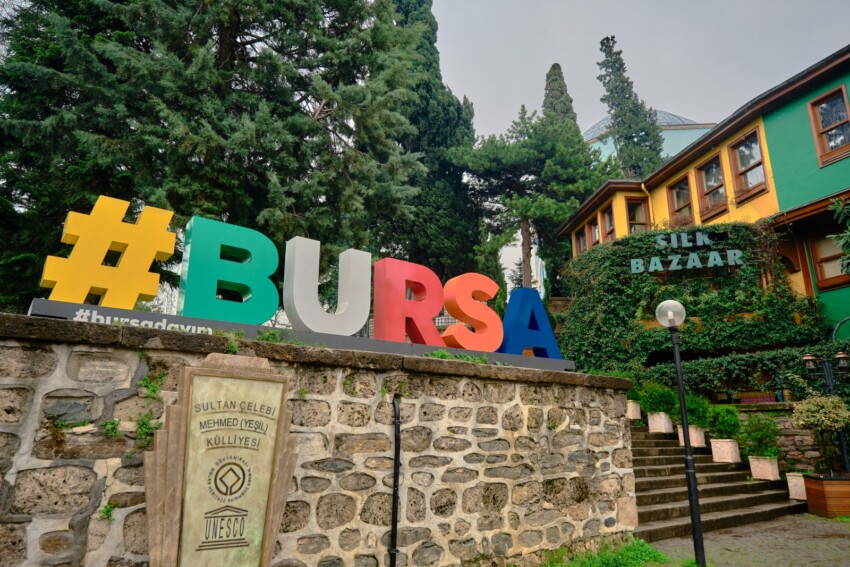
Bursa is a city in Turkey renowned as an important commercial and administrative hub, and the country’s fourth most populous settlement. Founded in the early 3rd century BC as Prusa, it quickly became one of Mysia’s principal cities and famously welcomed the Carthaginian general Hannibal after his defeat by the Roman Republic. Following periods of Roman and Byzantine rule, the Ottomans captured Bursa and made it the capital of their Empire in 1326 until 1363, when it was relocated first to Edirne and then to Istanbul.
Since the 6th century, Bursa has been celebrated as a major textile production centre, and through this reputation became a thriving hub along the Silk Road, attracting merchants and traders from across the world. Following the establishment of the Turkish Republic, Bursa developed into one of the country’s most significant industrial centres, particularly in the automotive sector.
Bursa sits at the foot of Mount Uludağ (the ancient Olympus of Mysia) south of the Sea of Marmara, and its considerable historical significance has endowed the city with a rich Ottoman architectural heritage. Throughout the town centre, beyond the Grand Bazaar, you’ll discover ancient mosques, medreses, caravanserais and numerous shops selling exquisite silk goods. Bursa is also known as “the green city” owing to its abundance of gardens and parks.
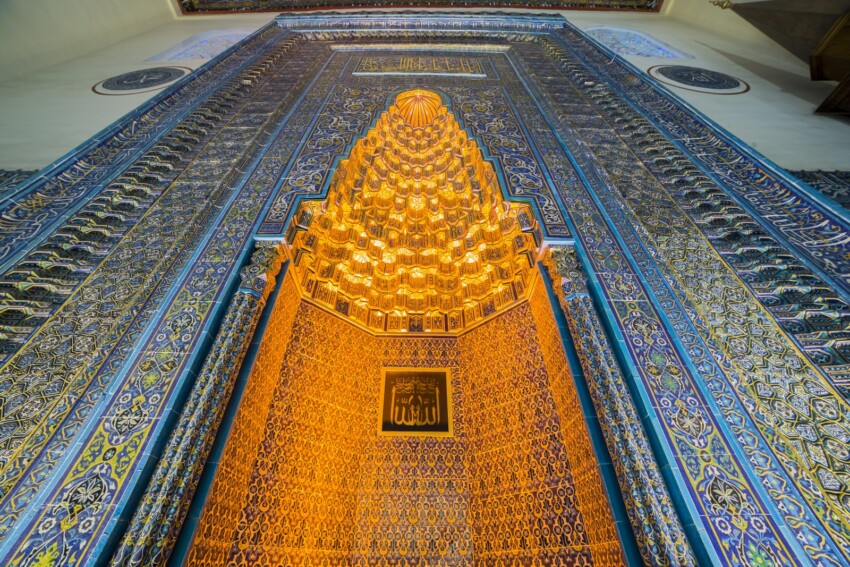
The Green Mosque (Yeşil Camii) is also called the Mosque of Mehmed I, named after the sultan who commissioned its construction in 1412. Sultan Mehmed I Elebi came to power after a struggle with his brothers and was responsible not only for the religious building itself but also for the grand complex surrounding it. The site encompassed the mosque, a mausoleum now known as the Green Mausoleum, a Quranic school and a hamam.
The exterior strikes visitors with its grand marble portal, whilst inside are magnificent decorations in green-glazed tiles of varying shades—the feature that gives the mosque its distinctive name. Beside the mosque stands the mausoleum containing the tomb of Sultan Mehmed I, who ruled the Ottoman realm from 1413 to 1421. The structure, called the Green Mausoleum, has an octagonal floor plan and takes its name from the numerous green tiles adorning its interior.
The Grand Mosque (Ulu Camii) stands in the historic city centre and was commissioned by Sultan Bayezid I to commemorate his victory at the Battle of Nicopolis. Constructed between 1396 and 1399, the mosque exemplifies early Ottoman architecture, striking visitors with its scale and featuring twenty domes and two imposing minarets. The rectangular structure’s white interior is decorated with black and gold calligraphic inscriptions created by the era’s most celebrated Ottoman calligraphers.
The city has hosted a Grand Bazaar (Kapalı Çarşı) for centuries—an enormous covered marketplace reminiscent of Istanbul’s equivalent, where merchants traded countless goods and products. The site’s origins trace back to the 15th century when Bursa had established itself as a Silk Road hub welcoming merchants and traders from both Europe and Asia. Today it’s the ideal place to purchase travel souvenirs and local items, noting that textile goods and silk products predominate, reflecting the city’s celebrated heritage in working with this material.
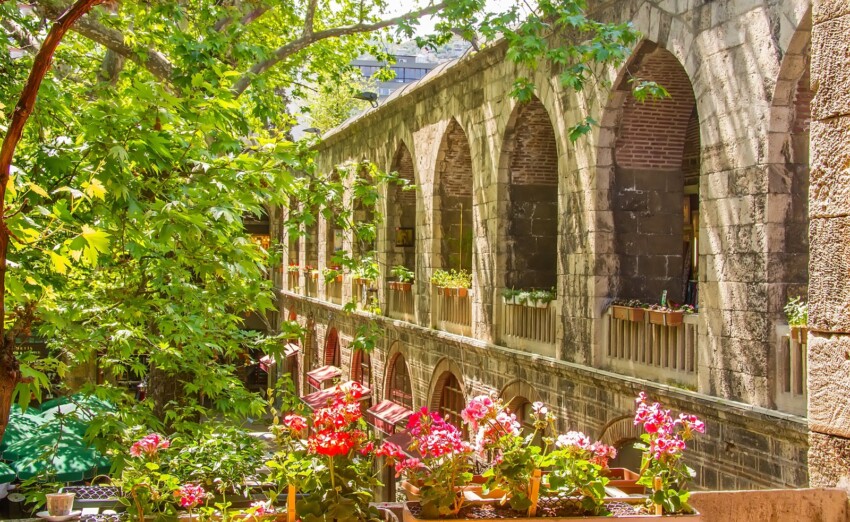
The Koza Han is a historic caravanserai (han) constructed in central Bursa near the Grand Bazaar in the late 15th century on the orders of Sultan Bayezid II. One of the region’s oldest caravanserais, it provided not only lodging and refreshment for travelling merchants and foreign traders but also stabling for their animals and spaces for conducting business.
Spread across two storeys with fifty rooms each, the building features an ornately decorated entrance portal and displays a rectangular layout with a spacious internal courtyard housing a small mosque. Today the caravanserai hosts stalls and small shops selling silk goods and handicrafts, alongside cafés and other establishments.
Atop the hill that once hosted Bursa’s ancient citadel, in a commanding position overlooking the surrounding landscape, stands the Clock Tower. From this vantage point, guards could effectively monitor the area, spot approaching enemies and alert the population to potential dangers. The tower visitors see today, however, was constructed in 1905 to replace an earlier structure commissioned by Sultan Abdulaziz (1861-1876) that had been destroyed. Currently, the 33-metre-high tower houses a radio clock and serves as a fire-watch station for the city.
Osman Gazi is widely regarded as the founding father of the Ottoman Empire, and it was his son Orhan Gazi who conquered Bursa in 1326 and made it the kingdom’s capital. During the siege, Osman Gazi became so captivated by a Byzantine chapel’s dome gleaming in the sunlight that he called it the “silver dome” and requested to be buried there upon his death. Orhan honoured his father’s wish and had his tomb built on the spot within an octagonal mausoleum alongside 17 sarcophagi of other family members.
Nearby stands the tomb of Orhan Gazi (1281-1362), positioned at the centre of a building on a marble base and surrounded by 20 sarcophagi, some belonging to relatives whilst others remain unnamed. Unfortunately, the entire complex suffered significant damage in an earthquake in 1855, so what visitors see today are reconstructions of the original tombs.
Given its proximity to Istanbul, most tourists choose to visit Bursa as a day trip, particularly given the numerous available tours. However, Bursa offers a wide selection of hotels and accommodation options, and for a fuller experience of the city and to make the most of your visit, it’s advisable to stay in the central area.
From Istanbul, Bursa is reached by car in roughly two hours along the O-5 motorway. Alternatively, coaches serve the route in approximately three to three-and-a-half hours depending on traffic and starting point. Another option involves fast ferries departing from Istanbul’s Eminönü/Sirkeci port to Mudanya port, just 25 km from Bursa’s centre. The city also has an airport, Bursa Yenisehir, with connections to Ankara and other Turkish cities.
What's the weather at Bursa? Below are the temperatures and the weather forecast at Bursa for the next few days.
Bursa is a city in north-western Turkey located in the Marmara region. The city is 150 km from Istanbul, 350 km from Izmir and 400 km from Ankara.
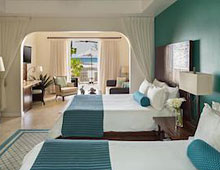 Hotel
Hotel 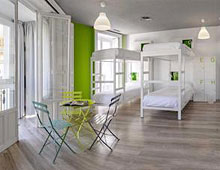 Budget accommodations
 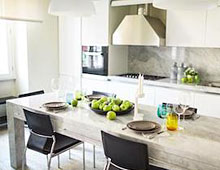 Apartments
 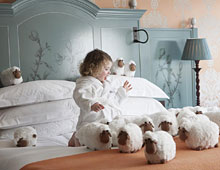 Family Hotel
  Luxury Hotel