Trabzon
Trebizond is a city of considerable commercial importance, having served not only as a crucial port on the Black Sea (and still does) but also as one of the key stops along the Silk Road.
Read more
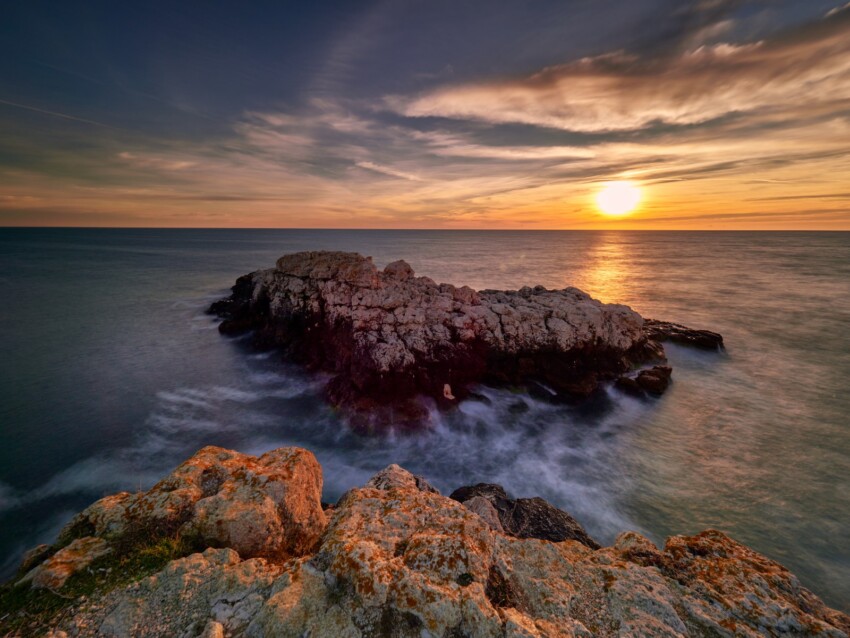
The Black Sea is situated between south-eastern Europe and Asia Minor, and six nations border its shores, including Turkey, which boasts both important port cities and pristine beaches in this region. The Turkish territory within the Black Sea region presents a distinctly different landscape from the rest of the country, as you can rapidly transition from coastal cities to mountain ranges with peaks reaching 3,000-4,000 metres in altitude. This is an area rich in history and culture, though many towns remain untouched by creeping urbanisation, and tourism hasn’t developed as intensively as it has along the Aegean and Mediterranean coasts.
With this in mind, the Black Sea region makes for a fascinating destination for those seeking a leisurely, slow-paced journey in close contact with nature, with the bonus of quickly moving from sea to mountains. The area offers compelling cities such as Trabzon, a commercial port with millennia of history, charming fishing villages, wild beaches, and mountain settlements (yaylasi) that have preserved genuinely ancient traditions.
The Black Sea region boasts canyons and national parks that appeal to hiking enthusiasts and outdoor activity lovers, whilst the peaks of the Kaçkar Mountains are ideal for trekking aficionados.
Beyond this, there are countless beaches and a rich historical and cultural heritage comprising ancient cities, monasteries carved into cliff faces, castles and small villages (such as Safranbolu) that have retained the Ottoman character of bygone eras.
Trabzon, known locally as such, has been recognised for millennia as an important commercial hub on the Black Sea and, thanks to its strategic location, quickly became a crossroads for trade routes between Europe and the East, with the legendary Silk Road passing through here. The old town, known as Kuşcular Mahallesi, is characterised by a sprawling bazaar (Trabzon Bedesten) surrounded by historic buildings, caravanserais, mosques, traditional restaurants and shops. It’s within this area that you’ll find Trabzon’s city museum, which offers insight into the territory’s history and showcases numerous valuable artefacts unearthed in the region.
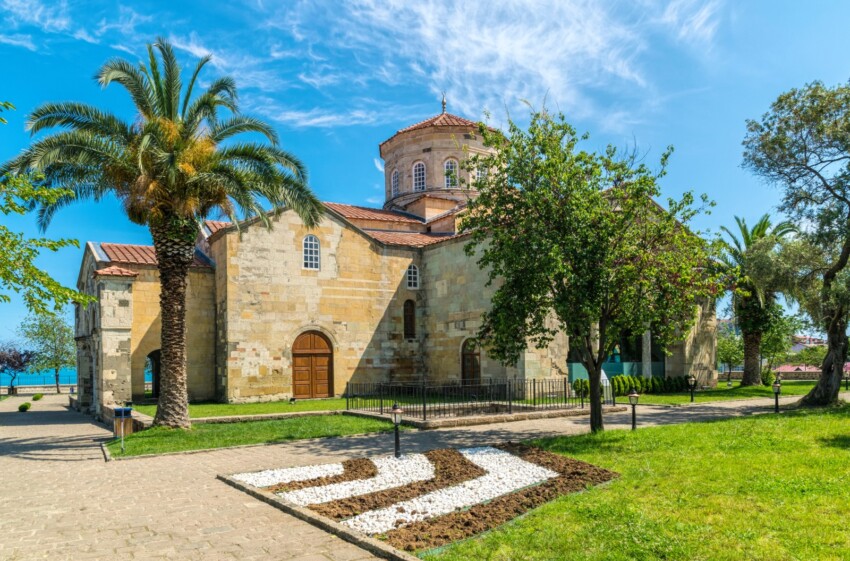
Trabzon’s emblem is the former basilica of Hagia Sophia (Ayasofya Camii), a structure built in the 13th century as a church, later converted into a mosque, and now recognised as a remarkable example of late-Byzantine architecture. In the early 20th century, the city captivated Mustafa Kemal Atatürk, founder and first President of the Turkish Republic, who visited several times; his former residence has since been converted into a museum.
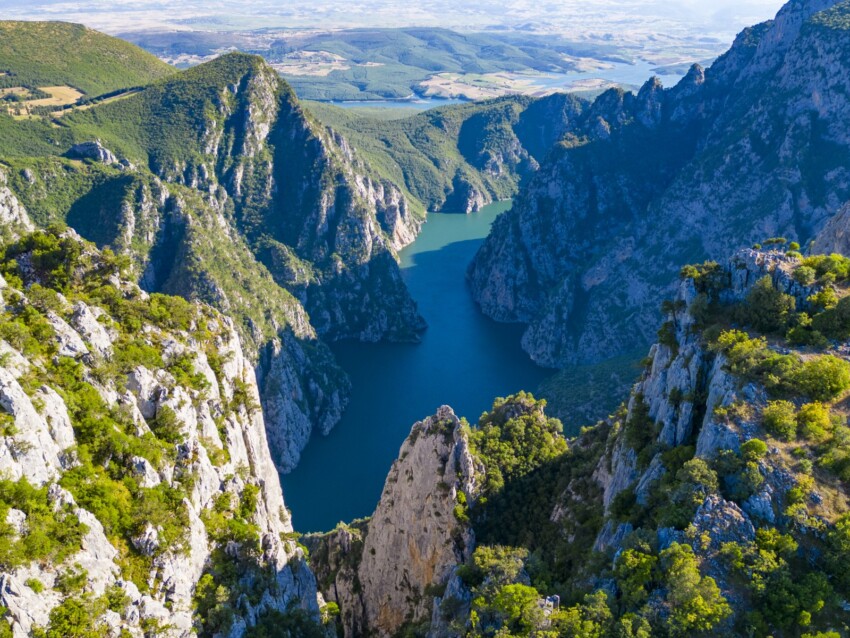
Another major port city of the Black Sea is undoubtedly Samsun, which has been dubbed in recent years as one of Anatolia’s “Tigers” for its rapid and significant economic development. The city is celebrated as the place where, on 19 May 1919, Mustafa Kemal Atatürk launched the revolution that led to the founding of the Turkish Republic. All events relating to those years are documented at the Atatürk Museum, where an exhibition recounts the birth of modern Turkey under Atatürk’s leadership.
Today, the city’s heart is Cumhuriyet Meydanı (Republic Square), established in 1931 as a place of great symbolic significance in the nation’s founding. Worth visiting in Samsun is the Pazar Mosque, the city’s oldest religious building, constructed by the Ilkhanate Mongols in the 13th century, and the Grand Central Mosque, erected by Batumi Hacı Efendi in 1884.
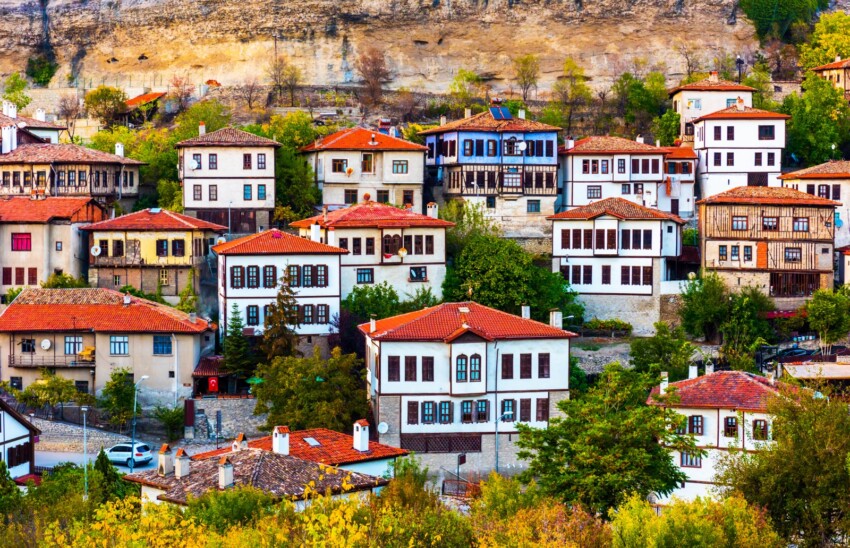
Designated a UNESCO World Heritage Site in 1994, Safranbolu is an ancient Ottoman town in the Black Sea region, renowned for millennia for its strategic position between Europe and the Middle East. The name Safranbolu means “city of saffron” because this was (and remains) one of the primary centres for saffron cultivation and trade. The crop is still grown in the area and sold in many of the town’s shops, so it’s easy to catch its distinctive aroma as you wander the streets.
Safranbolu’s beauty lies in the fact that it stands as a stunning example of an Ottoman town that has survived to the present day in excellent condition, with wooden houses, traditional hammams, artisan workshops and historic mosques still lining its narrow streets. In recent years, many of the ancient Ottoman buildings have been converted into hotels and accommodation, allowing visitors to experience something truly unique.
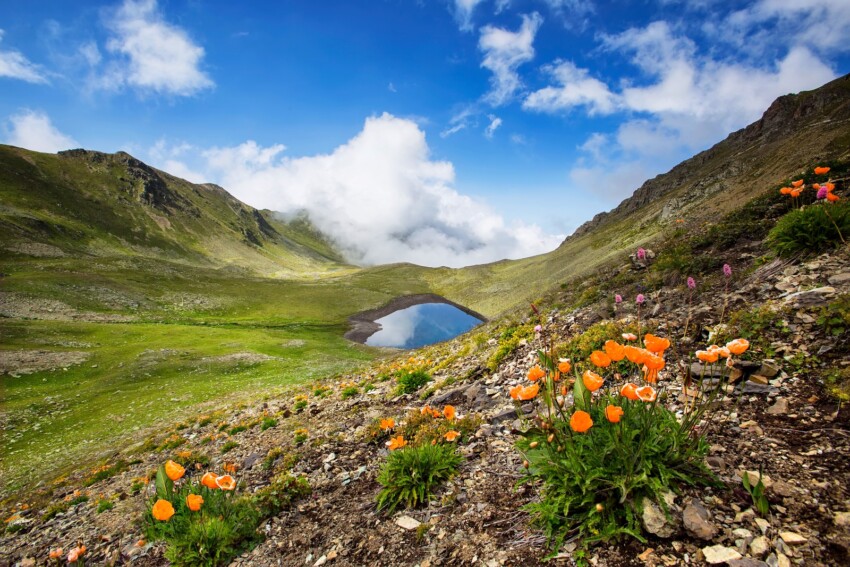
The north-eastern zone of the Black Sea region is dominated by the Kaçkar Mountains (Kaçkar Dağları), whose peaks nearly reach 4,000 metres, with Mount Kaçkar itself standing at 3,937 metres. Since the 1990s, they’ve been part of a National Park and represent the ideal destination for those who love nature-based stays. These mountains feature alpine scenery with lakes, some glaciers at higher elevations, and several mountain villages, known as yaylasi, inhabited mainly by herders who maintain genuinely ancient local traditions and lifestyles.
The park’s principal settlement is Ayder, located in the north-east, and as a starting point for many hiking routes, it offers numerous accommodation options and thermal facilities. The Kaçkar Mountains are also home to over six hundred different plant species, many of them endemic, while the fauna is equally rich, comprising wolves, bears, jackals and various bird and rodent species.
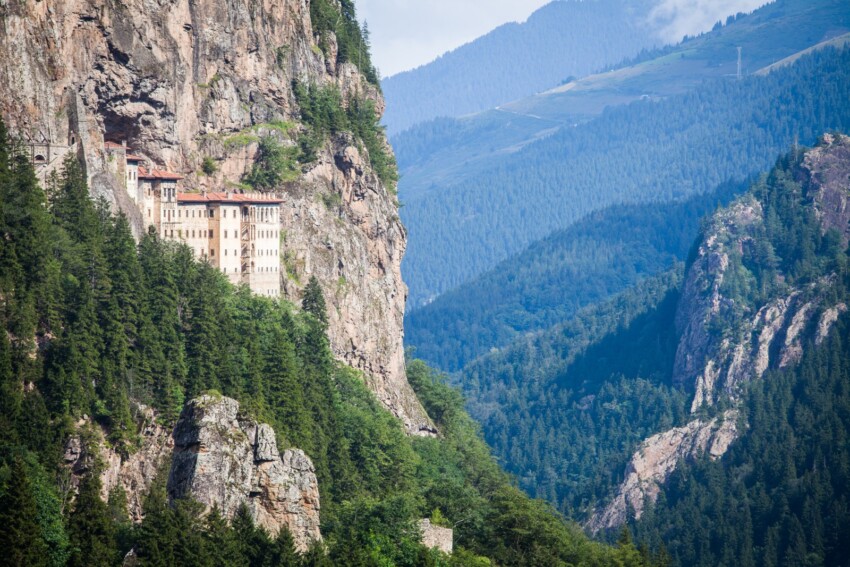
Just over 50 km from Trabzon, nestled into a sheer mountainside overlooking the Altındere River, stands the Sumela Monastery, known locally as Sümela Manastırı. It’s an essential stop when visiting the Black Sea region, not only for the religious and historical significance of the monastery but also for its sheer magnificence, which captivates visitors immediately.
The monastery’s origins date back to the late 4th century AD during the reign of Roman Emperor Theodosius I, and it remained active until 1923 when it was abandoned. Reopened in 2019 following restoration work, it’s now possible to visit the monks’ quarters, the refectory, the libraries, and the magnificent Church of the Virgin Mary, built within a natural cave.
For those wishing to explore the Black Sea area, there are several towns from which to base yourself for visiting surrounding areas; among the most suitable and well-developed for tourism is Trabzon, which offers a wide range of accommodation at various price points. For a truly special and unique experience, it’s worth spending at least one night in Safranbolu at one of the hotels created from converted historic Ottoman residences. Finally, for a nature-focused stay during summer months, you can also book hotels, chalets or small guesthouses located within the Kaçkar Mountains National Park.
The principal cities along the Black Sea coast are connected to the Georgian border via the coastal road D010. You can thus visit the various localities with a hired car from Istanbul or via long-distance bus services departing from Istanbul, Samsun or Trabzon that link the region’s main centres. Trabzon also has an airport offering flights to most Turkish cities including the capital Ankara and Istanbul, as well as many other European and Asian cities. Another major gateway is Samsun-Çarşamba, located just over 20 km from Samsun’s centre, which primarily offers domestic connections.
 Hotel
Hotel  Budget accommodations
  Apartments
  Family Hotel
  Luxury Hotel