New Park Hotel
Ankara - Ziya Gökalp Bulvari No:58 Cankaya
Book now
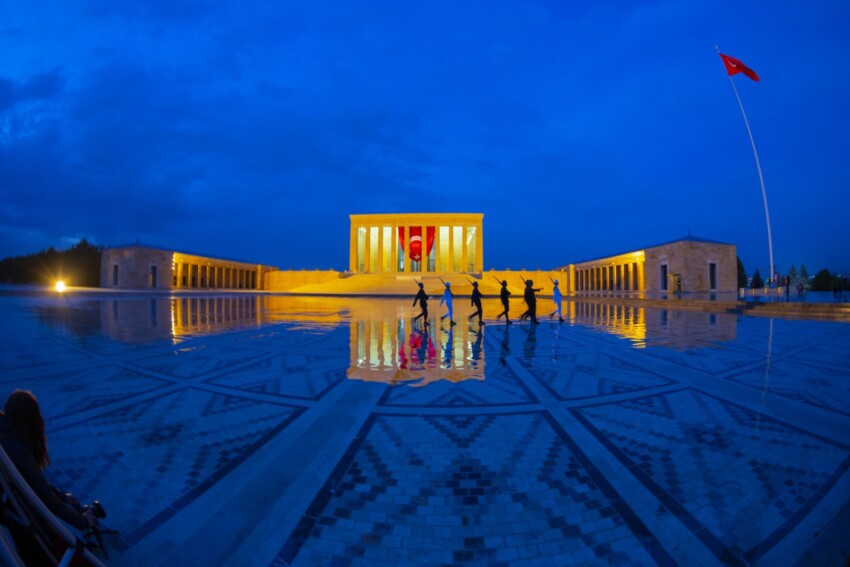
Ankara is a city situated on the Anatolian plateau at 938 metres above sea level and has been the capital of Turkey since the 1920s, though it remains less renowned than Istanbul. It was only towards the end of 1919 that the city was designated as capital by the revolutionary government, and in 1923 this was formally recognised by Parliament. It was subsequently chosen as the residence of Mustafa Kemal Atatürk, founder and first president of the Turkish Republic.
Ankara boasts a genuinely ancient history, but it was during the 4th century AD that the city became an important Byzantine settlement. It was occupied around the 11th century first by the Seljuks and then by the Ottomans, who governed it until the early 20th century. The various successive rulers left diverse traces and testimonies that have survived to tell the story of this fascinating city.
As mentioned, Ankara preserves evidence from several historical periods: from Roman artefacts to a Byzantine citadel, alongside an Ottoman-era castle and several ancient mosques. After being designated as capital, Ankara underwent urban planning modifications and transformations that made it a more modern city, with its heart in Kızılay Square, an area bustling with shops, cafés and restaurants. What the Turkish capital is particularly renowned for, however, are the Atatürk Mausoleum and its numerous museums.
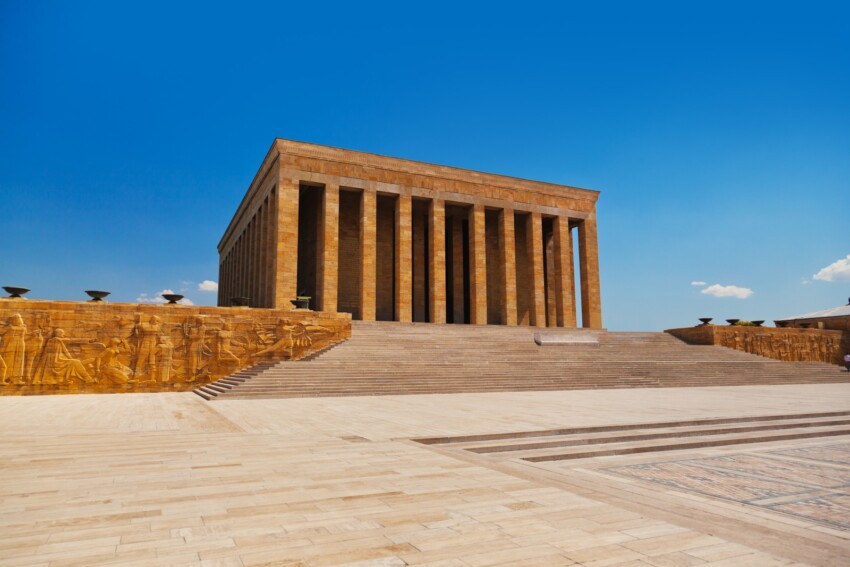
The Atatürk Mausoleum, also known as Anıtkabir, is dedicated to Mustafa Kemal Atatürk (1881–1938), founder and first President of the Turkish Republic. It is a site of great historical significance and an important national symbol that attracts thousands of visitors each year. Following Atatürk’s death in 1938, a design competition was announced for his mausoleum, which was won by two Turkish architects from Istanbul Technical University.
In fact, rather than a simple mausoleum, this is a complex housing a modest building containing the remains of the great Turkish leader, along with other structures, including a museum dedicated to the Turkish War of Independence and an exhibition charting Atatürk’s life. The second President of the Turkish Republic, İsmet İnönü, who passed away in 1973, is also buried here.
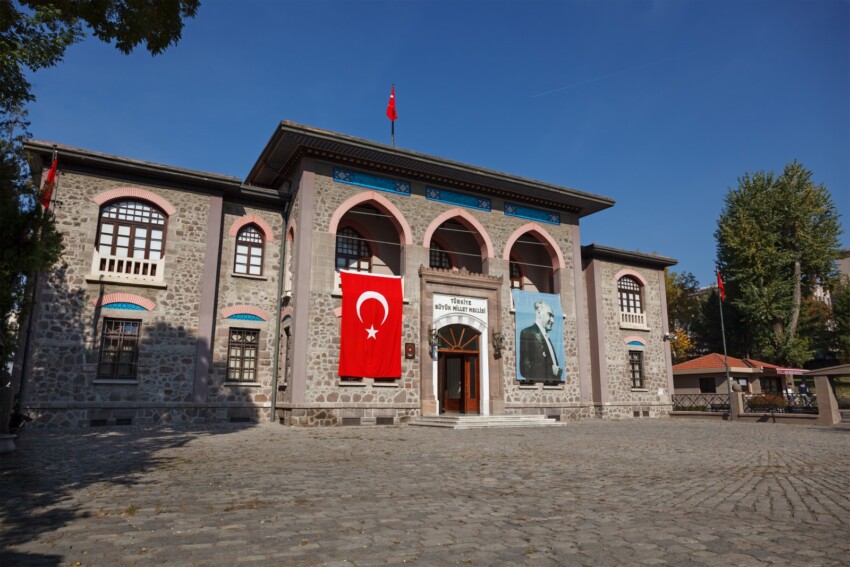
The Ulus district is the part of the city where you’ll find Roman ruins dating from the 1st to 4th centuries, bearing witness to the city’s importance and grandeur at that time. Here you can admire not only the remains of the Baths of Caracalla, a bathing complex dating to the 4th century, but also the foundations of the hypocaustum, a distinctive heating system used in ancient Rome. At that time, hot air was circulated through cavities in the floors and walls of the building to be heated, powered by a large furnace.
Nearby you’ll also find what remains of the Augusteum, a temple erected in honour of Augustus between 25 and 20 BC, after the Roman Empire had conquered Anatolia and created the province of Galatia with Ancyra (Ankara) as its administrative capital. The walls of the temple originally bore the text of “Res Gestae Divi Augusti”, traces of which can still be observed.
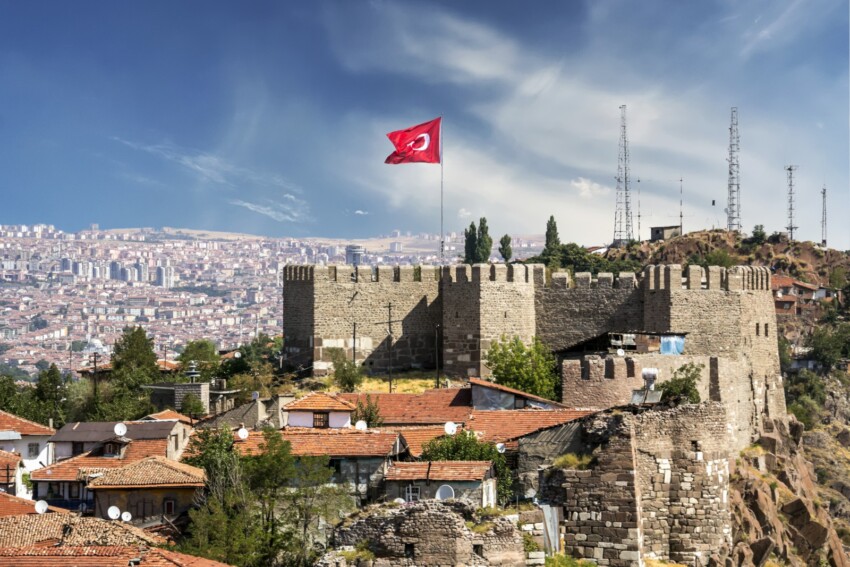
One of Ankara’s most interesting sites is undoubtedly the Castle (Ankara Kalesi), situated atop a hillock affording magnificent views of the surrounding landscape. Built during Ottoman rule over the remains of an earlier Roman fortress, Ankara Castle is surrounded by defensive walls and features several tall watchtowers. You can visit the fortress by climbing the small hill on foot, and once there you can take time to explore the lively local market with stalls selling various handicrafts and traditional items.
One of Ankara’s most characteristic areas is the ancient Hisar citadel, featuring distinctive Ottoman wooden buildings and narrow cobbled alleyways lined with artisan workshops, restaurants, cafés and antique shops. The district is still partially surrounded by the ancient city walls, once stretching 1,500 metres and comprising 14 bastions designed to watch for approaching enemies.
Among the towers still standing, the Eastern Tower (Sark Kulesi) stands out for its state of preservation, offering spectacular views of modern Ankara from its summit. The Hisar citadel is also home to Aslanhane Cami, one of the city’s finest mosques, particularly notable for its precious interior decorations.
One of Ankara’s most important museums is undoubtedly the Museum of Anatolian Civilisations (Anadolu Medeniyetleri Müzesi), which houses an extensive collection of archaeological finds discovered throughout Anatolia. Through these artefacts from the various civilisations that occupied this territory, it is possible to trace much of the region’s history from the Palaeolithic Age onwards.
A particular section is dedicated to coin collections, featuring examples ranging from the earliest minted coins to more modern times. Another recently opened section displays finds discovered in recent years in the Ankara area relating to the Roman period.
Ankara is a city rich in museums allowing you to explore not only the history of this territory but also discover the region’s fauna, flora and geology. Among the most significant sites are the Ethnography Museum (Etnoğrafya Müzesi), dedicated to the cultures and traditions of Turkish civilisations throughout the centuries, and the Erimtan Museum of Archaeology and Arts, which preserves many artefacts found in the Anatolian region dating from 3000 BC through the Byzantine period.
Finally, also worthy of mention is the Museum of Natural History (Doğa Tarihi Müzesi), renowned for its exhibition on natural heritage and its rich collection of fossil specimens from the region.
Ankara offers a large number of high-quality hotel accommodations, including options from well-known international chains. The city centre around the modern Kızılay Square boasts numerous hotels and accommodation options, as well as various pubs and restaurants where you can experience the city’s nightlife. Another area with plenty of hotels and options across different price ranges is around the pedestrian precinct “Selanik Caddesi”, which also has many nightclubs and discotheques.
Ankara can be reached by air, landing at Esenboğa International Airport, located less than 30 km from the city centre. However, there are no direct flights from the UK to this airport, so a stopover in another city such as Istanbul is always necessary. If you’re already in Turkey, you can reach the capital via domestic flights, long-distance buses or by train.
From Istanbul, for example, there are rail connections that allow you to reach Ankara in less than six hours. Alternatively, from Sabiha Gokcen airport (SAW), there are flights that reach the capital in less than an hour, often at very competitive prices. If you prefer to travel by car, from Istanbul you’ll need approximately 5 or 6 hours (depending on traffic) to reach Ankara.
What's the weather at Ankara? Below are the temperatures and the weather forecast at Ankara for the next few days.
Ankara, Turkey's capital and the nation's political and financial hub, sits at the heart of the Anatolian Plateau. The city lies approximately 450 km from Istanbul and 380 km from Bursa.
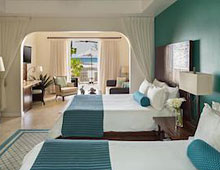 Hotel
Hotel 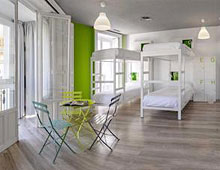 Budget accommodations
 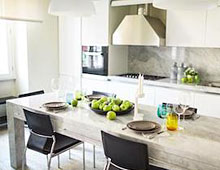 Apartments
  Family Hotel
 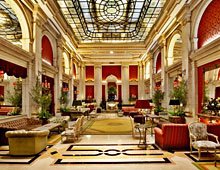 Luxury Hotel