Istanbul
A crossroads of trade and peoples for thousands of years, Istanbul is a city with a long history that preserves many sites of great historical and cultural interest.
Turkey is a destination that truly has a great deal to offer, not only in terms of historical and architectural heritage but also natural and gastronomic treasures. This land with a history spanning thousands of years has been ruled by various peoples since ancient times and has always been considered a strategic territory and an important crossroads for peoples and goods.
From the Greco-Roman period through Byzantine rule and finally Ottoman dominion, Turkey’s long history is reflected in its rich heritage comprising archaeological sites, religious buildings, monuments and numerous museums. If you’re planning a trip to discover Turkey, here are ten stops you absolutely cannot miss.
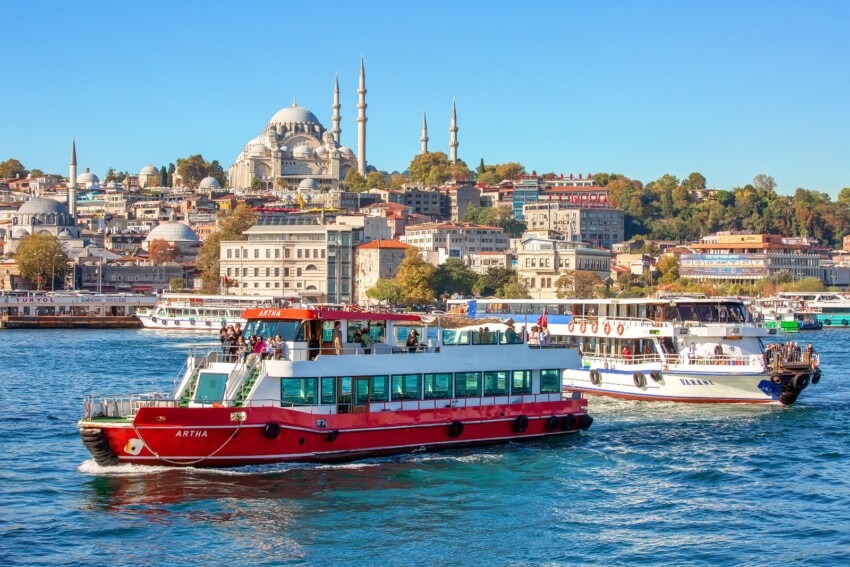
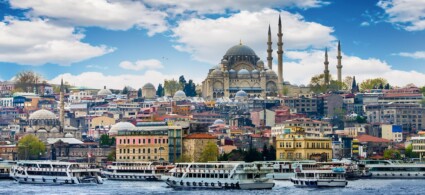
Turkey’s most famous city is undoubtedly Istanbul, also known as Constantinople or Byzantium, situated on the Bosphorus Strait dividing Europe and Asia. For centuries, this city served as the capital of various empires, from the Roman to the Ottoman, and each ruling power left important marks. From Hagia Sophia to Topkapi Palace and the stunning Blue Mosque, Istanbul is now a captivating blend of European and Asian culture. Other essential sites in the city’s oldest quarter include the Basilica Cistern, built in Roman times, and the Grand Bazaar.
For a spectacular view of Istanbul from above, a visit to the Galata Tower comes highly recommended. Built at the behest of the Genoese as part of the city’s defensive system, it remains an iconic landmark. The heart of modern Istanbul is now Taksim Square, home to major hotel chains, restaurants and numerous boutiques, as well as the Monument of the Republic, erected to celebrate the founding of the Turkish Republic in 1923. Independence Avenue (İstiklal Caddesi), a lively pedestrian street lined with shops and shopping centres, branches off from the square and is still traversed by Istanbul’s historic tram line.
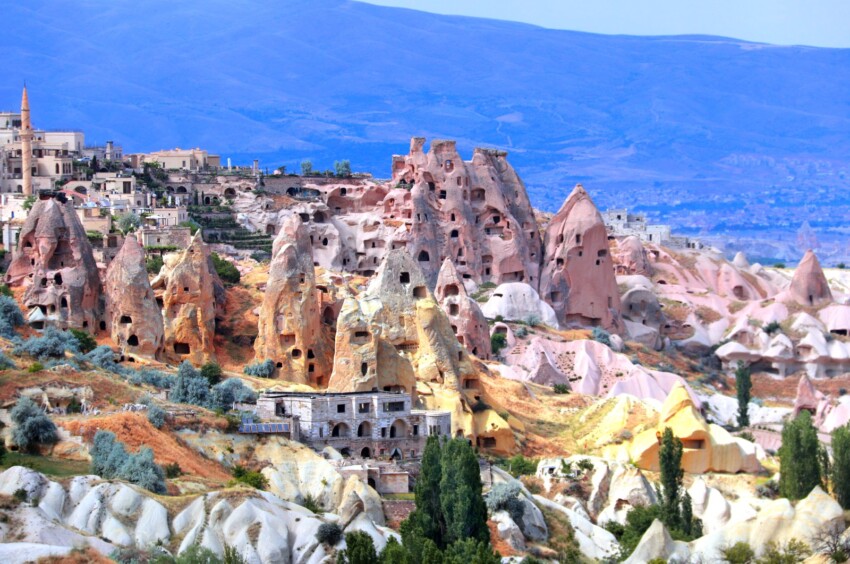
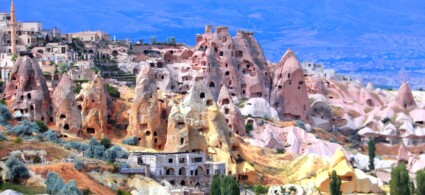
Cappadocia is a region in north-central Turkey that has always straddled Asia Minor and Mesopotamia, a characteristic that made it a coveted territory for centuries and an important hub for trade routes. The region features distinctive rock formations created by two now-dormant volcanoes (Erciyes and Hasan), whose lava and ash, combined with rainfall, have sculpted the landscape to produce truly unique and extraordinary formations known as the Fairy Chimneys.
These natural cone-shaped compositions with a history spanning millennia were discovered and utilised by mankind, particularly by Christian hermits in ancient times who carved the soft tufa stone to create caves and dwellings. Many consider the heart of the region to be the Göreme National Park, a locality nestled in a hillside featuring a veritable labyrinth of houses, churches and buildings carved into the rock and often adorned with frescoes and decorations. This open-air museum was built between the 10th and 12th centuries when Cappadocia was regarded as an important Byzantine religious centre.
Given the area’s tremendous appeal, one of the most wonderful things to do in Cappadocia is undoubtedly a hot-air balloon ride, allowing you to admire these magnificent landscapes from above. Several agencies organise dawn balloon tours to experience this terrain as the sun rises, though booking well in advance is recommended. In recognition of its beauty and historical importance, UNESCO has designated Göreme National Park a World Heritage Site.
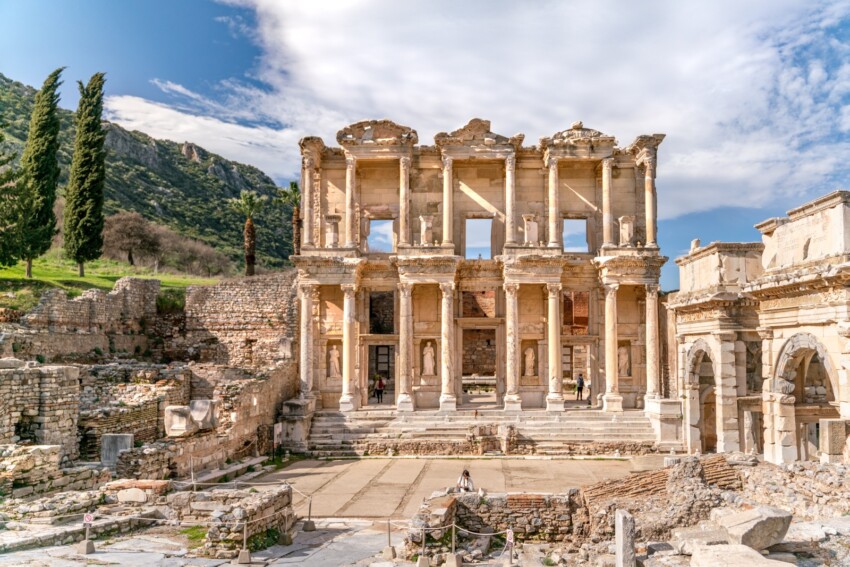
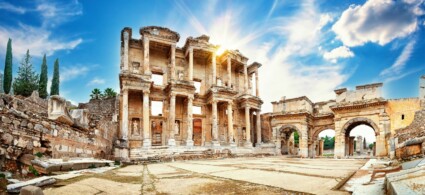
Ephesus hosts one of Turkey’s most important archaeological sites, telling the story of this territory’s significance in ancient times. The city boasts a long history, and its origins are often traced to myths and legends, though during the Greek period, Roman rule and the spread of Christianity, Ephesus played a vital commercial role.
The ancient city of Ephesus comprised a large agora and two main quarters—one reserved for political and religious life, the other dedicated to entertainment and leisure. Among the best-preserved monuments within the site are undoubtedly the Library of Celsus, the Odeon, the Fountains of Trajan, the great Theatre and the Temple of Hadrian.
About three kilometres from ancient Ephesus lies another significant historical site containing the remains of the Temple of Artemis, first erected around the 6th century BC but rebuilt many times thereafter. Due to its grandeur (it was considerably larger than the Parthenon in Athens), this religious building was considered one of the Seven Wonders of the Ancient World.
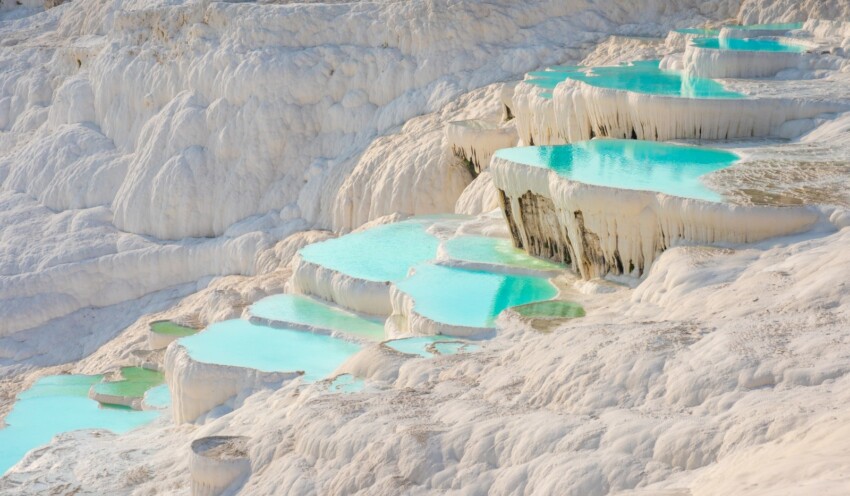
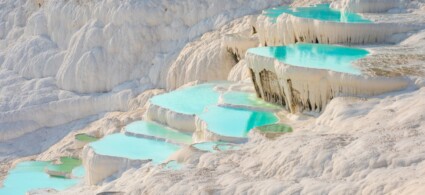
Turkey boasts not only significant historical and architectural heritage but also numerous natural sites of considerable interest. Those wishing to behold a true masterpiece of nature should visit the natural pools of Pamukkale, located in south-western Turkey in the Aegean region. Here, water from thermal springs flows down the mountainside, rich in minerals and leaving behind deposits of limestone and travertine.
The special minerals released by the water create distinctive white compositions on the terrain. As the deposits cool, they resemble a blanket of snow or a special cotton covering, so much so that the name “Pamukkale” means “cotton castle” in Turkish. Over the years, special pathways have been created allowing visitors to walk among these beautiful natural pools, and although swimming in the basins is no longer permitted, the sight remains breathtaking.
Near Pamukkale, moreover, stands Hierapolis, which was a flourishing Greco-Roman city regarded as an important health and wellness centre thanks to its thermal springs. This locality features an archaeological site with well-preserved ruins including a large theatre, a necropolis and several temples. Pamukkale and Hierapolis together were designated a World Heritage Site by UNESCO in 1988.
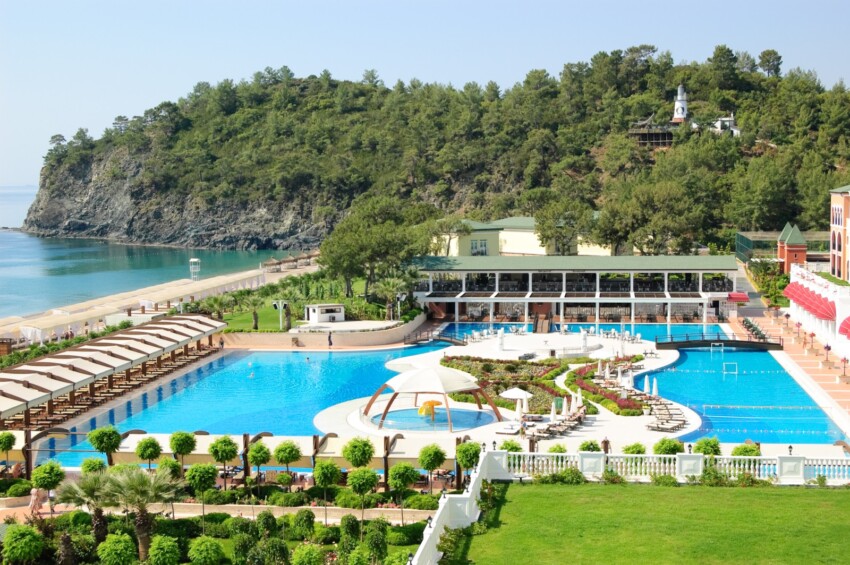
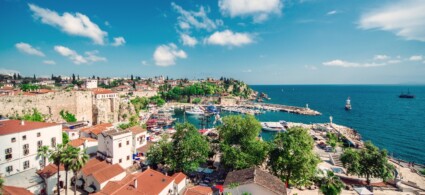
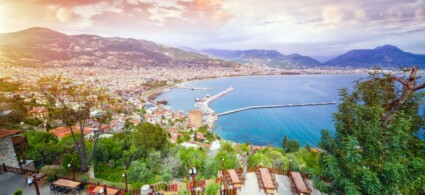
Antalya is a vibrant city on Turkey’s south-western coast, flanked on one side by the western Taurus Mountains and on the other by the Mediterranean Sea. With a rich history, this city was one of the principal Roman ports and an important commercial centre during Byzantine rule. Today, Antalya is one of the country’s most popular tourist destinations because it successfully combines historical sites with wonderful beaches and crystal-clear waters, ideal for those seeking a seaside getaway.
Antalya’s old town, called Kaleiçi, is enclosed within the city walls and is a maze of narrow streets lined with Ottoman-style houses, shops, restaurants and cafés. Moving along the coast, you’ll find numerous beaches (such as Konyaaltı Beach and Lara Beach) and the Old Harbour (Yat Limanı), the perfect spot for a leisurely stroll with panoramic views over the bay, surrounded by numerous restaurants and cafés.
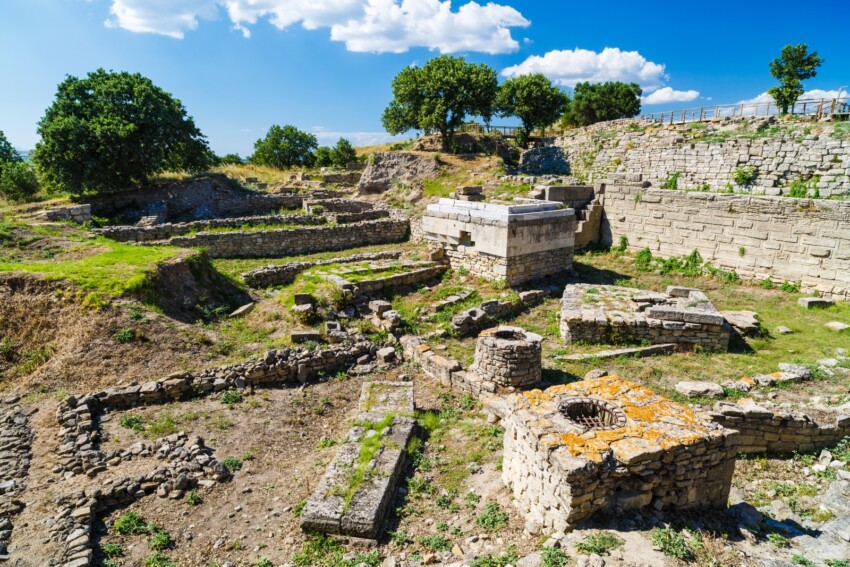
Troy is an ancient archaeological site located in Çanakkale Province in north-western Turkey and is renowned for being the legendary setting of the Trojan War as narrated in Homer’s Iliad. Today, it remains possible to see numerous remnants of the city’s long history and the successive periods of rule. Experts have indeed studied the geological stratification and identified at least nine different cities that were built one atop the other over centuries on this territory. The Gate of Troy, once considered the main entrance to the ancient city, is noteworthy within the site and now marks the beginning of the route through the ruins.
From the entrance, you can also see the remains of the defensive walls that were built to protect the town from raids and attacks and are mentioned multiple times in Homer’s epic. Continuing through the site, you can admire the remains of the Temple of Athena and Priam’s House, a large building dating to the Bronze Age believed to have belonged to the famous king of the Trojans. In the 19th century, numerous artefacts and objects belonging to King Priam and other rulers were found here; some were removed by archaeologist Heinrich Schliemann during the excavation campaign and taken to Germany. The site also features a reconstruction of a large wooden horse commemorating the one used by the Achaeans to breach the city and win the famous battle. Due to its historical and archaeological significance, the site has been designated a World Heritage Site by UNESCO.
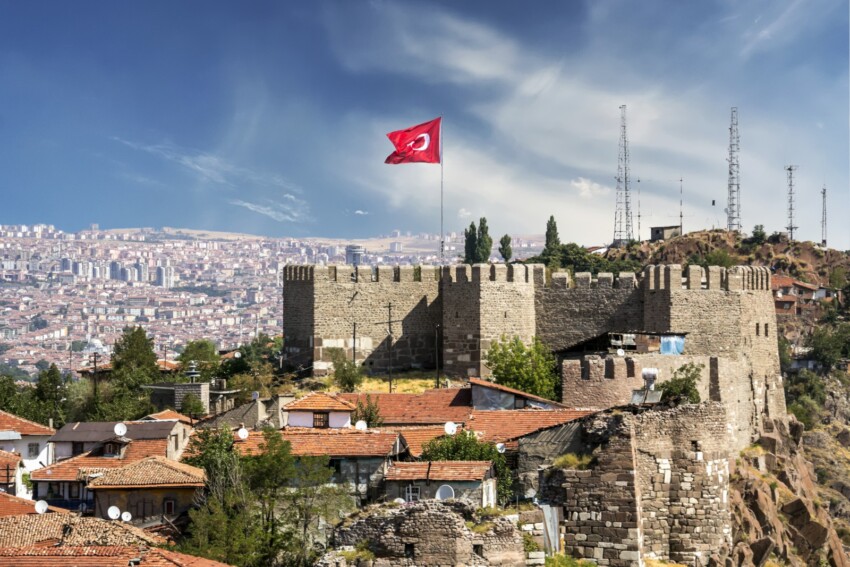
Ankara is a city situated on the Anatolian plateau at 938 metres above sea level and has been Turkey’s capital since the 1920s, though it is less famous than Istanbul. The most evocative part is arguably the Hisar citadel, where you can still observe ancient wooden Ottoman buildings housing craft workshops, cafés and antique shops. Another area of great charm is the Ulus district, which contains numerous remnants from the Roman period, including the Temple of Augustus, the remains of the Baths of Caracalla dating to the 4th century, and the foundations of a hypocaust—an innovative heating system.
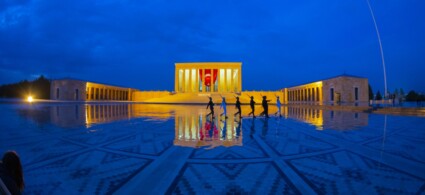
However, Ankara is renowned for the Atatürk Mausoleum, dedicated to Mustafa Kemal Atatürk (founder and first president of modern Turkey), which houses a tomb and a museum illustrating the life and activities of this important leader. Ankara also boasts numerous museums allowing visitors to explore not only the city’s history but also discover the region’s fauna, flora and geology. Among the most important museum sites are: the Museum of Anatolian Civilisations (Anadolu Medeniyetleri Müzesi), which holds an extensive collection of archaeological artefacts from various periods and civilisations, the Ankara Museum of Fine Arts and the Natural History Museum.
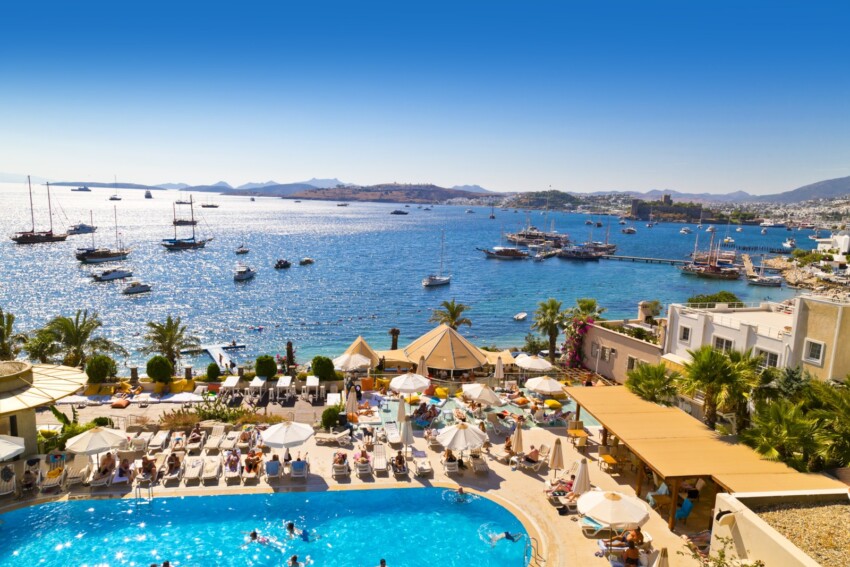
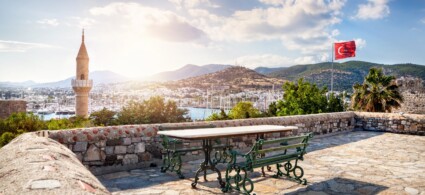
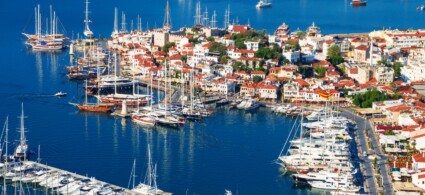
Bodrum, once known as Halicarnassus, the birthplace of the celebrated Greek historian Herodotus and the Roman writer Dionysius, sits on Turkey’s south-western coast along the Aegean Sea. This destination is renowned as the perfect choice for those seeking a blend of history, entertainment and relaxation, thanks to its numerous historical sites, stunning beaches and vibrant nightlife. Bodrum was one of the most important cities in Ancient Greece, and it was home to one of the Seven Wonders of the Ancient World: the Mausoleum of Halicarnassus, of which only a few remains can still be admired. Two other fascinating historical sites worth visiting just outside the town centre are the Ancient Theatre of Halicarnassus, considered one of Anatolia’s oldest theatres, and the Myndos Gate, which thousands of years ago granted access to the ancient city of Halicarnassus.
The symbol of Bodrum, however, is the fortress located in the harbour area and known as the Castle of Saint Peter, erected in the fifteenth century by members of the Knights Hospitaller for defensive purposes. Over the centuries, the fortress has served many different functions until, in the nineteenth century, it was converted into a prison, and then in the twentieth century, following extensive restoration work, it was transformed into a museum. Visiting the Castle of Saint Peter today means not only retracing part of Bodrum’s history but also enjoying breathtaking views across the entire Aegean Sea and the town. In recent years, Bodrum has become a thriving beach destination, with some dubbing it the “Saint Tropez of Asia Minor” for its chic and glamorous atmosphere that echoes the famous French resort. Indeed, thanks to its excellent facilities, pristine beaches, crystal-clear waters and lively nightlife, Bodrum has increasingly attracted tourists from around the world, and more and more celebrities and public figures now choose this destination for their holidays.
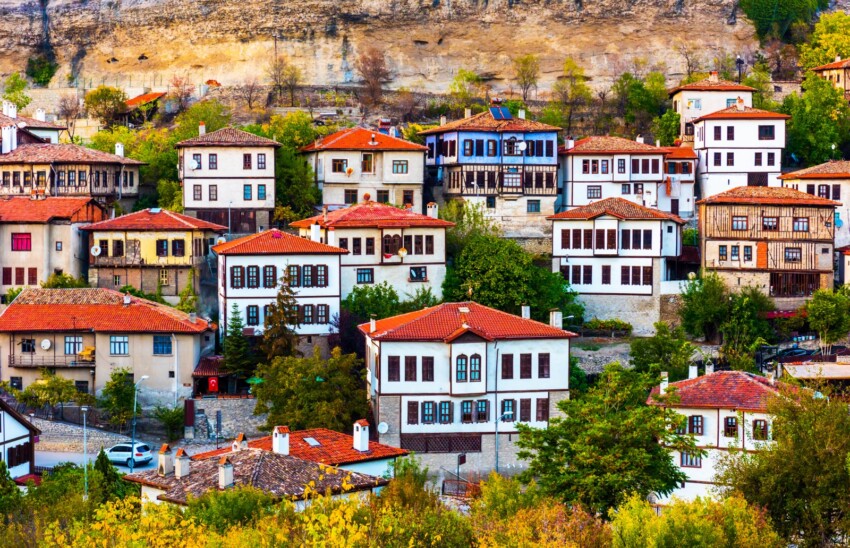
Located north of Ankara, the town of Safranbolu is known as “the city of saffron”, derived from the word “safran” meaning saffron and the Greek word “polis” meaning city. The name reflects the fact that Safranbolu was one of the principal centres for the cultivation and trade of saffron, which continues to be grown in the area and sold in many shops throughout the town. The city has also been a strategically important territory for trade routes between Istanbul and the Middle East for centuries.
This location was designated a UNESCO World Heritage Site in 1994 because it is regarded as a magnificent example of an Ottoman town that has survived in excellent condition. It’s delightful to explore Safranbolu by wandering through its narrow streets lined with wooden Ottoman houses, hammams, small cafés, craft workshops and ancient mosques. To fully experience the town’s atmosphere, you can now stay in one of the restored traditional Ottoman mansions that have been converted into hotels.
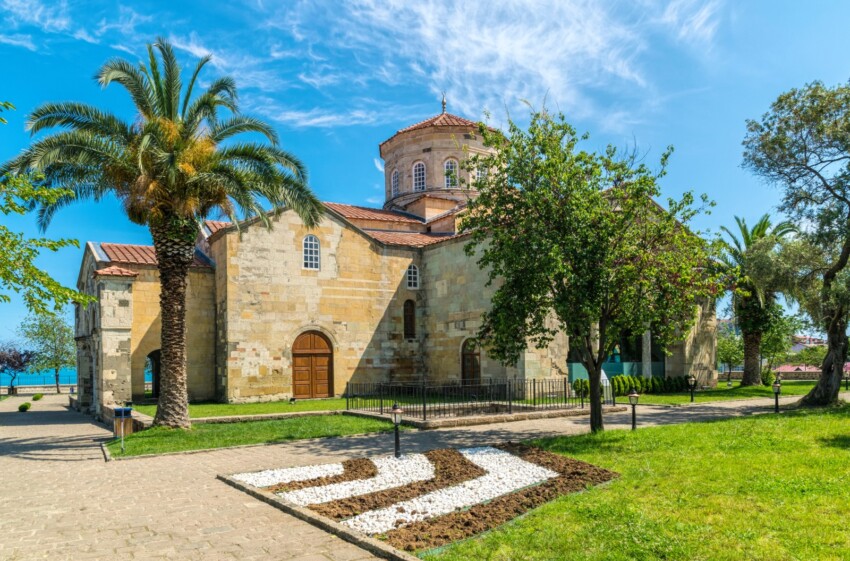
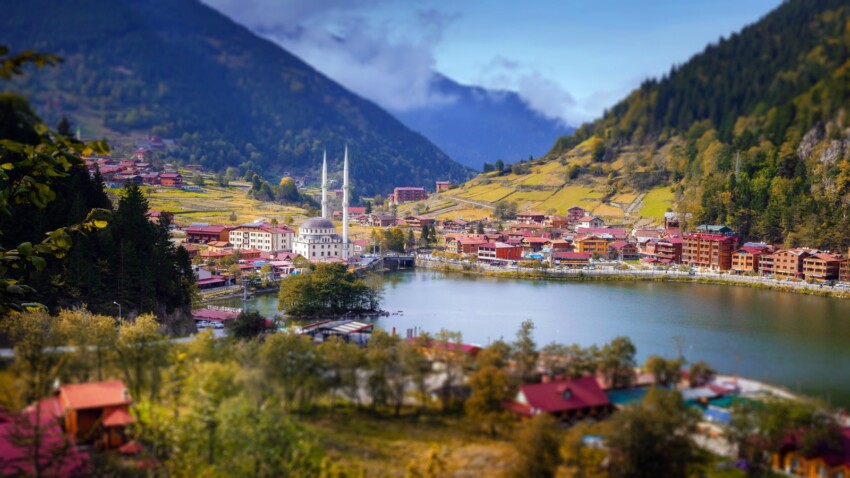
Trabzon (formerly known as Trebizond) is a city on Turkey’s north-eastern coast and is considered the country’s principal port on the Black Sea. It was particularly during the Roman imperial era under emperors Trajan and Hadrian that Trabzon became the region’s main naval base. Its strategic location made it an important centre for trade routes between Europe and the Orient for centuries, with the ancient Silk Road passing through here.
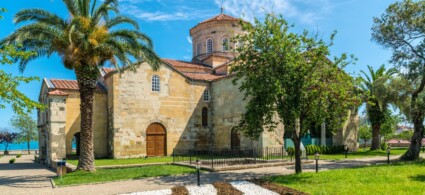
The city’s most important site is the former basilica of Hagia Sophia (Aya Sofya Camii), an Orthodox church built around the thirteenth century that was later converted into a mosque following the Ottoman conquest. It is now regarded as an important example of late Byzantine architecture, built with a square floor plan and featuring a tall dome at its centre, whilst the interior is elegantly decorated with frescoes. The interior paintings have been well preserved over time because when the building was converted into a mosque, they were whitewashed in accordance with Islamic practice.
To learn more about this region’s long and turbulent history, you can visit the Trabzon Museum, located in the town centre, which houses numerous artefacts and finds of considerable value. Finally, Mustafa Kemal Atatürk, the founder of the Turkish Republic, visited Trabzon several times, and the villa where he stayed has since been converted into a museum that is well worth visiting to learn more about this important Turkish leader and his connection to the city.
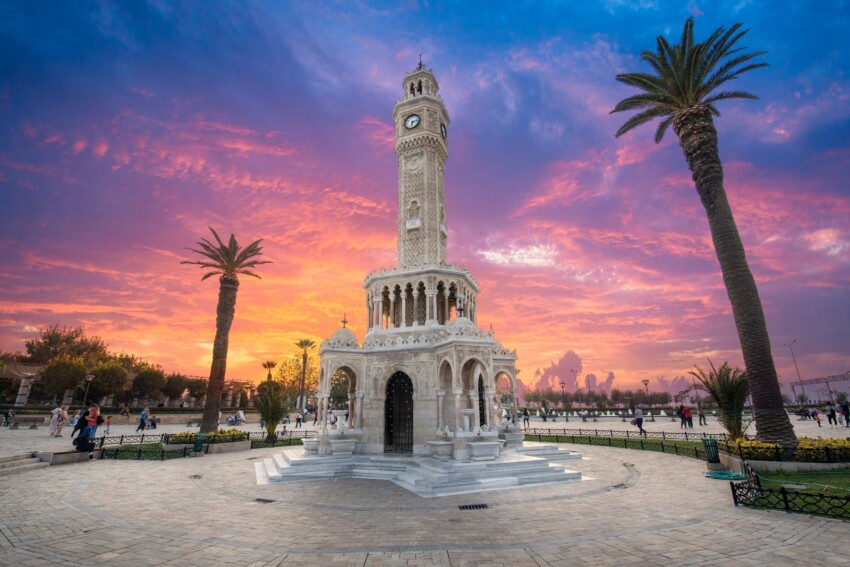
Izmir, known in antiquity as Smyrna, is a city on the Aegean Sea that was founded by the Greeks, but later dominated by the Romans, the Byzantines and finally the Ottomans, with its port always playing an important commercial role for trade routes between Asia and Europe. Rebuilt first by Alexander the Great and later by Marcus Aurelius, this region now boasts numerous archaeological sites that function as an open-air museum and vivid testimony to its turbulent history.
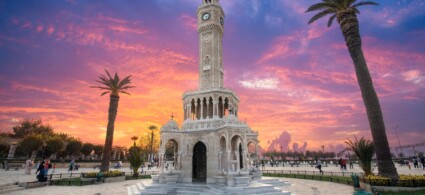
The heart of the city’s life is now Konak Square, where you’ll find the Government Palace, the Municipality Building and the Clock Tower, which has been the city’s symbol since 1901. Don’t miss a stroll along the waterfront promenade, known as Alsancak, where you’ll find restaurants, venues and bars offering open-air dining. Another landmark of great interest is the Kadifekale, or the “velvet castle“, a structure built during the era of Alexander the Great that dominates the city from atop a hill.
 Hotel
Hotel  Budget accommodations
  Apartments
  Family Hotel
  Luxury Hotel