Istanbul: Bosphorus Dinner Cruise & Show with Private Table
63.791 reviews
Buy now
From 23,70€ per person
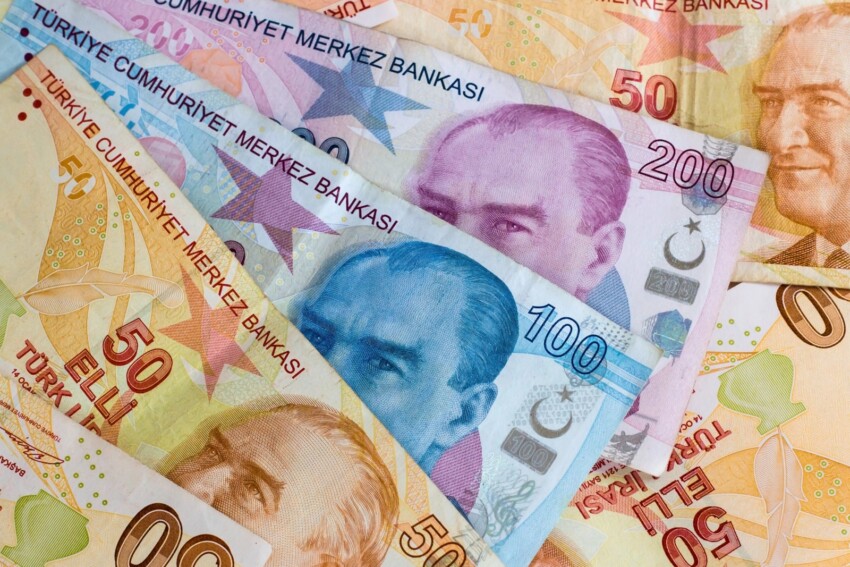
The Turkish lira (symbol: ₺, ISO code: TRY) is the official currency of Turkey and Northern Cyprus. Locally it’s known as Türk Lirası and abbreviated as TL. One lira is subdivided into 100 kuruş, the fractional unit you’ll find in both coins and retail prices.
The Turkish lira was introduced in 1844 during the Ottoman Empire. After decades of chronic inflation that had severely devalued the currency (in 2004, one dollar was worth 1,350,000 lire), the government decided on a drastic reform.
On 1 January 2005, a new currency was introduced, eliminating six zeros: one new Turkish lira was equivalent to one million old lire. From 2009, the currency simply resumed the name “Turkish lira” and this is the currency you’ll use today.
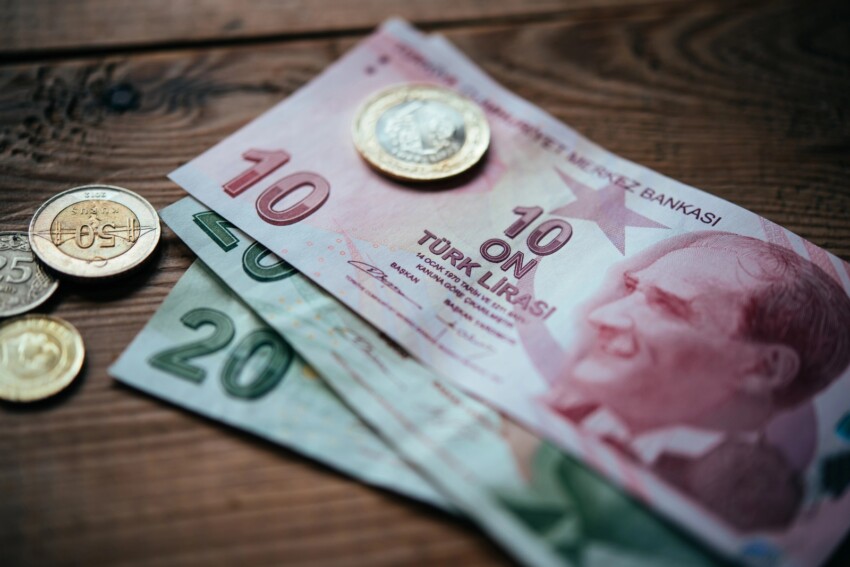
Banknotes in circulation come in denominations of 5, 10, 20, 50, 100 and 200 Turkish lire. All feature a portrait of Mustafa Kemal Atatürk, founder of the Turkish Republic, on the front, and prominent figures from Turkish culture on the reverse. Banknotes increase in size as their value increases, from 134×64 mm for the 5 lire note to 160×72 mm for the 200 lire note.
Coins come in denominations of 1, 5, 10, 25 and 50 kuruş and 1 lira. Coins from 1 to 25 kuruş are made of metal alloy, while the 50 kuruş and 1 lira coins are bimetallic (silver-plated ring and golden centre).
As of February 2026, the exchange rate stands at around 51-52 Turkish lire to 1 euro, so with 100 euros you’ll receive approximately 5,100-5,200 lire. The Turkish lira is a volatile currency and the rate can fluctuate considerably.
In recent years, the lira has depreciated significantly: in 2015, one euro would get you around 3 Turkish lire, now over 50. This is mainly due to high inflation (around 31% in January 2026). For European travellers this means greater purchasing power: Istanbul, Antalya and other Turkish destinations are now more affordable.
Before you travel and during your stay, check the current rate on XE.com or the European Central Bank website. Remember that the rate you see online is the interbank rate: when you physically exchange money, it will be slightly less favourable due to fees.
Never exchange money before you travel: the rates are very poor. Also avoid Turkish airports (Istanbul airport, Sabiha Gökçen) where rates are worse than in the city.
The most convenient method is to withdraw from ATMs, which you’ll find everywhere in Turkish cities. ATMs accept Visa, Mastercard, Maestro and Cirrus cards. Check with your bank about fees on overseas withdrawals (typically 3-5% plus possibly a fixed fee). Withdraw larger amounts in one go to offset fixed fees.
Exchange offices (Döviz Bürosu) are widespread in tourist areas. They offer less favourable rates than ATMs but have no fixed fees, so they can work out well for smaller amounts. Always compare rates at different offices and avoid those that don’t display them clearly.
A modern alternative is multi-currency accounts like Wise or Revolut: they allow you to convert euros to lire at the real market rate with modest fees, and use a prepaid card for payments and withdrawals.
Cash is still essential in Turkey: small shops, markets, taxis, guesthouses and many local restaurants prefer it or only accept it. Visa and Mastercard are widely accepted in hotels, tourist restaurants and shopping centres. American Express often causes problems.
The advice is to always carry cash for daily expenses (200-500 lire per day) and use your card for major purchases and accommodation.
Tips (bahşiş) are not obligatory but appreciated: 10-15% in restaurants, 10-20 TRY for porters, 10-15% of the cost for tour guides, rounding up for taxi drivers. Tips should always be given in cash.
 Hotel
Hotel  Budget accommodations
  Apartments
  Family Hotel
  Luxury Hotel