Istanbul: Bosphorus Dinner Cruise & Show with Private Table
63.791 reviews
Buy now
From 23,70€ per person
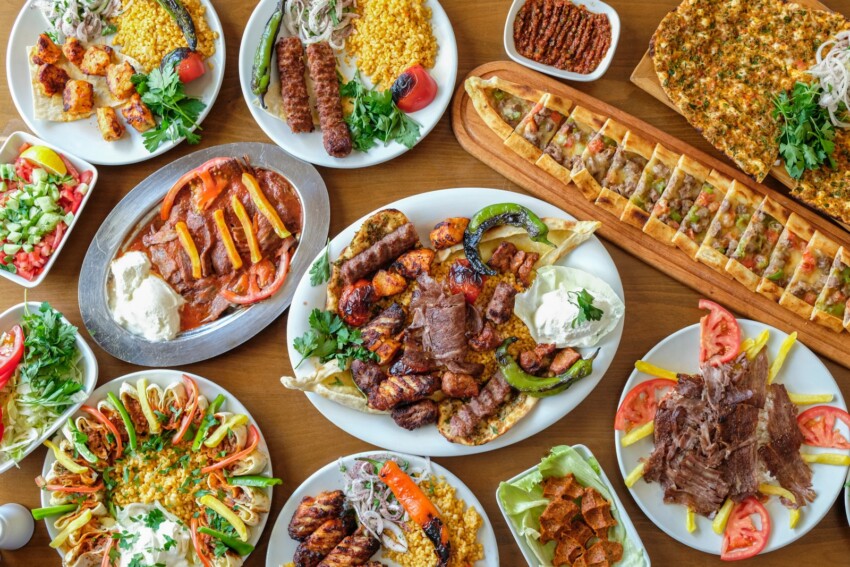
When it comes to Turkish cuisine, people’s minds immediately turn to kebab. Yet reducing this country’s gastronomy to a single dish would be like visiting Istanbul and stopping only at Sultanahmet Square. Turkey is an immense crossroads of flavours where Asia and Europe, the Mediterranean and the Black Sea, the nomadic traditions of the steppes and the refined elegance of Ottoman imperial cuisine all converge.
Every corner of the country tells a different story through its dishes: along the Black Sea coast, anchovies are the undisputed stars; in south-eastern regions like Gaziantep and Urfa, spices and pistachios reign supreme; whilst in Cappadocia you’ll discover ancient recipes cooked in clay pots. This culinary wealth is the result of millennia of influences: Byzantine, Ottoman, Mediterranean, Middle Eastern and Central Asian traditions have blended together to create one of the world’s most captivating cuisines.
Prepare yourself for a gastronomic journey that goes far beyond kebab: you’ll discover the elegance of meze, the crispness of börek, the sweetness of baklava and so much more.
Turkey is two-and-a-half times larger than the UK and stretches across incredibly varied terrain. This geographical diversity is directly reflected in local gastronomy, making each region a unique culinary experience.
In the Black Sea provinces, where anchovies (hamsi) are abundant, this small fish is prepared in dozens of different ways: fried, baked, as meatballs or even transformed into sweets. Corn and cabbage are other key ingredients of this region.
Moving towards the south-east, cities like Gaziantep and Urfa are considered the country’s gastronomic capitals. Here pistachios are used generously, chillies are omnipresent and spices perfume the air of the markets. Gaziantep baklava has even earned a European PGI (Protected Geographical Indication) designation.
Along the Aegean and Mediterranean coasts, olive oil is the absolute star. Fresh vegetables, fish and vegetarian dishes dominate. In the Marmara region, where Istanbul is located, all Turkish culinary traditions exist side by side, creating a perfect synthesis between the ancient and the modern.
Central Anatolia, finally, is renowned for its stuffed pasta dishes such as mantı and clay-pot preparations that characterise Cappadocia’s cuisine.
Kebab is undoubtedly Turkey’s most famous dish worldwide, but what you might not know is that there are over 50 different varieties. The word kebap in Turkish simply means “roasted meat”, and behind this seemingly simple definition lies a universe of different preparations.
Döner kebab (literally “rotating kebab”) is what you see everywhere on the street food scene: layers of lamb, beef or chicken stacked on a vertical spit that slowly rotates in front of a heat source. The meat is sliced thinly and served in bread, in durum (rolled flatbread) or directly on a plate with accompaniments.
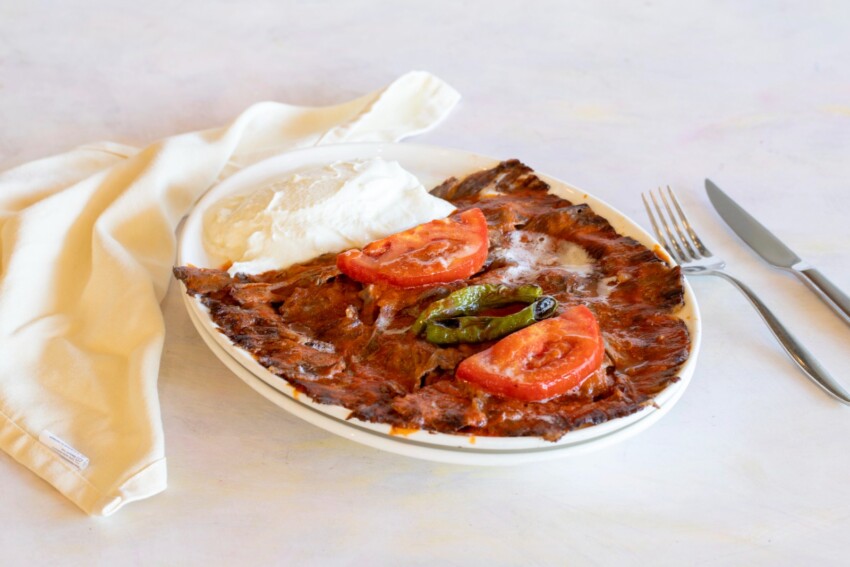
Originating from Bursa, İskender kebab is considered one of the most refined versions. Slices of döner are served over cubes of pitta bread, all topped with a generous coating of melted butter, tomato sauce and accompanied by yoghurt. An explosion of flavours and textures that will leave you speechless.
From the city of Adana in southern Turkey comes this spicy version: minced lamb mixed with chillies and spices, moulded around long flat skewers and grilled. It’s traditionally served with raw onion, parsley and lavash (thin bread).
The classic grilled meat skewer: cubes of lamb or chicken marinated with spices and cooked over hot coals, often alternated with peppers, onions and tomatoes.
A speciality of Cappadocia, this kebab is cooked in a sealed clay pot which is then broken open in front of you when serving. The meat (lamb or beef) cooks slowly with vegetables and spices, creating an incredibly tender and flavourful dish. It’s not just food, it’s a spectacle.
Köfte are meatballs made from beef or lamb mixed with grated onion, eggs, parsley and spices. They can be grilled, fried, baked or simmered in tomato sauce.
Each city has its own version: İnegöl köftesi are elongated and grilled, İzmir köftesi are cooked in tomato sauce with potatoes, whilst çiğ köfte are made with raw meat (or bulgur for the vegetarian version), chilli and spices, worked for a long time until smooth.
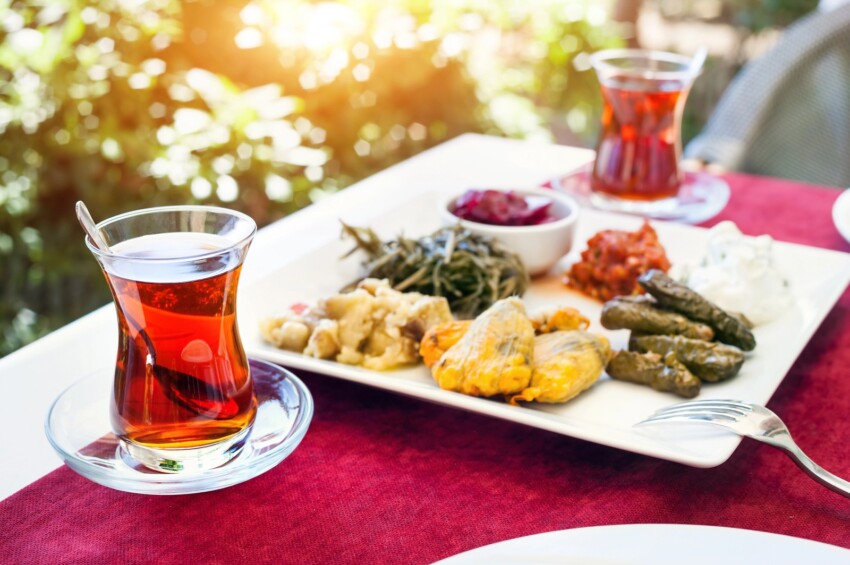
Meze are one of the most authentic expressions of Turkish gastronomic culture. These are selections of appetisers served in small plates for sharing, which can accompany rakı (the national spirit) or constitute a complete meal.
Ordering meze isn’t just a culinary act but a social ritual: you sit around the table, sample dozens of different preparations, converse for hours. Time slows down, and the meal becomes a moment of conviviality.
Haydari is thick yoghurt mixed with garlic, dill and olive oil. Cacık is similar to Greek tzatziki: yoghurt with diced cucumber, garlic and mint. Ezme is a spicy sauce of finely chopped tomatoes, chillies, onions and garlic.
Dolma are vine leaves stuffed with spiced rice, pine nuts, raisins and herbs, cooked in olive oil and served cold. Tarama is a creamy dip of fish roe mixed with breadcrumbs. Acılı ezme is a spicy red pepper purée.
There are also hummus, smoked aubergines (patlıcan salatası), roasted peppers and countless other preparations based on vegetables, pulses and yoghurt.
Turkish streets, especially those of Istanbul, are a street food lover’s paradise. Here you can taste delicious dishes whilst spending little and experiencing authentic food culture.
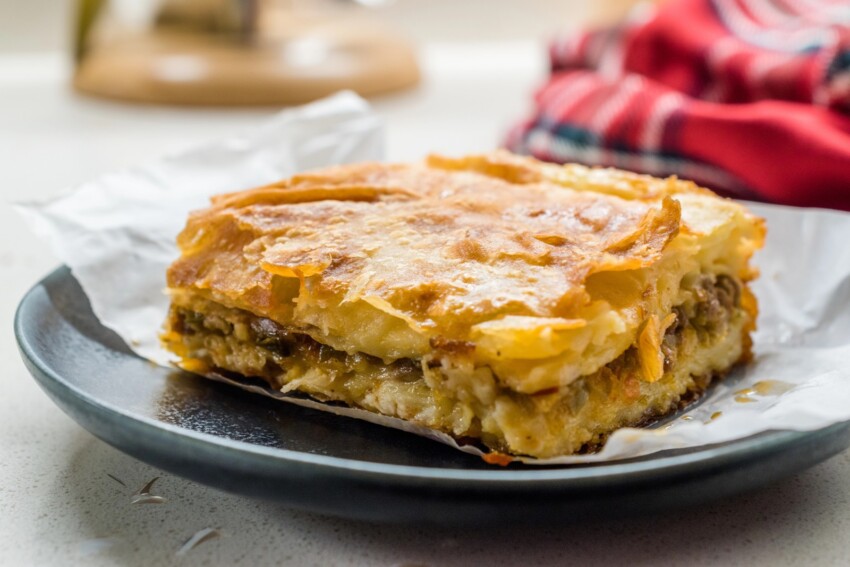
Börek is a collection of preparations based on puff pastry (yufka) filled with cheese, minced meat, spinach or potatoes. It can be rolled (sigara böreği, cigar-shaped), folded (su böreği), or baked in a tray (tepsi böreği). It’s served hot, crispy outside and soft inside.
Simit is the Turkish equivalent of a bagel: a bread ring covered with sesame seeds, crispy and slightly sweet. You’ll see it everywhere, sold from street carts. It’s perfect for breakfast or as a snack, perhaps accompanied by çay (Turkish tea).
Also called “Turkish pizza”, lahmacun is an extremely thin and crispy pastry sheet topped with minced spiced meat, tomatoes, onions and parsley. It’s rolled with fresh salad, onion and lemon inside, and eaten by hand. It’s affordable, quick and delicious.
Pide is a boat-shaped flatbread with folded edges, filled with various ingredients: sucuk (spicy sausage), pastırma (cured meat), cheese, eggs or minced meat. It’s cooked in a wood-fired oven, which gives it a distinctive smoky flavour.
Gözleme is a sort of Turkish savoury crêpe: a thin sheet filled with spinach, cheese, minced meat or potatoes, folded and cooked on a griddle. In rural areas you’ll see it being prepared by women who roll out the dough by hand.
Kumpir is a giant baked potato that is opened, mashed and mixed with butter and cheese, then filled with dozens of toppings of your choice: olives, sweetcorn, frankfurters, Russian salad, pickles and much more. It’s one of the most popular dishes in the Beyoğlu neighbourhood in Istanbul.
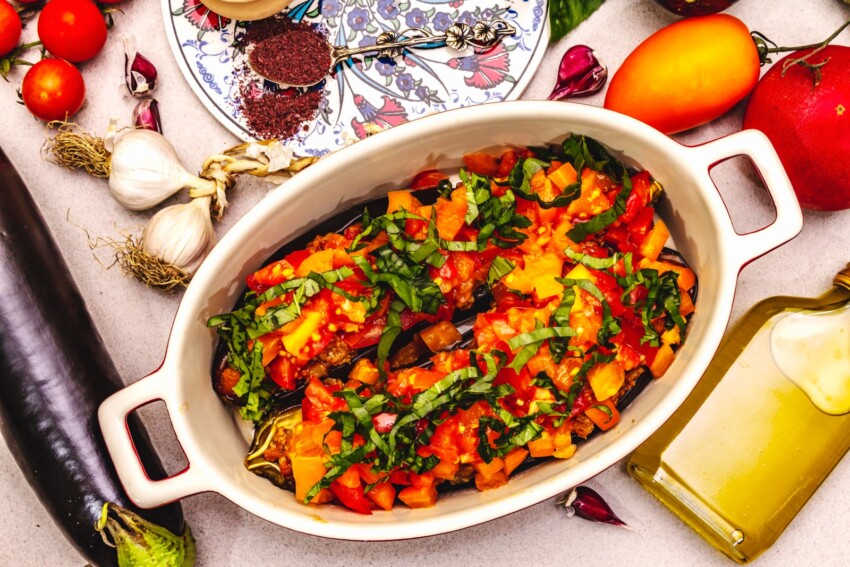
Contrary to what you might think, Turkish cuisine offers a wide selection of vegetarian dishes. Vegetables are prepared with olive oil (zeytinyağlı) and served cold or at room temperature.
When vegetables are stuffed, they are called dolma. The Turkish verb dolmak indeed means “to fill”. Vine leaves stuffed with spiced rice are called yaprak sarması (sarma means “rolled”). But you can also stuff peppers, courgettes, aubergines and tomatoes.
The name of this dish literally means “the imam fainted”, and legend has it that an imam was so moved by the deliciousness of these aubergines that he lost consciousness. The aubergines are halved, lightly fried and then stuffed with onions, garlic, tomatoes and parsley, all cooked slowly in abundant olive oil.
Fritters of grated courgettes mixed with cheese, eggs, flour and dill, fried until crispy. They’re served hot with garlic yoghurt.
Soups (çorba) hold a special place in Turkish cuisine. They are consumed primarily at breakfast or as a first course at dinner, and are considered an excellent remedy for the after-effects of an evening of rakı.
Mercimek çorbası is a red lentil soup with onion, carrots and a touch of lemon and mint. İşkembe çorbası is a tripe soup with garlic, very popular in the late hours. Tarhana çorbası is made with a fermented paste of yoghurt, tomatoes and grains, with a slightly tangy flavour.
Mantı are small Turkish ravioli filled with spiced minced meat, boiled and served with garlic yoghurt, melted butter infused with chilli and dried mint. They’re tiny (traditionally, a skilled cook should be able to make 40 from a single spoonful of dough) and require patience and skill.
The most famous version comes from Kayseri, in central Anatolia, and represents one of the most beloved dishes amongst Turks.
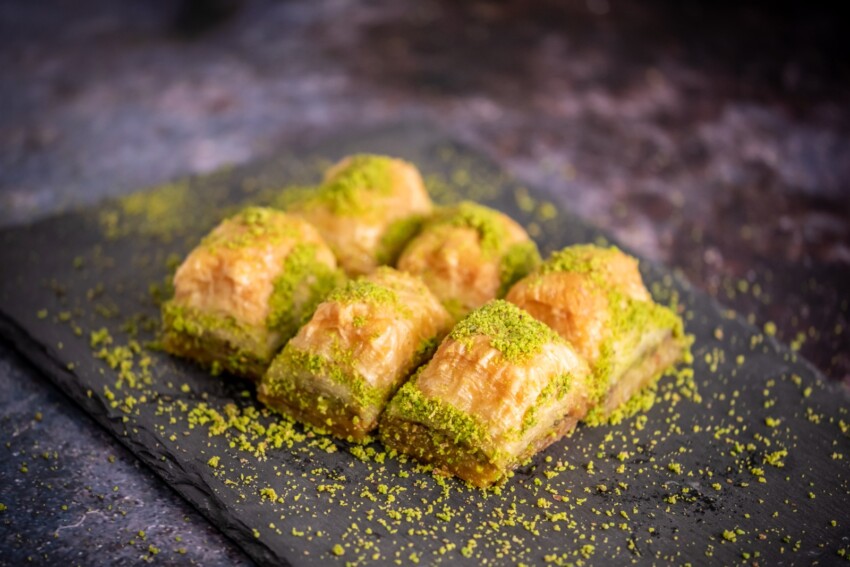
Turkish pastry deserves special mention – it’s a whole chapter unto itself, brimming with elaborate confections rooted in the imperial kitchens of the Ottoman Empire.
Baklava is undoubtedly Turkey’s most famous sweet worldwide. It consists of paper-thin layers of filo pastry (yufka) alternated with chopped pistachios or walnuts, baked until golden, then drenched in sugar syrup or honey.
The finest baklava comes from Gaziantep, where Antep pistachios – which hold protected designation of origin status – impart an incomparable flavour and colour. The city takes this confection so seriously that it even has a museum dedicated entirely to baklava.
Künefe is a spectacular dessert served piping hot: kataifi pastry (impossibly fine shredded pastry) filled with stringy white cheese, cooked in butter, then soaked in sugar syrup. It’s served warm, often garnished with crushed pistachios. When you cut into it, the cheese pulls in the most satisfying way.
Lokum, known in the West as “Turkish delight”, is a confection made from starch and sugar, infused with rose water, lemon, orange or pomegranate, often studded with pistachios, hazelnuts or walnuts. It has a soft, yielding texture and is dusted with icing sugar.
Sütlaç is a creamy rice pudding served chilled or with a golden grilled top. Kazandibi is a milk pudding with a caramelised base. Kadayıf uses the same shredded pastry as künefe but is filled with nuts. Revani is a semolina cake soaked in syrup.
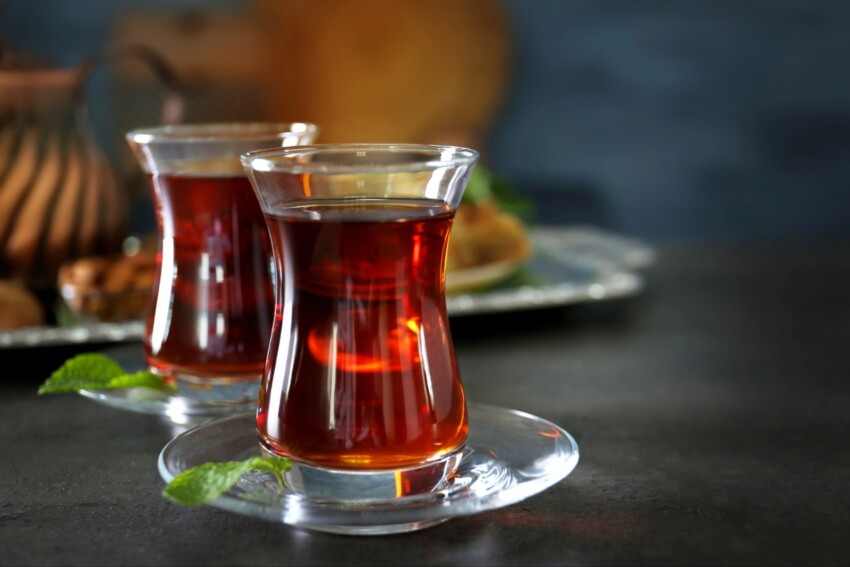
Turkey’s national drink isn’t coffee – it’s çay, a robust black tea served in distinctive tulip-shaped glasses. It’s grown along the Black Sea coast and brewed in a special two-chambered teapot (çaydanlık). Turks drink it throughout the day, and offering a guest tea is a fundamental gesture of hospitality.
Turkish coffee is prepared in a small copper pot (cezve) with finely ground coffee, water and, if desired, sugar. It’s unfiltered, so a thick sediment settles at the bottom of the cup. Traditionally, after drinking your coffee, you tip the cup upside down onto the saucer and have your fortune told from the patterns the grounds create (fal).
Ayran is a refreshing drink made from yoghurt, water and salt. It has a pleasantly tangy, salty flavour and pairs beautifully with spiced dishes like kebab. It may seem unusual at first, but trust us – it’s the ideal drink for hot summer afternoons.
Şalgam is a fermented juice made from beetroot, with a vivid purple colour and a tangy, slightly spicy taste. It’s typical of southern Turkey and is particularly popular in Adana, where it’s served alongside fiery kebabs.
Rakı is Turkey’s national spirit, distilled from grapes and flavoured with aniseed. It’s potent and traditionally always diluted with water, which turns it white and milky (hence its nickname aslan sütü, “lion’s milk”). It’s the classic accompaniment to meze during long, leisurely meals with friends and family.
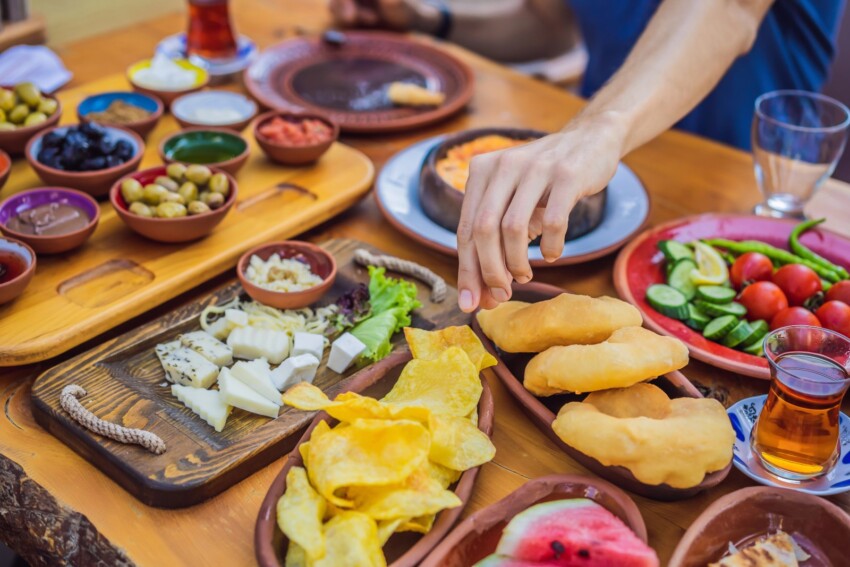
Turkish breakfast (kahvaltı) deserves special mention. It’s not a quick affair, but an experience that can stretch for hours, especially at weekends.
You’ll find fresh bread (ekmek), various cheeses (white goat’s cheese, beyaz peynir, is most common), black and green olives, sliced tomatoes and cucumbers, homemade jams, honey, butter, eggs prepared several ways (with menemen, a delicious scramble with tomatoes and peppers, being particularly popular), sucuk (spicy sausage), pastırma (cured meat), and of course unlimited çay.
To have a genuine culinary experience in Turkey, venture beyond tourist restaurants. Seek out lokanta – simple local eateries serving home-style cooking at reasonable prices. Dishes are displayed in heated cabinets and you simply point to what you’d like to try.
Don’t be daunted by street food: kebapçı (kebab specialists), simit vendors, and lahmacun stands are all perfectly safe places to eat excellent food for very little money.
In Istanbul, explore Beyoğlu for meyhane (taverns serving meze and rakı), Eminönü for the most authentic street food, and Karaköy for seafood restaurants. Don’t miss the markets, such as the Egyptian Bazaar, for sourcing spices, cheeses and sweets.
Turkish cuisine is far more than a collection of recipes: it’s hospitality, sharing and conviviality. When a Turk invites you to eat, expect to spend hours at the table, savouring dish after dish, in a warm atmosphere where food is simply the excuse for being together. As they say in Turkey: Afiyet olsun – bon appétit!
 Hotel
Hotel  Budget accommodations
  Apartments
  Family Hotel
  Luxury Hotel