Beach holidays in Istanbul: the beaches nearby
Here are the ten most beautiful beaches around Istanbul where you can spend days of pure relaxation in the sun and swim in refreshing waters!
Read more
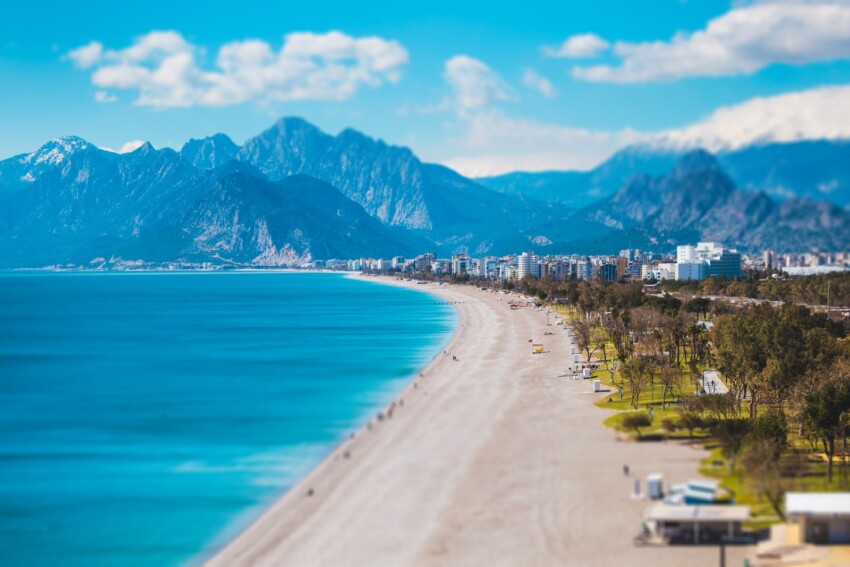
Turkish coastal beaches stretch along over 8,000 kilometres of shoreline divided between the Aegean Sea and the Mediterranean, with a variety of landscapes that are difficult to match elsewhere in the Mediterranean basin. Turquoise waters, limestone coves, fine sandy beaches and seabeds rich in submerged history make this country one of Europe’s most complete seaside destinations.
The Turkish coast is not a uniform landscape: it changes character every hundred kilometres or so, moving from the expansive sandy shores of the Antalya Riviera — ideal for all-inclusive resorts — to the quiet bays of the Lycian coast, where the remains of ancient cities emerge among vegetation or break the surface of shallow waters. Each region has its own style, its own rhythm and its ideal type of visitor.
Historical heritage, moreover, is an integral part of the Turkish seaside experience. Sites such as Ephesus, Patara and Termessos are located just a few kilometres from the sea and can be visited comfortably in half a day. In this guide you’ll find an overview of Turkey’s main beach destinations, from the most celebrated spots on the Turkish Riviera to the wild coves of the southern Aegean.
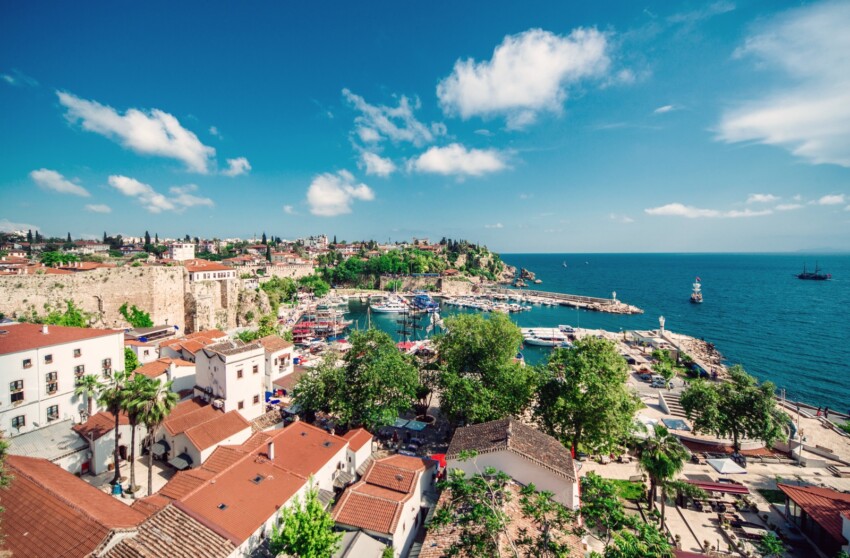
Antalya is the undisputed capital of Turkish beach tourism, with a coastal province stretching for over 630 kilometres along the Mediterranean. The shoreline is varied: the Konyaaltı Beach, with grey-blue pebbles, is the quintessential urban beach, with snow-capped Taurus mountains in the background that make it scenically unique. To the east, Lara Beach offers 12 kilometres of fine, golden sand backed by a long line of resorts. Both are well equipped with cabins, sun lounger hire and refreshment stands, and are easily reached from the city by public transport.
The Antalya area also includes Belek, a purpose-built luxury tourism zone some 40 kilometres from the city: resorts with direct beach access, private beaches and golf courses designed by international architects. Nearby you’ll find the sites of Perge and Aspendos, the latter featuring a second-century AD Roman theatre that is among the best preserved in the world and still hosts concerts and summer performances. Water temperatures reach 27–28°C between July and September, making it the warmest area of the Turkish coast.
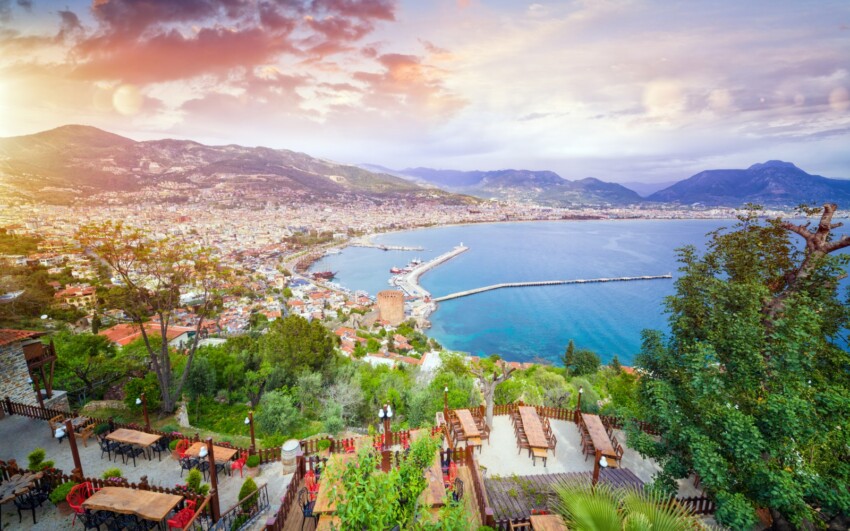
Alanya, 135 kilometres east of Antalya, is one of the most popular beach destinations on the Turkish Riviera. Its main beach is the celebrated Cleopatra Beach: 2.5 kilometres of golden sand with a particularly fine texture, emerald-green waters and the silhouette of a thirteenth-century Seljuk castle perched on a rocky outcrop that divides the city into two distinct bays. Legend has it that Mark Antony had this sand transported from Egypt for Cleopatra, hence the name. The seafront is lively, with water activities, boat trips and fish restaurants open late into the night.
On the opposite side of the promontory lie Damlataş Beach and its namesake caves, which have a humid microclimate with high carbon dioxide concentration that traditionally attracts those with asthma. Some 30 kilometres to the east opens the Dim Çayı Bay, where fresh water from the river mingles with the sea in a lush, almost tropical landscape, less known to mainstream tourist circuits. The Seljuk castle, reached by cable car from the centre, offers one of the most spectacular panoramas of the entire Turkish Mediterranean coast.
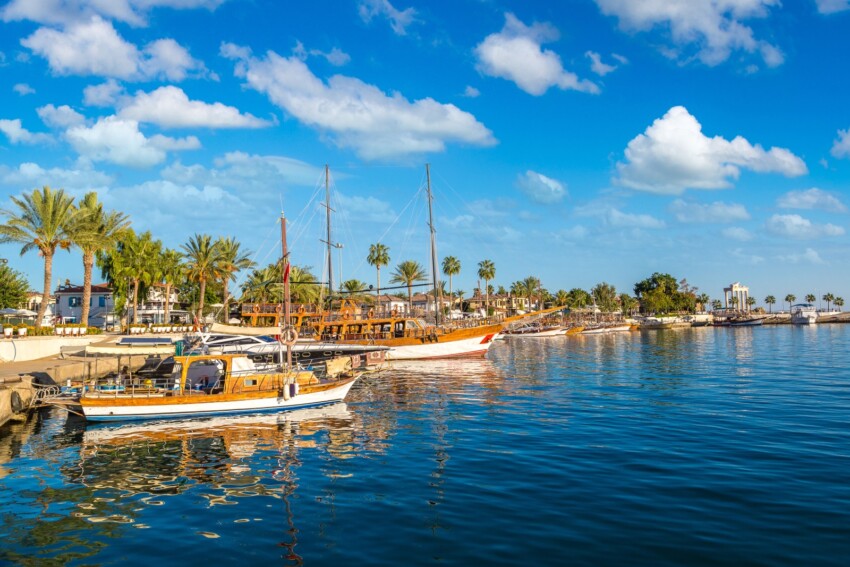
Side is one of Turkey’s most distinctive beach destinations: an ancient Hellenistic city — the name means “pomegranate” in the local pre-Roman language — nestled between two sandy beaches that converge on a small promontory. The second-century AD Roman theatre, with its 15,000 seats, rises just a few metres from the eastern shore, and walking among the columns of the Temple of Apollo at sunset gives you one of the most evocative views of the entire Turkish coast. The archaeological site can be visited in the evening, when it is illuminated, without interfering with your daytime beach experience.
The two beaches flanking Side’s promontory have different characteristics: the western one is wider and sandier, with shallow waters ideal for families; the eastern one stretches for several kilometres towards Kumköy and Titreyengöl, where the area’s largest resorts are concentrated. Side works perfectly as a base for visiting Aspendos (20 km), Köprülü National Park — with its canyon and still-walkable Roman bridge — and the ancient ruins of Seleukeia, an hour’s drive inland into the mountains.
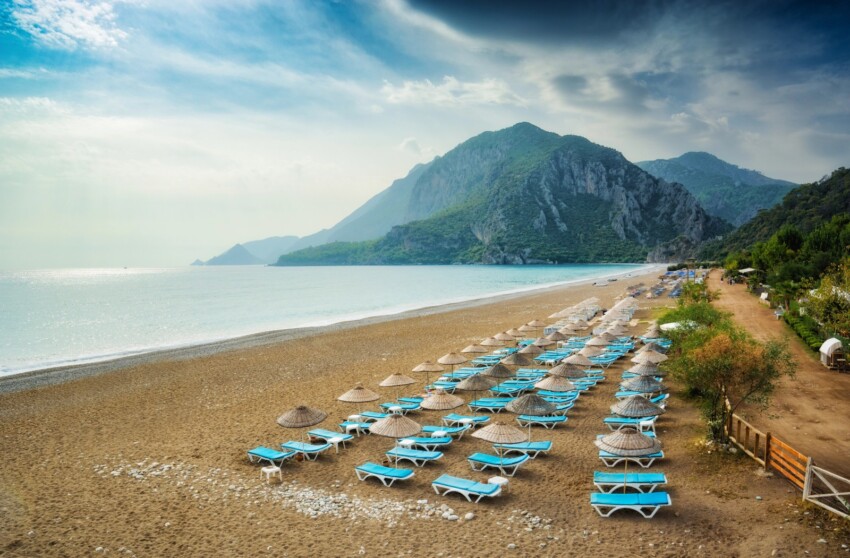
Kemer is located 43 kilometres west of Antalya, nestled between the pine forests of Beydağları Nature Park and exceptionally clear sea. It’s one of the principal bases for high-end all-inclusive resorts on the Turkish Riviera: facilities have private beaches with direct access, and the water colours — from intense turquoise to deep blue — are among the most vivid on the entire Anatolian coast, thanks to depths that fall away steeply because of mountains that reach almost to the shore. The presence of the pine forest gives the air a distinctive fragrance that lingers throughout the summer season.
Around Kemer you’ll find some of the region’s most beautiful coves. Phaselis, the site of an ancient Hellenistic port city immersed in pine forest, has three beaches separated by ruins that extend to the waterline — one of the places where history and sea overlap most extraordinarily. Just further north, Göynük bay and its namesake canyon offer water-based excursions with rope descents down rock faces. The area is also appreciated by divers for its several accessible wrecks.
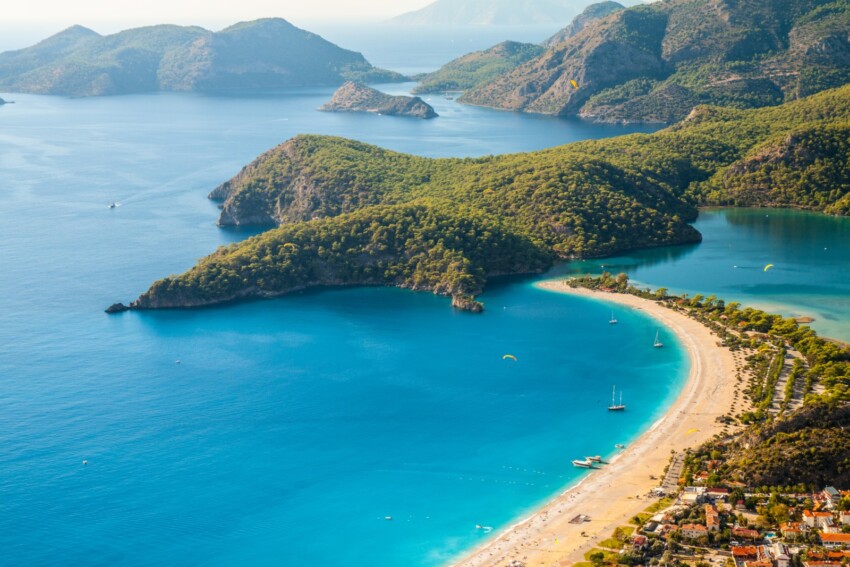
The Blue Lagoon of Ölüdeniz, within a protected nature park about 15 kilometres from Fethiye, is probably the most photographed beach in all of Turkey. A mirror of turquoise water of extraordinary intensity, protected by a tongue of white sand that separates the lagoon from the open sea: the sandy, very shallow seabed makes it safe for small children, while the natural protection ensures the waters are always calm. The Blue Flag has been confirmed for decades. Entrance to the lagoon is charged as it’s within a protected area, whilst the outer beach is free.
Ölüdeniz is also the main launching point for tandem paragliding from Mount Babadağ (1,969 m), with landing directly on the beach: one of Europe’s most scenic flights. The Valley of Butterflies (Kelebekler Vadisi), accessible only by sea via water taxis from the harbour, is a valley nestled between high limestone walls, without roads or permanent structures, home to hundreds of butterfly species during the summer season. Fethiye is also the main embarkation point for Blue Voyages — gulet cruises along the Turquoise Coast — towards Göcek, Marmaris and Bodrum.
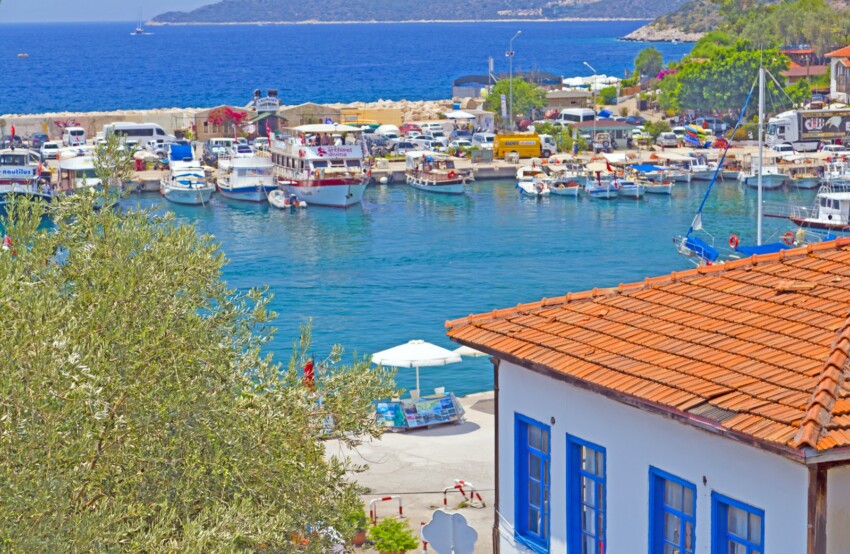
Kaş is a fishing village turned international diving centre: the seabeds around the peninsula host Roman amphorae scattered on the bottom, submerged caves and a vertical wall that plunges to 40 metres, frequented by diving instructors from all over Europe. The water is among the clearest in Turkey, with visibility often exceeding 25 metres. Less than a kilometre from shore, the Greek island of Meis (Kastellorizo) is reachable by ferry in just a few minutes, with an atmosphere of a timeless white and blue Greek village.
Some 30 kilometres to the east, Kalkan is more exclusive and intimate: a picturesque Ottoman village perched on a hillside with white houses, cobbled lanes and terraces with sea views. The coast is predominantly rocky, but the private piers of hotels and natural rock pools compensate for the lack of large sandy beaches. Boat excursions lead to Patara Beach, 18 kilometres of sand protected as a nature reserve for loggerhead Caretta caretta turtles, reachable in about 30 minutes by sea or 45 minutes by road.
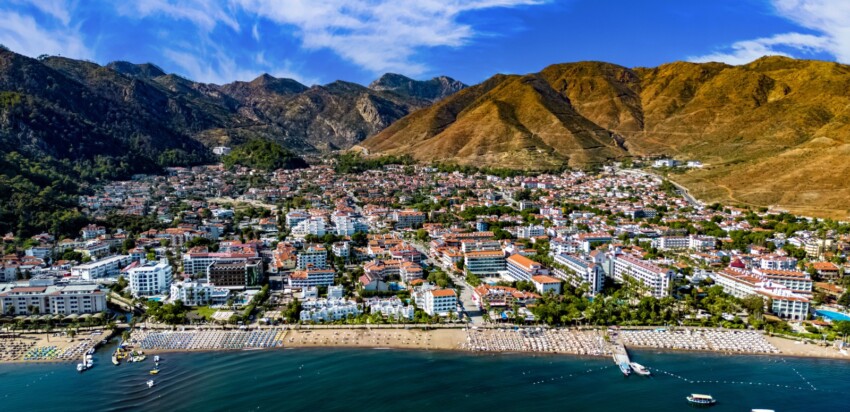
The bay of Marmaris is one of the most imposing natural settings on the Turkish coast: an amphitheatre of pine-covered hills sloping down to deep sea, with a narrow entrance that shields the waters from open winds. The marina is among the largest in the eastern Mediterranean, capable of hosting hundreds of vessels, and the seafront of the town is extremely lively with restaurants, bazaars and nightlife. İçmeler Beach, 8 kilometres from the centre, is the quietest in the area, with sand and shallow waters suitable for families and always calm conditions.
The Hisarönü Gulf, some thirty kilometres to the west, is considered one of the most beautiful panoramas for gulet sailing in all of Turkey: dozens of coves accessible only by sea remain almost empty even in peak summer, despite their proximity to coastal accommodation. The Bozburun peninsula is even more authentic: small fishing villages, olive groves reaching to the shore and an active traditional gulet boat-building heritage. To explore the surroundings independently, car hire is the most convenient option.
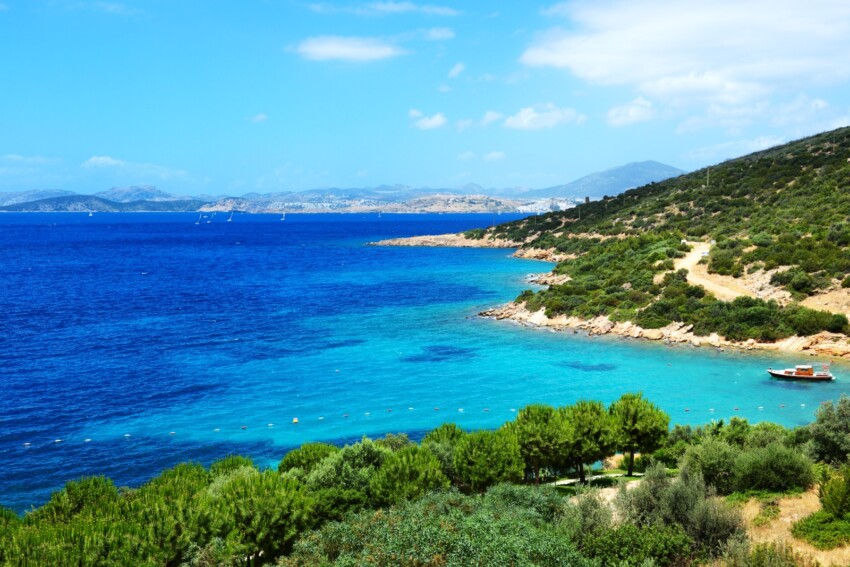
The Bodrum peninsula is Turkey’s most cosmopolitan beach destination, attracting artists, intellectuals and international tourists since the 1960s. The silhouette of St Peter’s Castle — a medieval fortress of the Knights of Rhodes, now home to the Museum of Underwater Archaeology — dominates the white harbour with a landscape reminiscent of the Greek Cyclades rather than the Anatolian coast. The beaches vary in character from cove to cove: Bitez is sandy and sheltered, ideal for windsurfing and families; Gümüşlük preserves the atmosphere of a fishing village, with the remains of ancient Myndos breaking the surface of shallow waters.
The northern part of the peninsula — Türkbükü and Yalıkavak — is the most exclusive: elegant beach clubs, luxury yachts and upmarket seafront restaurants. At Yalıkavak stands one of Turkey’s most modern luxury marinas, opened in 2012, which has transformed the small village into an international destination. Bodrum’s harbour is also the main embarkation point for gulet cruises towards Marmaris along the classic Turquoise Coast route, which winds through coves, historical sites and characteristic anchorages over five to seven days.
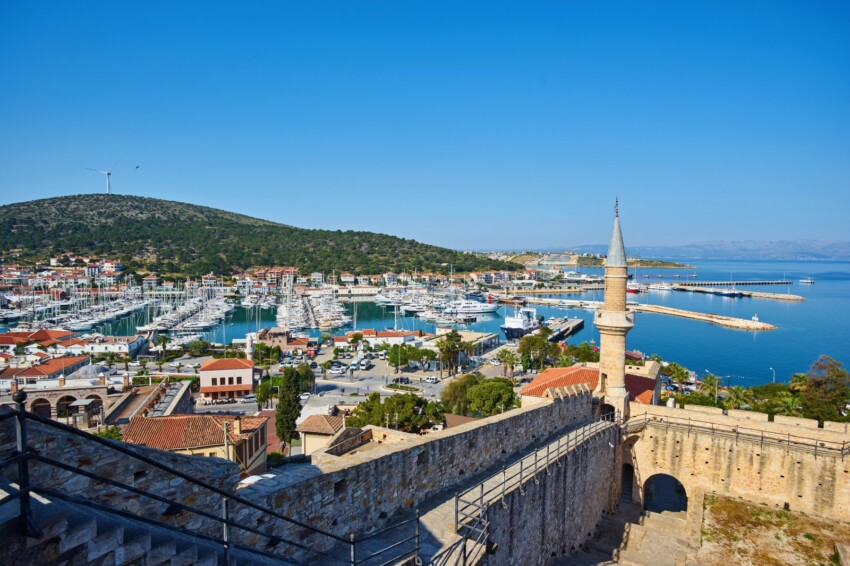
The Çeşme peninsula, 80 kilometres west of Izmir, is Turkey’s capital for windsurfing and kitesurfing. The Alaçatı beaches, on the side exposed to Aegean winds, host international competitions every summer: conditions — north-westerly winds of 20–25 knots in the afternoon, flat water in the natural lagoon — are considered among the best in the Mediterranean for these sports. The Aegean waters are cooler than the Mediterranean (22–25°C in summer) but exceptionally clear, with visibility of 15–20 metres even at the surface.
Alaçatı is also a small architectural gem: a village of grey stone houses with arched windows, cobbled lanes and a notable concentration of boutique hotels and Aegean cuisine restaurants with flower-filled terraces. İlıca Beach, the sandiest and most popular on the peninsula, has an extremely shallow seabed that extends for many dozens of metres, making it safe for children. The Çeşme Castle, built by the Genoese in the fourteenth century and later expanded by Süleyman the Magnificent, hosts concerts and summer festivals and can be visited comfortably in a morning.
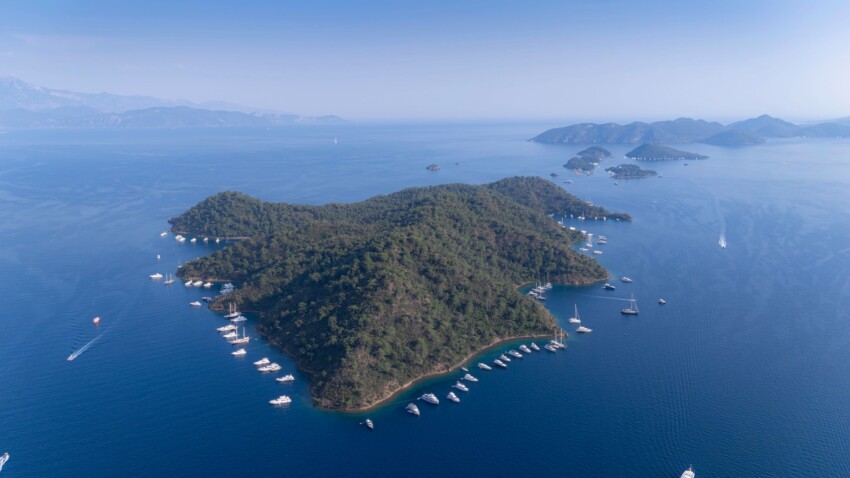
Göcek is a small port settlement on Fethiye Gulf that has become, over the past two decades, one of the main hubs for offshore sailing in the eastern Mediterranean. The village itself is tiny — walkable in twenty minutes — but its six marinas host fleets of gulets and international sailing boats that depart each morning to explore the 12 islands of the gulf. Each island has its own cove with distinct characteristics: some with sandy beaches, others with flat sunny rocks, some with Lycian rock tombs emerging from Mediterranean scrub directly onto the sea.
On Sedir island, in the gulf, you’ll find the more authentic so-called Cleopatra Beach: sand of unusual consistency, composed of rounded aragonite granules not found anywhere else in the Mediterranean, that doesn’t stick to the skin like ordinary sand. Access is regulated and charged to preserve the site. The gulf is protected from winds for almost the entire day, making its waters ideal for snorkelling, kayaking and diving. Göcek is reachable by road from Fethiye in approximately 20 minutes.
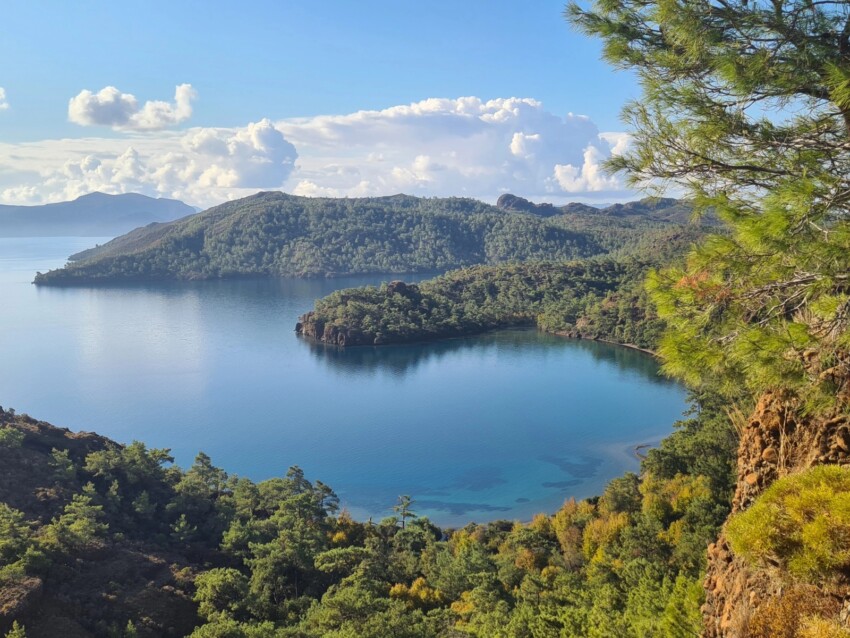
The Datça peninsula is the most pristine corner of the Turkish Aegean coast: a strip of land 70 kilometres long with waters on both sides — the Aegean Sea to the north and the Mediterranean to the south — and a succession of white coves that remain almost empty even in peak summer. Palamutbükü Beach, with clear sand and pines reaching to the shore, is considered among Turkey’s finest. At the peninsula’s tip, the site of ancient Knidos preserves a Hellenistic theatre and two separate harbours still recognisable, with the Greek islands of Kos and Rhodes visible to the naked eye on clear days.
The peninsula is reachable by road from Marmaris in approximately 2 hours on a winding scenic route, or by sea with seasonal ferries. Slowness is part of the experience: Datça and its hinterland produce almonds, olives and capers among Turkey’s finest, and harbour restaurants serve fish and meze of quality at prices still reasonable compared to major destinations. The constant wind makes it popular with sailors: the Bozburun area, an hour’s drive east along the coast, is even more authentic, with small shipyards where traditional gulets are built using the same methods as fifty years ago.
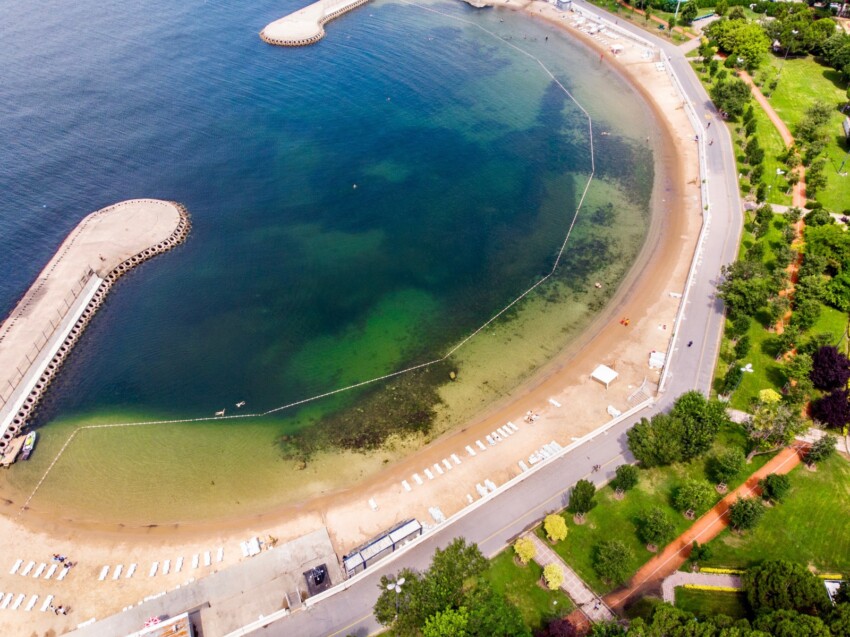
Visitors staying in Istanbul have surprisingly good access to a decent number of beaches within easy day-trip distance. The most convenient stretch along the European shore of the Sea of Marmara12, with Florya and Yeşilköy just 20-30 minutes from the city centre by suburban train. These are well-equipped beaches with lidos, perfect for a half-day’s seaside break without venturing far from the city. Water quality in this area has improved substantially over recent years thanks to purification schemes introduced by Istanbul’s municipal authorities.
The finest options, however, lie along the Bosphorus and around the Princes’ Islands (Adalar): an archipelago of nine islands roughly 20 kilometres from the city, reached by ferry from Kabataş pier in 35-90 minutes, offering peaceful beaches with cleaner water than the urban coastline. Büyükada13, the largest island, has two organised lidos on the southern side frequented mainly by Istanbul residents at weekends. For independent exploration of these areas, the guide to beaches around Istanbul provides practical advice on reaching various spots by public transport.
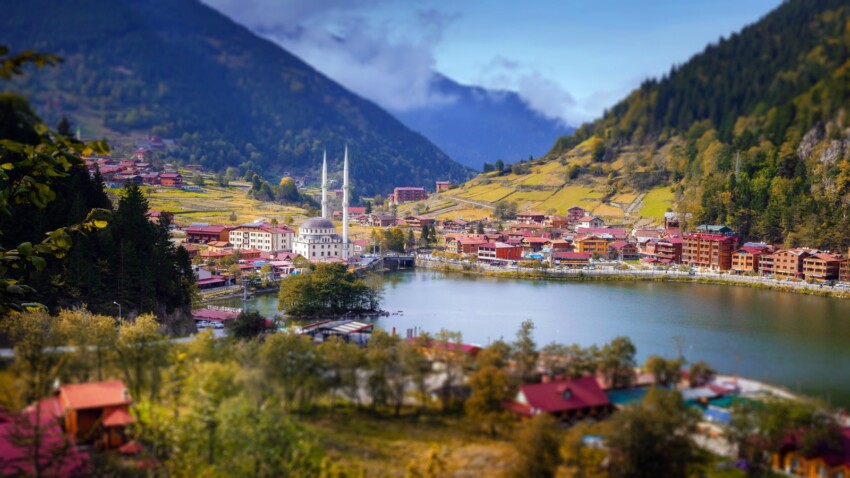
The Turkish Black Sea coast offers a completely different seaside experience from the Aegean and Mediterranean: cooler waters (18-22°C in summer), dark sandy beaches that are often rather wild, cliffs clothed in green forest down to the shoreline and softer, more changeable light. The main beach resorts cluster between Amasra14 — a medieval village perched on a promontory with two sheltered beaches — and Sinope15, considered the loveliest town on the entire coast with its historic centre surrounded by Byzantine walls overlooking the water. The coast attracts less international tourism but is hugely popular with Turkish holiday-makers, particularly during July and August.
The hinterland of the Black Sea region — known as Pontus in antiquity — is blanketed with dense beech and chestnut forests that descend to within a few kilometres of the shore, creating a landscape unique in Turkey. Trebizond16 is the coast’s largest and most culturally significant centre: 45 minutes from the town lies the Sumela Monastery, built on a sheer rock face at 1,200 metres elevation, one of Turkey’s most breathtaking sites. The beach season is shorter than on the Turkish Riviera, with the best conditions concentrated between June and September.
In the following map you can see the location of the main places of interest mentioned in this article.
Hiring a car is the most flexible option for combining different beaches and historic sites, particularly in less accessible areas like the Datça Peninsula or the Lycian coast. If you want to extend your trip with inland stops, Pamukkale is roughly 3 hours from Marmaris, whilst Cappadocia is reachable by domestic flight from Antalya in under an hour. If you’re adding a few days in the city, the guide to what to see in Istanbul covers all the details you’ll need to make the most of your stay in this Bosphorus metropolis.
 Hotel
Hotel 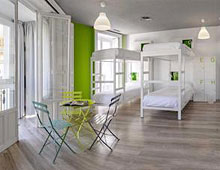 Budget accommodations
 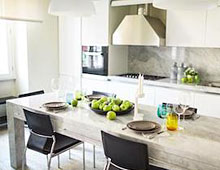 Apartments
  Family Hotel
 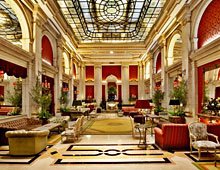 Luxury Hotel