Bestseller
Istanbul: Hodjapasha Whirling Dervishes Show & Exhibition
From 27,82 €
Buy the ticket
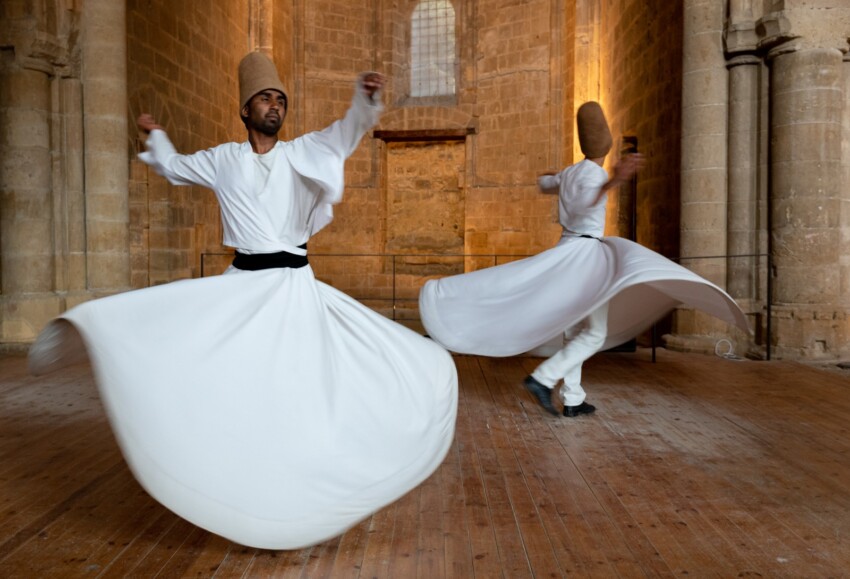
An activity we’d recommend during a visit to Istanbul is watching a whirling dervish performance, organised at various cultural centres around the city such as the Galata Mevlevi Museum. “Dervish” is a term for followers of Muslim religious brotherhoods who practised Sufism, a mystical-religious movement within Islam.
Practitioners believed they could communicate with the divine through prayer and dance. Specifically, it was the ascetic order of the Mevleviye, which originated in the thirteenth century but later spread throughout the Ottoman Empire, that trained a large number of dervish dancers whose performances have been designated as UNESCO World Heritage.
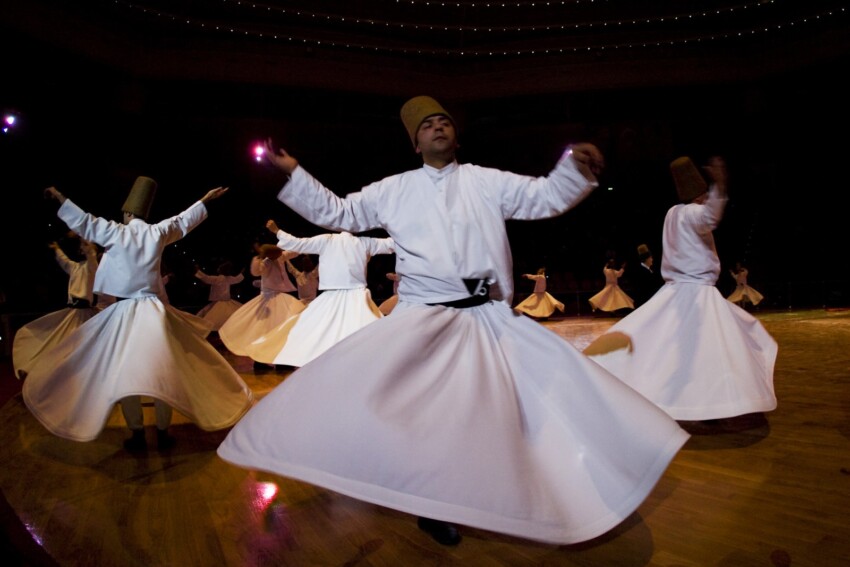
Dervish dancers must complete extensive training within mevlevi-houses (mevlevihane), where they study the Qur’an, ethics, and practise prayer, sacred music and dance. These accomplished artists perform whirling dances according to strict ritual that also includes fasting for several hours.
During a dervish performance (whose dances are also known as Sema), you’ll see these dancers spin on themselves whilst standing on the tips of the first two toes of their left foot, executing a semi-circular motion in two counts. Their arms are held open with one hand turned upwards to receive the word of God, whilst the other faces downwards to transmit it to the faithful.
The ceremony features a highly theatrical programme that includes a distinctive musical repertoire, complete with a singer, a flute player and a cymbal player.
Demand to attend these performances is extremely high, so it’s best to purchase tickets in advance online to guarantee a seat.
Dervishes were banned in 1924 when Turkey ordered the dissolution of all Sufi brotherhoods, but the Mevleviye managed to survive in small villages and continue their traditions. However, in 1954 the Turkish government granted the Mevlevi order special permission to perform their centuries-old ritual dance practices for tourism purposes.
City Card allow you to save on public transport and / or on the entrances to the main tourist attractions.

 Hotel
Hotel  Budget accommodations
  Apartments
  Family Hotel
  Luxury Hotel