Bestseller
Istanbul: Acemoglu Historical Turkish Bath w/Private Options
From 36,00 €
Buy the ticket
Over a hundred historic hammams still exist in Istanbul today, many of which have been operating continuously for four or five centuries. This is not a tourist attraction built after the fact, but an institution that shaped daily life in the Ottoman city for centuries: the public bath was a place of ritual purification, hygiene, and the weekly social ritual before Friday prayers. Some of the greatest architects of the Ottoman Empire — beginning with Mimar Sinan, architect of the Mosque of Süleyman and the Blue Mosque — devoted part of their genius to designing these thermal spaces.
Entering a hammam in Istanbul today means crossing the same threshold that was crossed by court officials, merchants from the Grand Bazaar and Janissary soldiers. The heat, the steam, the light filtering through star-shaped domes and the dull sound of water gliding over marble remain unchanged. In this guide you’ll find everything you need to choose the hammam that best suits your expectations, understand how the ritual works, what to spend and how to behave so you don’t feel out of place.
Istanbul has hammams of every kind: 16th-century architectural monuments in the heart of the historic city, more recent facilities in the Beyoğlu district, neighbourhood baths still frequented mainly by residents. Your choice depends on what you’re looking for: history and architecture, quality of service, authenticity, location relative to other places you’ll visit. Here are the most important ones, with the characteristics that distinguish them.
Built in 1584 to designs by Mimar Sinan at the behest of Nurbanu Sultan, mother of Sultan Murad III, the Çemberlitaş Hamamı is probably the most visited hammam in Istanbul and one of the best preserved in all of Turkey. It’s located in the heart of the historic city, just steps away from the Column of Constantine (the Çemberlitaş that gives the bath its name) and roughly 600 metres from the Grand Bazaar. The structure is double — male and female sections separated, as per Ottoman tradition — with two identical main domes that mirror each other on the roofline.
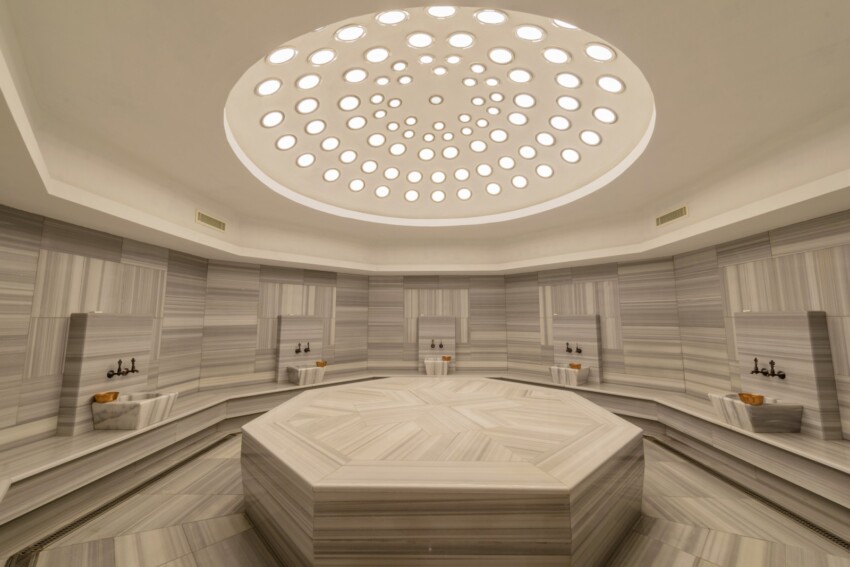
The interior of the main male hall is of rare beauty: an octagonal dome approximately 12 metres in diameter with star-shaped windows that filter sunlight into beams moving slowly across white marble throughout the day. At the centre sits the traditional göbek taşı, the “navel stone”, the large heated marble slab on which one reclines during the sweating phase. In 2008, Çemberlitaş was included in the Sunday Times’ list of 1,000 places to see before you die. Online booking is recommended during peak season.
Commissioned by Suleiman the Magnificent for his consort Hürrem Sultan (the celebrated Roxelana) and completed by Mimar Sinan in 1556, the Hürrem Sultan Hamamı enjoys an unparalleled location: positioned exactly halfway between Hagia Sophia and the Blue Mosque, on the site of the ancient Roman Hippodrome. Long abandoned as a storage facility and later as a covered bazaar, it underwent a six-year restoration and reopened in 2011 as a luxury hammam, with original marble recovered and domes restored to their 16th-century appearance.
It is Istanbul’s architecturally purest hammam: symmetrical, with two identically constructed sections built as mirror images — a rarity in Ottoman building, dictated by the need to serve simultaneously the visitors to the mosque and those of the Hippodrome. Prices are the highest in the city, but the experience combines absolute historical authenticity with modern service standards. Massage therapists are selected and trained, the original 16th-century marble is still in place. Advance online booking is practically essential.
The Kılıç Ali Paşa Hamamı is located in the Tophane district, between Karaköy and Beşiktaş, a short distance from the Bosphorus waterfront. Built by Mimar Sinan in 1583 for Admiral Kılıç Ali Paşa — Italian by origin, born in Le Castella in Calabria as Giovanni Dionigi Galeni, who became the Ottoman fleet’s most trusted commander — it remained closed for decades and was reopened in 2012 following a scrupulous five-year restoration.
It is considered by experts in Ottoman architecture to be Istanbul’s most refined hammam in terms of interior spaces: the central dome is among the highest ever built for a public bath, and the system of small secondary domes surrounding it creates an extraordinary visual effect. The service emphasises quality over quantity of clients: the atmosphere is intimate, staff are few and well-trained, and the time dedicated to each visitor is considerably greater than in the busier baths of the historic centre. Its location in the Tophane district, undergoing artistic and cultural transformation, makes it easily combinable with a visit to the Beyoğlu area.
The Çağaloğlu Hamamı, built in 1741 by order of Sultan Mahmud I with proceeds from the silk trade, is the last great hammam constructed during the classical Ottoman period and one of the most famous in the world. In 1953, Life Magazine included it in the list of “1,000 experiences to have in a lifetime”, and since then its name has become synonymous with the Istanbul hammam par excellence in international tourism. It stands fewer than 200 metres from Topkapi Palace, in the heart of the historic city.
The interior is grand: exceptionally high ceilings, marble columns, a sequence of rooms ranging from changing rooms with private alcoves (the camekân) to hot rooms, leading to the heart of the bath with its central göbek taşı. Among its historic guests are Franz Liszt, Kaiser Wilhelm II, Florence Nightingale and Tony Curtis. The Çağaloğlu has been run by the same family for four generations, and this continuity is evident in the atmosphere: less polished than recently refurbished baths, more authentic, with staff accustomed to working with international visitors.
Built by Mimar Sinan in 1557 as part of the Mosque of Süleyman complex, the Süleymaniye Hamamı long remained one of the city’s most authentic, frequented primarily by the surrounding neighbourhood. After a long period of neglect it was restored and reopened to the public as a tourist hammam, whilst maintaining a quieter, less crowded atmosphere compared to its competitors in the centre. The structure is double, with the two sections positioned side-by-side along the axis of the religious complex.
The most interesting feature of Süleymaniye compared to other major historic hammams is its integrated position within Sinan’s architectural complex: exiting the bath, you find yourself directly in the mosque courtyard, with the possibility of immediately visiting one of the greatest masterpieces of Ottoman architecture. The hammam is often less crowded than Çemberlitaş or Çağaloğlu — a noticeable difference during peak season — and prices are slightly more moderate. Recommended for those wishing to include a hammam visit in an itinerary that also covers Süleymaniye Hill and Istanbul’s university district.
The Galatasaray Hamamı, built in 1481 at the behest of Sultan Bayezid II, is Istanbul’s oldest hammam still in operation and remained for centuries the reference bath for the Beyoğlu district, the European area of the city across the Golden Horn. It stands on İstiklal Caddesi, the major pedestrian avenue of the modern centre, just steps from the famous school and the Italian consulate. It is the most frequented hammam by Beyoğlu residents and less oriented towards mass tourism than those in the historic city.
The atmosphere is authentic and slightly more informal: the clientele mixes foreign visitors with neighbourhood residents, the mood is lively, prices are among the most affordable in the city for a quality bath. The male section is the largest and best preserved; the female section was renovated more recently. Galatasaray is the ideal choice for those staying in Beyoğlu who want a hammam experience without travelling to the historic city, perhaps the evening before dining in the Karaköy or Çihangir district.
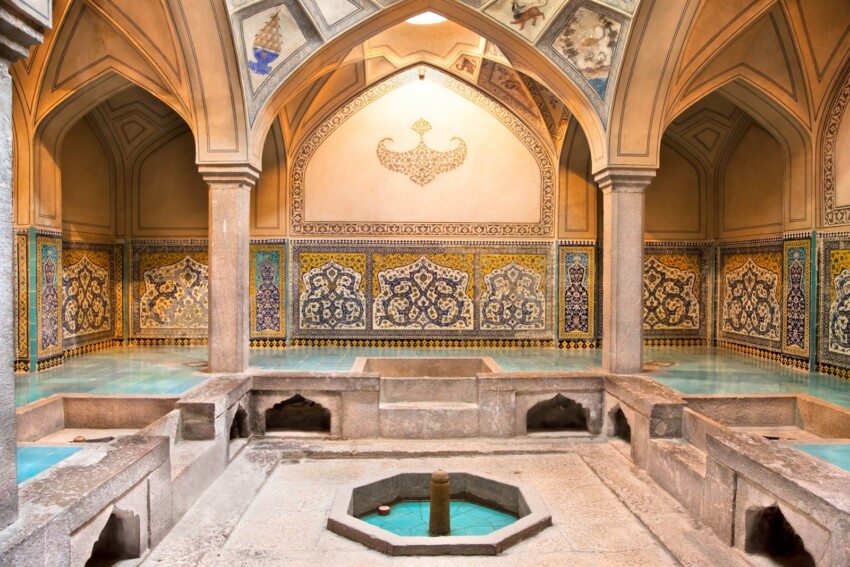
The Acemoğlu Hamamı, built in the 15th century at the behest of Mehmed II the Conqueror, has a unique military origin among Istanbul’s historic baths: it was built for the Acemi Oğlanlar, young recruits in training for the Janissary corps, as part of the Ottoman system of discipline and training. It stands in the heart of the historic peninsula and retains the dome architecture and stonework typical of the period. In 1826, with the abolition of the Janissary corps by Sultan Mahmud II, the bath passed into civil use: it was purchased by the father of the celebrated Ottoman composer İsmail Dede Efendi and subsequently donated to the Yenikapı Mevlevihane, Istanbul’s Mevlevi dervish lodge.
Today the Acemoğlu offers a more multifaceted experience compared to traditional historic baths, with options including public bathing, semi-private and private sessions, a covered pool, sauna and steam bath. Packages range from facility access alone to 160-minute VIP treatments. It is one of the few historic Istanbul structures combining 15th-century Ottoman architecture with facilities typical of a modern wellness centre, making it suitable also for those seeking something more comprehensive than the classic Turkish bath.
In the following map you can see the location of the main places of interest mentioned in this article.
The institution of the Islamic public bath — the hammam, from the Arabic term hamma meaning “to heat” — arrived in Anatolia and Thrace in the wake of Arab and then Seljuk conquests, grafting an established tradition onto pre-existing Roman and Byzantine thermal baths. With the Ottoman conquest of Constantinople in 1453, Mehmed II immediately set about constructing new hammams in the city: he ordered at least thirteen in the first decades of his reign, recognising in the public bath a tool for Islamicisation, public hygiene and social cohesion.
The economic mechanism was ingenious: hammams were built as vakıf, charitable endowments, whose revenues financed nearby mosques, madrasas and hospitals. For this reason every major Ottoman religious complex was almost always accompanied by an associated hammam: the Süleymaniye, the Beyazıt mosque, the Eyüp Sultan complex. In the 16th century, at the height of the Ottoman Empire, Istanbul boasted over 150 hammams in operation — one for every few hundred inhabitants — and Mimar Sinan personally designed at least a dozen, bringing Ottoman thermal architecture to a level of refinement never surpassed.
The social function was equally central. The hammam was one of the few public spaces where women could meet, converse and socialise outside the domestic sphere: the female sections were venues for betrothals, pre-nuptial ceremonies, family gatherings. For men it was the place of the barber, the masseur, the confidant. In the 19th century, with the spread of private baths in bourgeois homes, the hygienic role of hammams began to decline, but the ritual and social function persisted long in working-class neighbourhoods. Today approximately 60 hammams remain active in Istanbul, between those open to the general public and those frequented almost exclusively by local residents.
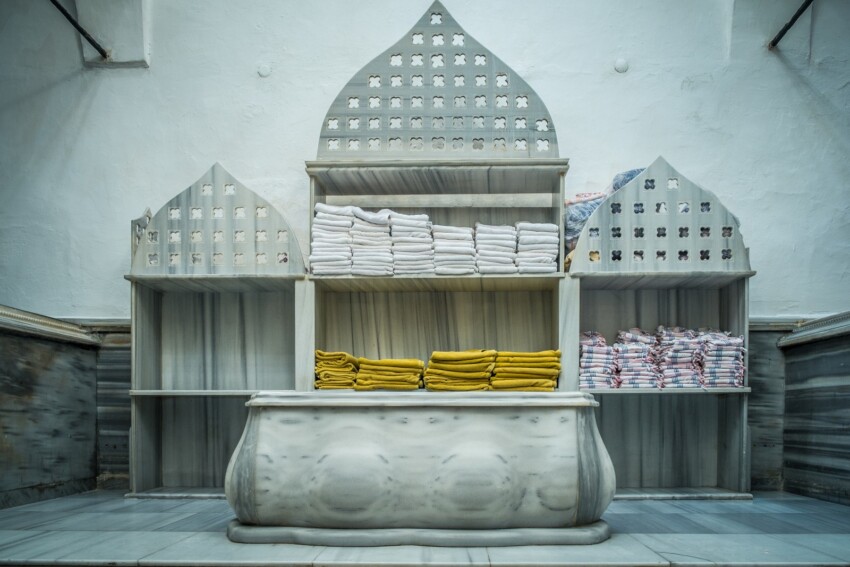
Stepping into a hammam without knowing what to expect can feel daunting: the ritual follows a precise sequence, codified over centuries, that’s worth understanding beforehand. At the entrance you’re welcomed into the camekân, the changing room: a space with private alcoves where you undress, wrap your hips in the traditional striped towel called a peştemal (provided by the hammam) and store your valuables in locked cabinets.
From the changing room you move into the soğukluk, the warm anteroom, and then into the hararet, the hot chamber: the main room with its dome, steam and humid warmth hovering around 40–45°C. You enter and recline on the central göbek taşı (marble platform) for the sweating phase, which typically lasts 15–20 minutes. This is the most passive stage: you surrender to the heat, breathe slowly and watch the light filtering down through the star-shaped openings in the dome.
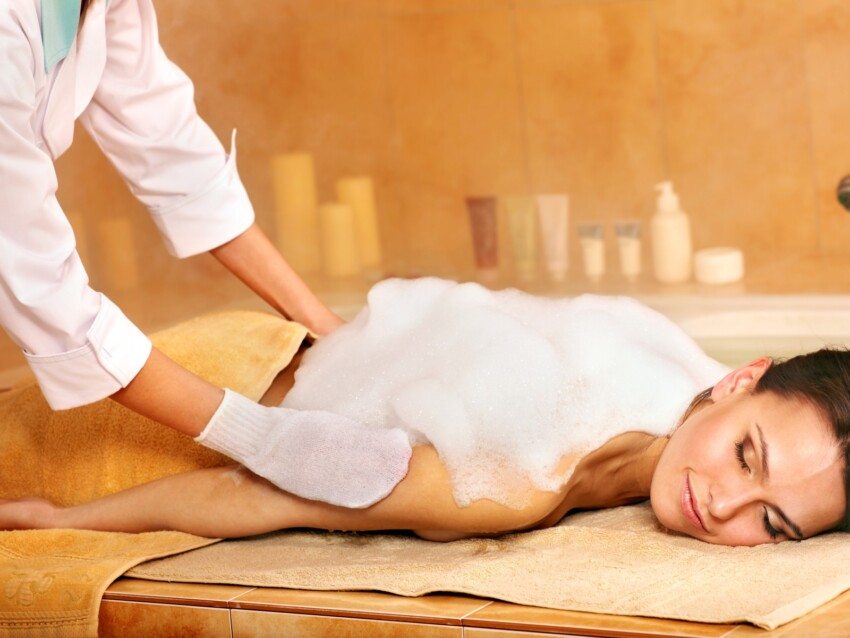
Next comes the kese, exfoliation with a coarse mitt (also called kese): the attendant vigorously scrubs your skin, removing dead layers and leaving it incredibly soft. This is the most distinctive and surprising part of the experience for first-time visitors—the amount of dead skin the mitt removes always exceeds expectations. After the kese comes the köpük masajı, the soap massage: abundant lather produced from olive soap is worked over your entire body with a canvas bag, followed by massage using techniques that vary from hammam to hammam. The visit concludes with a rinse, a gradual return to normal temperature and a rest period in the camekân with tea, juice or water.
Prices vary considerably depending on which hammam you choose and the service package. Entry alone with bath access and heat exposure—without kese or massage—is the most budget-friendly option, generally between £15 and £30 at the main historic bathhouses. The complete package with kese, soap massage and towel included ranges from £35 to £75 at mid-range historic hammams, and can exceed £90 at the Hürrem Sultan Hamamı or Kılıç Ali Paşa, which also offer premium treatments with argan oil, mud masks and extended massages.
Neighbourhood bathhouses frequented mainly by locals—such as some hammams in Fatih, Balat or Üsküdar—cost considerably less, sometimes £3–7 for a full experience, but their staff aren’t accustomed to international tourism and require greater familiarity with the ritual. Online booking in advance is strongly recommended for the most famous bathhouses between May and October: Çemberlitaş, Çağaloğlu and Hürrem Sultan fill up rapidly and waiting lists during peak season can be lengthy. Payment is almost always made on site, in cash or by card depending on the hammam.
Most historic hammams open to tourists operate daily from 8:00 to 22:00 or 23:00, with no holiday closures. Neighbourhood bathhouses follow more traditional schedules, with separate sessions for men and women throughout the day. The best time to visit the busier bathhouses—Çemberlitaş and Çağaloğlu in particular—is early morning, before 10:00, or after 20:00: the midday hours between 11:00 and 17:00 coincide with peak tourism and waiting times can lengthen considerably.
A few practical pointers. Avoid eating heavily in the two hours before your visit: the heat of the hararet on a full stomach is uncomfortable. There’s no need to bring anything: towels, peştemal, soap and slippers are always provided. Those with cardiovascular problems, high blood pressure or who are pregnant should consult a doctor before entering a hammam: prolonged heat at 40–45°C is not advisable in these cases. Long hair is easier to manage tied back. Bring only minimal cash for payment and tips.
For the most famous bathhouses—Çemberlitaş, Çağaloğlu, Hürrem Sultan and Kılıç Ali Paşa—online booking is strongly advised between April and October. During low season (November–March) you can usually walk in, but ringing the day before remains good practice. Booking is done through the individual hammams’ official websites or via major tour and experience platforms.
Cancellation policies vary from hammam to hammam. Generally, cancellations made at least 24 hours before your booked time are fully refunded. Late cancellations or no-shows may incur the full service charge. Always check the specific terms at the time of booking on the official website.
There’s no need to bring anything special: the hammam provides the peştemal (sarong-style towel), slippers and soap. Wear comfortable, easy-to-remove clothing. Inside the bathhouse you enter wrapped in the peştemal; swimming costumes aren’t traditionally worn, though they’re tolerated at many tourist hammams, particularly in female sections.
Yes, in all of Istanbul’s historic hammams the male and female sections are completely separate, with distinct entrances or alternating times. At newly built or renovated bathhouses there are sometimes private cabins for couples, but this remains the exception. The Hürrem Sultan Hamamı has introduced the option of booking couple sessions in reserved areas.
No, you can purchase entry alone and enjoy the heat and steam without kese or massage. It’s the most economical option and still allows you to experience the hammam’s environment, architecture and atmosphere. However, the kese (exfoliation) is the most distinctive part of the Turkish experience and is worth including at least on your first visit.
Yes, tips are expected and appreciated. The conventional amount is 10–20% of the service cost, given directly to the tellak (massage attendant) at the end of your session. At some hammams it’s already included in the price as a service charge: check your bill before adding extra.
Children are generally welcome at Istanbul’s historic hammams, though with some precautions. The heat of the hararet (40–45°C) may be excessive for children under 4–5 years old. For older children, the visit can be an interesting and enjoyable experience, especially the foam stage. Vigorous kese isn’t appropriate for small children. Always check the specific hammam’s policy regarding children before booking.
Many historic hammams have spaces that aren’t fully accessible: steps at entrances, wet and slippery floors, lack of handrails in hot areas. The Hürrem Sultan Hamamı and Kılıç Ali Paşa have undergone the most recent accessibility improvements and offer better solutions for visitors with reduced mobility. Contact your chosen bathhouse directly before visiting to learn about specific conditions.
Photography is generally prohibited in the areas you use—hot rooms, changing areas—out of respect for other visitors’ privacy. Some facilities permit photographs in architecturally significant areas (such as the domes) before the bathhouse fills with clients, on specific request. Never photograph other people without their explicit consent.
Turkish-themed spas at many luxury hotels offer similar treatments (kese, soap massage) in modern, climate-controlled settings, often at prices comparable to historic hammams. The substantial difference lies in the overall experience: a 16th-century hammam in original marble with a star-filled dome and water flowing through ancient channels offers a context impossible to replicate. For first-time visitors to Istanbul, choosing a historic hammam is always the more meaningful choice.
City Card allow you to save on public transport and / or on the entrances to the main tourist attractions.

 Hotel
Hotel  Budget accommodations
  Apartments
  Family Hotel
  Luxury Hotel