Bestseller
Topkapi Palace Skip-the-Line-Tickets & Audio Guide
From 69,00 €
Buy the ticket
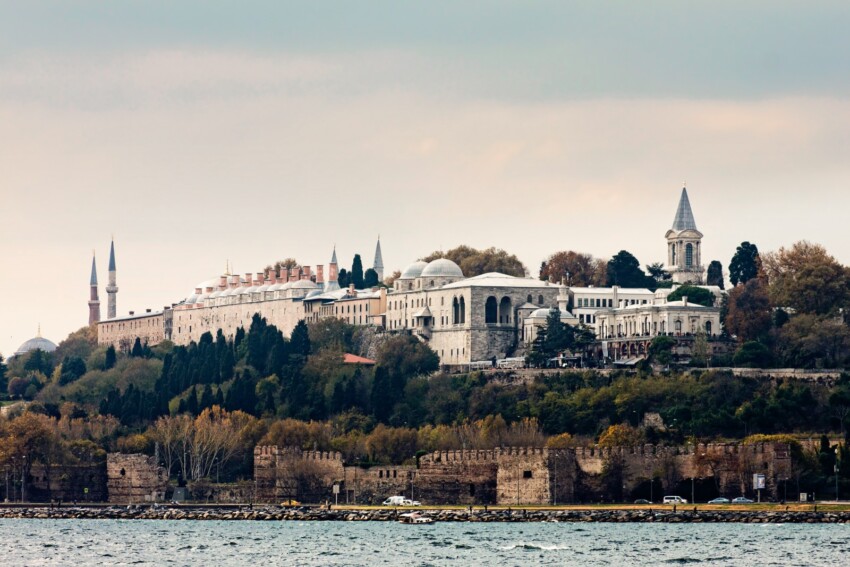
Overlooking the Bosphorus, not far from Hagia Sophia, stands the magnificent Topkapi Palace, which was constructed in 1453 by Mehmed II, known as the Conqueror. The building, also known as Topkapi Sarayi, served as the heart of political life and residence of 26 of the 36 sultans of the Ottoman Empire for nearly eight hundred years.
The architecture of this palace differs from that of European residences, as it is a complex of over 700,000 square metres comprising various courtyards, kiosks and terraces with panoramic views. The structure was enlarged and modified several times by successive rulers, and now houses the Archaeological Museum within its walls.
The original name of the complex was actually the “New Palace“, in contrast to the “Old Palace” inherited from the Byzantines and little appreciated by the Ottoman sultans. The name “Topkapi”, meanwhile, means “Cannon Gate” and was only assigned in the nineteenth century.
Set aside enough time to visit the beautiful rooms of Topkapi Palace, which served as the political centre of the empire for centuries. Inside are four main areas, each comprising numerous buildings of great interest, including pavilions, private apartments, stables, kitchens and the harem.
Due to its great significance, Topkapi Palace is inscribed as a UNESCO World Heritage Site as part of the “Historic Areas of Istanbul”.
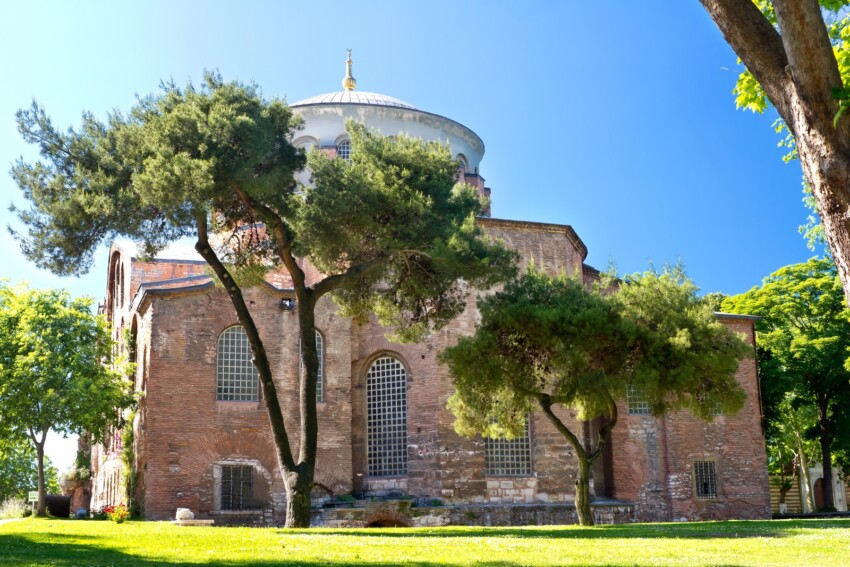
The First Courtyard, also known as the “Courtyard of the Janissaries” or “Parade Ground”, was a space largely dedicated to the infantry corps of the Ottoman sultan’s private army. Here stands the former Byzantine church of Aya İrini (Hagia Irene), believed by many to be the first Christian church in the city, though it was later converted into a museum. Adjacent to this is the former mint and several fountains, which the Janissaries allegedly used to clean their blood-stained swords after carrying out executions in this very area.
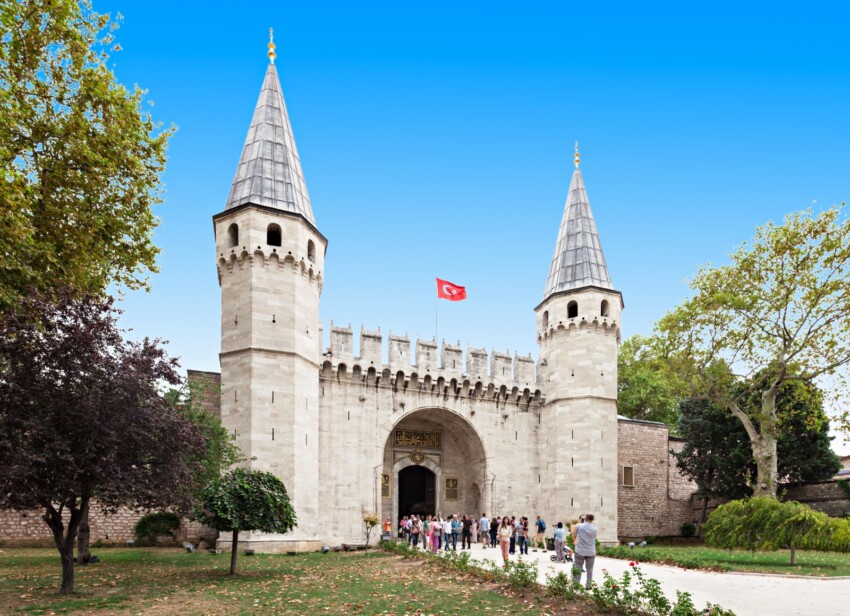
The second was the Courtyard of Ceremonies, accessed via the Gate of Salutation, which could only be crossed by the sultan on horseback. The entrance consists of a finely decorated gate adorned with numerous religious inscriptions from the Quran. This was a space used for courtiers’ meetings and overlooked by the palace hospital, bakery, stables, kitchens, harem and the Council Chamber (Divan).
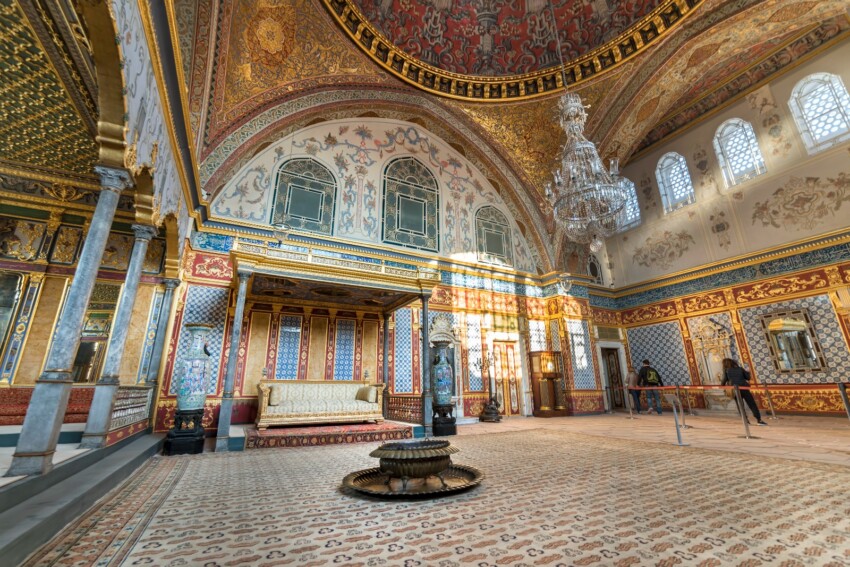
The harem section certainly deserves further attention, as it was once dedicated to the imperial family and the women placed at the sultan’s disposal. The word “harem” literally meant “private” or “forbidden”, and this was indeed a zone reserved for women, with the sultan being the only man permitted to enter. The sultan’s mother, known as the Valide Sultan (Queen Mother), was responsible for managing the harem and its associated activities.
There were two treasuries in the palace: one in the second courtyard, called the Outer Treasury, and another in the third courtyard, called the Inner Treasury. The Outer Treasury currently displays a collection of over 400 weapons and suits of armour and is considered one of the world’s most extensive collections of arms dating from the seventh to the twentieth century. It features various weapons used by the Ottoman Empire, as well as Umayyad swords and arms from both Europe and the Far East.
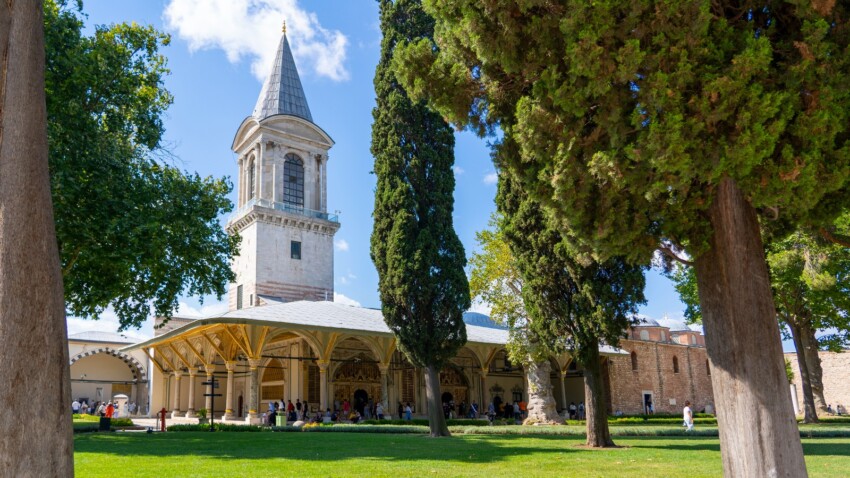
The third courtyard is perhaps the most important, as this was the sultan’s private area and was overseen by white eunuchs. Access to this area was through the Gate of Felicity, built by Mehmed II but later reconstructed by Mustafa III in the eighteenth century, who transformed it into a richly decorated structure crowned with a dome supported by marble pillars.
Here you’ll find the Audience Chamber, which served to welcome foreign ambassadors and officials and featured an ornately decorated ceiling and floors richly covered with carpets.
The second of the palace treasuries, also known as the Inner Treasury or Conqueror’s Pavilion, was located in the third courtyard and is a must-see for the treasures it holds. Here you’ll find many items, works of art and relics belonging to various Ottoman rulers or gifts received from foreign delegations. Among the most valuable pieces are one of Sultan Mustafa III’s suits of armour, the 86-carat Kasicki diamond, the Topkapi Dagger and the throne covered in gold leaf and gems that belonged to Sultan Mahmud I.
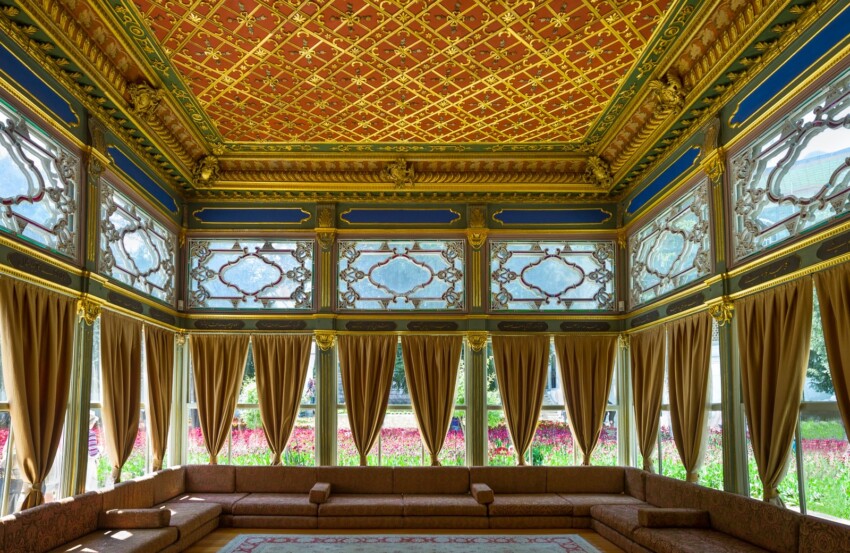
The Fourth Courtyard, or Imperial Divan, was an area comprising various pavilions, a library, gardens and terraces, mainly reserved for the sultan and his family. The oldest building here is the Chief Physician’s Tower, where the chief physician who prepared medicines for the Sultan and the Chief himself, who was responsible for administering them, resided. This courtyard also contains the Circumcision Chamber, a room where young princes underwent circumcision according to Islamic religious practice.
Entrance to Topkapi Palace is charged, with ticket prices starting from 100 TL. Given the lengthy queues at the entrance, we recommend purchasing a fast-track ticket for Topkapi Palace in advance or taking advantage of entrance included with an Istanbul city card.
If you’re planning to visit other attractions in the city besides Topkapi Palace, such as the Blue Mosque and Hagia Sophia, and perhaps embark on an unmissable Bosphorus cruise, a city card would be worthwhile.
Topkapi Palace is open daily except Tuesdays. Opening hours are:
Topkapi Palace is easily accessible by public transport or on foot. From Hagia Sophia, you can reach the complex in less than ten minutes on foot; alternatively, it can be reached by public transport, as the Sultanahmet stop on the T1 tram line is nearby.
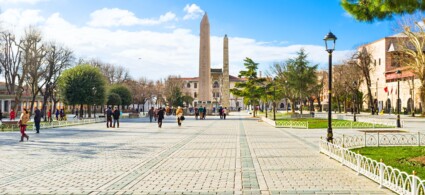
Topkapi Palace is located in Sultanahmet, Istanbul's oldest neighbourhood, just a short distance from the Hagia Sophia, the Blue Mosque and the Hippodrome.
City Card allow you to save on public transport and / or on the entrances to the main tourist attractions.

 Hotel
Hotel  Budget accommodations
  Apartments
  Family Hotel
  Luxury Hotel