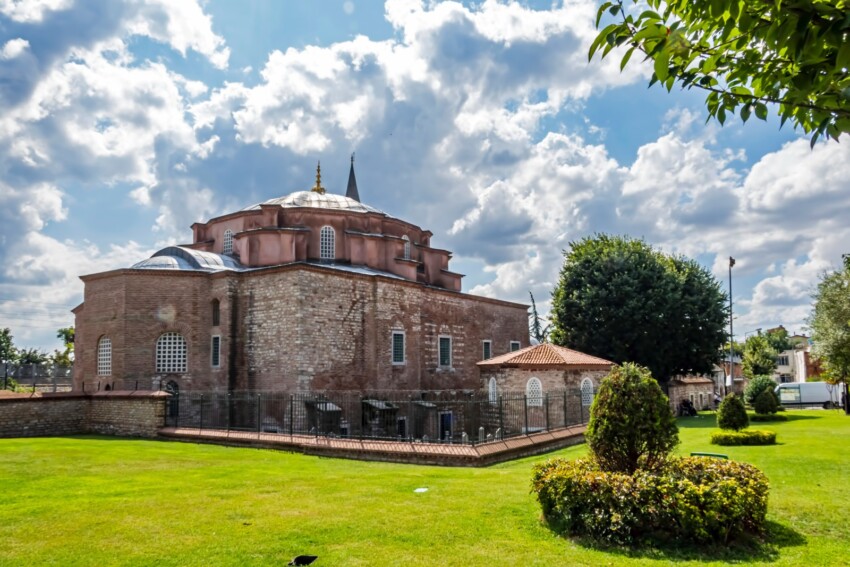
Built in the 6th century by the Emperor Justinian and Empress Theodora, Little Hagia Sophia was a Byzantine church that was later transformed into a mosque, with a portico featuring small domes added to the original structure.
Despite being quite different from Hagia Sophia in both size and character, this intimate mosque retains a particular charm: peaceful, secluded, and visited by very few tourists, Little Hagia Sophia preserves the qualities of a place of worship deeply woven into the fabric of its neighbourhood.
Surrounding it is a labyrinth of ancient wooden houses, many in a state of disrepair, narrow climbing alleyways and artisan shops. Walking these streets, you’ll experience the authentic character of old Istanbul—children playing outdoors, locals chatting in cafés, Quranic students—in a neighbourhood atmosphere that feels worlds away from the tourist bustle of Sultanahmet, just a short walk away.
As you wander through the Little Hagia Sophia quarter, you’ll discover some lesser-known corners of the city that deserve a detour from the crowded tourist centre.
The Sokollu Mehmet Paşa Mosque is considered the city’s most beautiful mosque: built in 1571 at the request of Sultan Selim II’s daughter, its interior is richly adorned with turquoise Iznik tiles that create a striking polychromatic effect alongside white marble and the wooden gallery. With the backdrop of prayers from students of the Quranic school housed within, you’ll step into an oasis of silence and contemplation.
The Theodosian Cistern, meanwhile, smaller than the Basilica Cistern, was commissioned in the 5th century by Theodosian II: it offers the delight of discovering a hidden gem overlooked by hurried visitors, with its 4 rows of 8 columns preserved in the basement by the Eminönü municipality.
City Card allow you to save on public transport and / or on the entrances to the main tourist attractions.


 Hotel
Hotel  Budget accommodations
  Apartments
  Family Hotel
  Luxury Hotel