During a visit to Istanbul it is certainly worth exploring the Grand Bazaar, an ancient and utterly captivating market where you can discover unique products.
The Grand Bazaar (or Kapali Çarşi in Turkish, meaning “covered market”) is one of the oldest and largest covered markets in the world and an absolute must-see during a trip to Istanbul. The Bazaar is located in the oldest part of the city and was built around the mid-15th century under the orders of Mehmed II, though it has been expanded many times since and now boasts almost 4,000 shops and stalls.
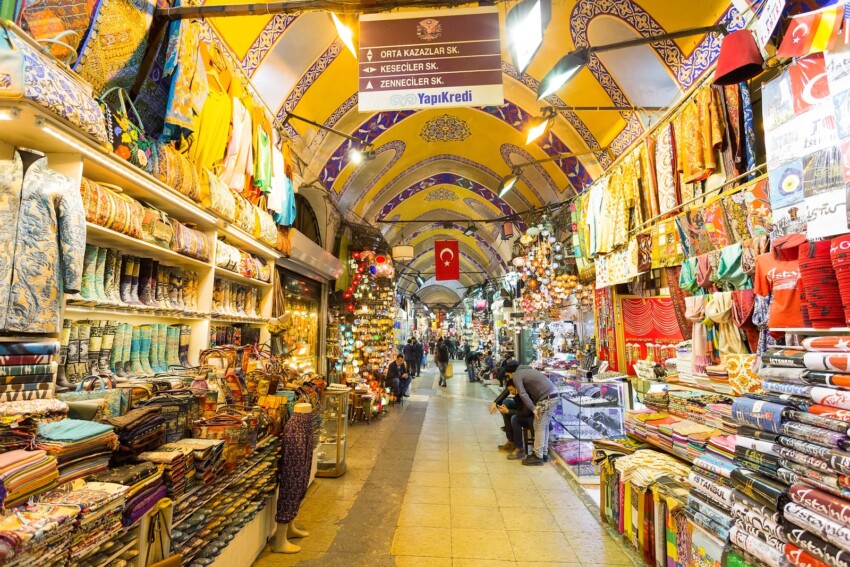
Busy, chaotic and vibrant in atmosphere, the Grand Bazaar comprises an intricate maze of alleyways that lead visitors on a journey of discovery through objects and goods of all kinds: it’s an unmissable stop on any Istanbul visit.
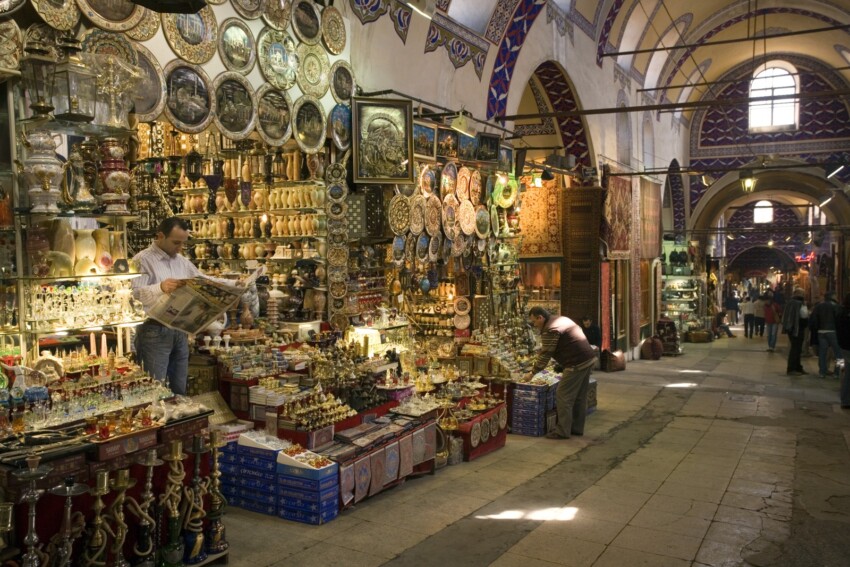
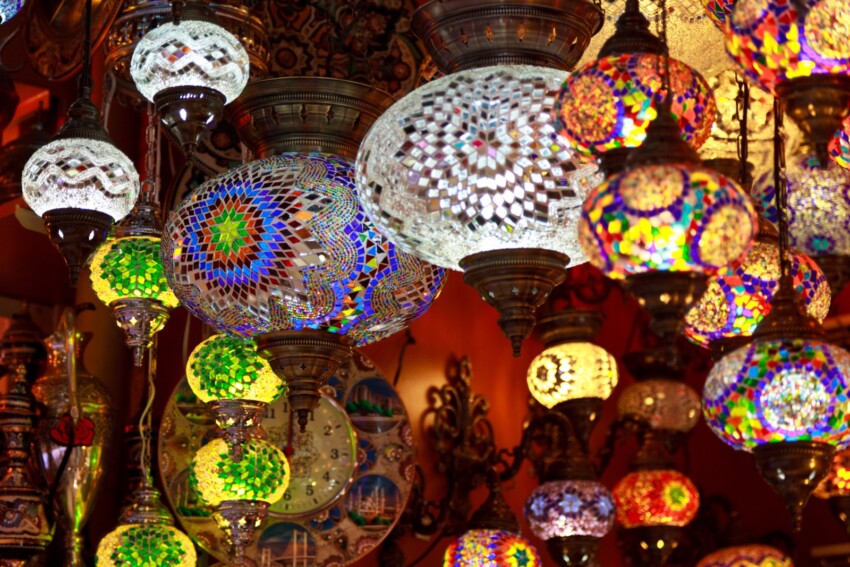
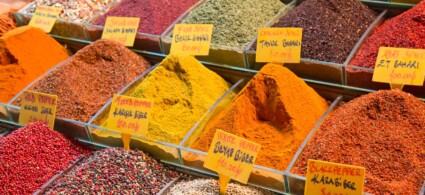
For many, the Grand Bazaar is like a city within a city, given that it spans almost 31 hectares and contains several distinct areas and approximately 60 alleyways lined with shops. This enormous complex boasts boutiques and stalls selling all manner of goods including carpets, textiles, Turkish handicrafts, jewellery, clothing, shoes as well as spices and typical food products.
The 18 original entrances still exist, and it’s easy to lose your way inside, not only because you’ll be drawn in by the countless products and friendly merchants, but also by the inherent charm of this place, which is frequented by locals too. Despite the many modern shopping centres now found throughout the city, the Grand Bazaar remains a place of timeless appeal that’s best explored without a fixed destination, simply by “getting lost” among its alleyways.
Inside, beyond retail shops, you’ll find mosques, a bank, two hammams and several cafés serving Turkish coffee, çay (Turkish tea) and light snacks. The tip is to take a break at one of the small establishments, sit at a table and soak in the everyday life of this bustling bazaar.
You can purchase travel souvenirs or gifts for friends and family here, just remember that opening prices may be high because haggling is the name of the game. At the market’s heart lies the oldest section, covered by the dome of the Cevahir Bedesten, where the most precious and expensive items were originally sold—furniture, copper articles, inlaid weapons, candelabras, ancient coins and especially gold jewellery.
Tours and guided visits of the Grand Bazaar
The Grand Bazaar is often included in tours and guided visits of Istanbul’s main attractions: exploring this magnificent Turkish city with a tour guide remains the best way to discover the full breadth of the city’s history and hidden gems.
The Grand Bazaar in Istanbul is open Monday to Saturday from 8:30am to 7:00pm. It’s closed on Sundays and during certain national and Islamic holidays. Admission is free.
How to reach the Grand Bazaar
The Grand Bazaar is easily reached from the Sultanahmet district with a walk of about 10 minutes, or you can take the T1 tram line to the Beyazıt-Kapalıçarşı stop. From Taksim Square, you can take the metro line 2 to Veznecıler – İstanbul Üniversitesi station, which is very close to the market area.
History of the Grand Bazaar
The history of Istanbul’s Grand Bazaar appears to date back to 1455, when Sultan Mehmed II ordered the construction of a first covered market for the sale of textiles, jewellery and precious goods, known as “Cevâhir Bedestan” (the gem market). Nearly a century later, Sultan Suleiman I had a second covered market built, the “Sandal Bedesten”, situated slightly to the north of the first.
Over time, the textile trade shifted to the Sandal Bedesten, while the Cevahir Bedesten remained reserved for luxury goods. Initially the two buildings were separate, but over the years both markets expanded as many merchants opened shops between the two bazaars, continuously widening the commercial area. This is how the two markets merged and the Grand Bazaar was born—an entire quarter dedicated exclusively to commerce. By the early 17th century, the Grand Bazaar had virtually acquired its current dimensions and layout, with each internal street dedicated to a particular guild.
According to accounts from numerous European merchants and travellers, by the 17th century the Grand Bazaar already had a square layout, with two main perpendicular streets meeting at the centre and approximately 60 secondary streets, each named after a particular type of goods sold in that area. Within this structure were also several squares, seven fountains, some mosques and as many as 18 entrances that were opened each morning and closed in the evening.
The Grand Bazaar has been partially destroyed multiple times by fires and earthquakes, the last of which occurred in 1894, following which the site underwent a major restoration project. Today, the Grand Bazaar is certainly an important part of Istanbul’s culture and history, offering an opportunity to learn more about the history and traditions of this ancient city.
Useful information
Address
Beyazıt, 34126 Fatih/İstanbul, Türkiye
Contacts
TEL: +90 212 519 12 48
Timetables
Monday: 08:30 - 19:00
Tuesday: 08:30 - 19:00
Wednesday: 08:30 - 19:00
Thursday: 08:30 - 19:00
Friday: 08:30 - 19:00
Saturday: 08:30 - 19:00
Sunday: Closed
Transports
Bus stops
Beyazit (354 mt)
Beyazit Universite (415 mt)
Vezneciler (602 mt)
Where is located Grand Bazaar
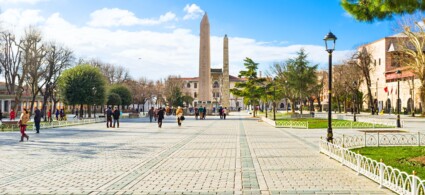
The Grand Bazaar is located in the Fatih district on the slope of Istanbul's third hill, in the heart of the city's European side. The Bazaar stands close to other sites of interest such as Hagia Sophia, the Blue Mosque, the Hippodrome and Topkapi Palace, all roughly 1.5 km away.


 Hotel
Hotel  Budget accommodations
  Apartments
  Family Hotel
  Luxury Hotel