Bestseller
Istanbul: Galata Tower Entry Ticket with Audio Guide
From 35,49 €
Buy the ticket
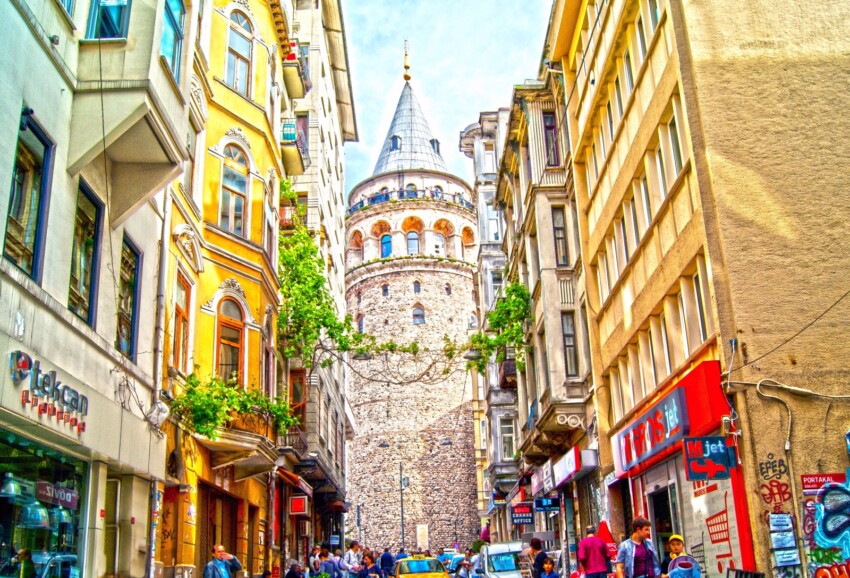
The Galata Tower (or Galata Kulesi) is a building located in the district of the same name, constructed around the mid-14th century by the Genoese to control the coastline. There was likely an earlier structure in this location, but it was during Genoese rule that the defensive system was reinforced and the Galata Tower took on an increasingly strategic role.
Situated atop a hill, the Tower has served various purposes over the centuries, including use as a prison, military outpost and now a major tourist attraction. Standing in the Galata quarter on the European side of the city, with its current height of over 60 metres, it offers spectacular views of the Bosphorus.
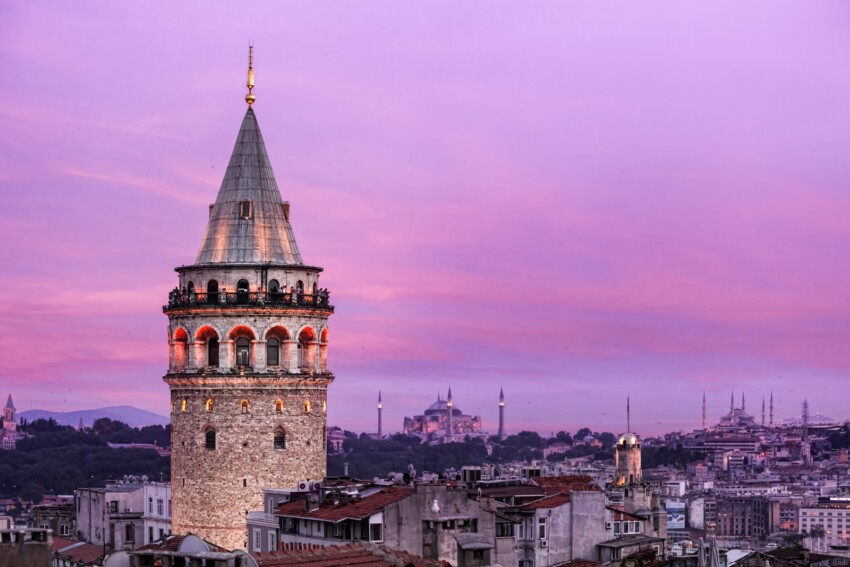
The Galata Tower has long been not only one of Istanbul’s iconic symbols but also the city’s tallest building. The tower has been depicted in numerous works of art, literature and film, which is why it remains one of Istanbul’s cultural landmarks. Today the building has a circular floor plan, measures 66.9 metres in height (62.59 metres excluding the gilded frieze at the roof’s crown) and has an internal diameter of 8.95 metres.
The Tower was constructed on the crest of a hill, 140 metres above sea level, and features a cylindrical form with a distinctive conical roof visible from various parts of the city. Inside are nine storeys; the lower levels preserve Genoese architectural style, whilst the upper levels were rebuilt in typical Ottoman style. On the Tower’s top floor is a panoramic terrace offering magnificent views across all of Istanbul, including the Old City. In recent years, a restaurant has also opened at the summit, allowing you to dine whilst taking in splendid vistas.
The Galata Tower was built by the Genoese around the mid-14th century when the district was under their control, with the tower erected as part of the city’s defensive system. It was likely Rosso Doria, Galata’s first governor, who commissioned the construction of a tower then called the Tower of Christ (Christea Turris) to command extensive views of the Sea of Marmara, considered a strategic point for trade routes. Over time, the building changed purpose several times, serving as a prison and later as a fire-watch tower to spot blazes breaking out across the city.
It was particularly during the Ottoman period that the tower was repeatedly struck by earthquakes and fires, requiring numerous restorations. From Galata Tower, in the 17th century, the aviator enthusiast Lagâri Hasan Çelebi reportedly launched himself with a pair of artificial mechanical wings, reaching the neighbourhood of Scutari on the opposite bank of the Bosphorus in the Asian part of the city. In subsequent years the tower fell into disuse, until its importance was recognised again in the 1960s when it was restored by Istanbul Municipality and opened to the public.
The Galata Tower is open daily from 08:30 to 23:00, with the last admission at 22:00.
From Sultanahmet, Galata Tower is accessible via the T1 tram line, a journey of approximately 10 minutes to Karaköy stop; from there it’s roughly a 600-metre walk to the Tower. From Taksim Square, you can take the T2 tram or M2 metro line to reach Galata Tower in less than 15 minutes.
The Galata Tower is located in the eponymous district of Istanbul, which forms part of the Beyoğlu area situated in the European side of the city. The Tower stands approximately 3 km from Hagia Sophia and the Blue Mosque, and 2 km from Taksim Square.
City Card allow you to save on public transport and / or on the entrances to the main tourist attractions.



 Hotel
Hotel  Budget accommodations
  Apartments
  Family Hotel
  Luxury Hotel