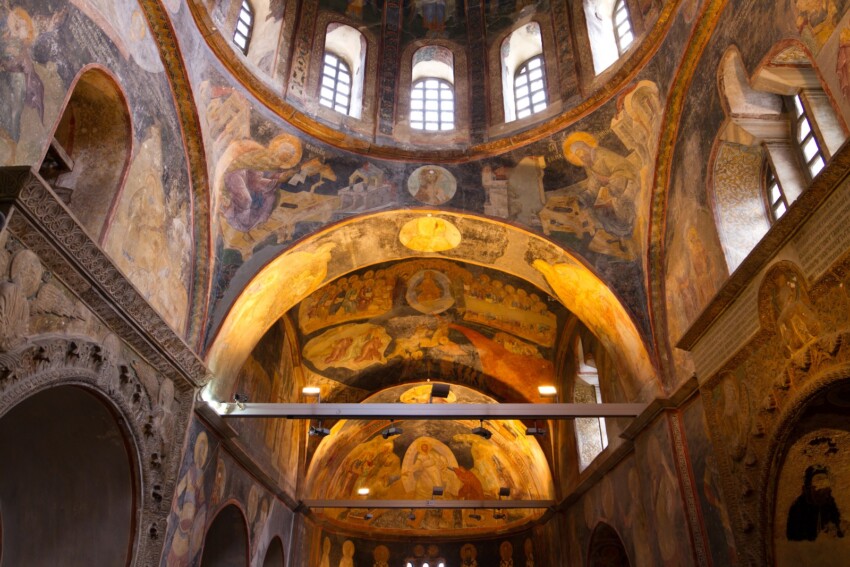
The Church of the Holy Saviour in Chora (in Turkish Kariye Müzesi, meaning Chora Museum) is another important example of Byzantine architecture in Istanbul, appreciated above all for its stunning frescoes. The term “Chora” means “outside the city” because the building was originally constructed in an area that lay beyond the city walls at that time, though it now stands in the Edirnekapi district in western Istanbul.
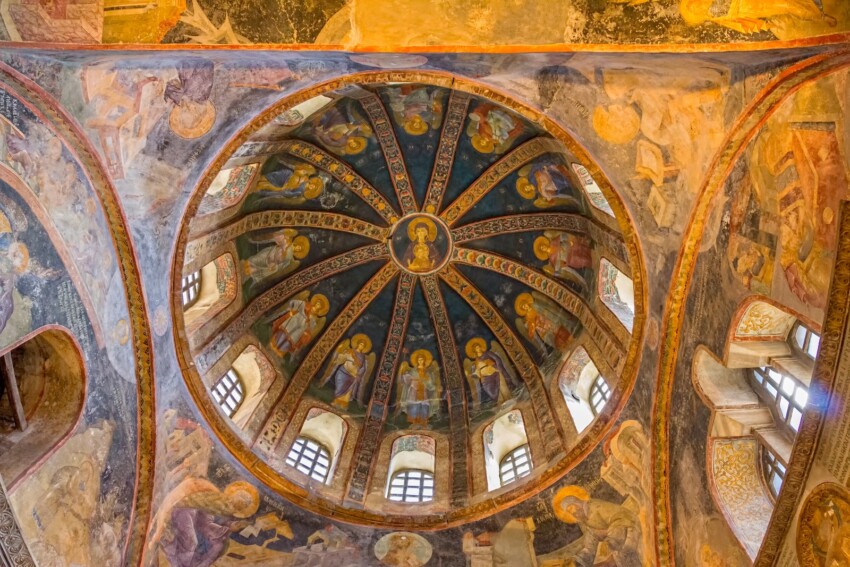
According to historical research, the first church on this site was built around the 5th century, though the religious building was subsequently reconstructed with an inscribed Greek cross plan between 1077 and 1081 thanks to Maria Doukaina, mother-in-law of Alexios I Komnenos. Another major renovation took place between 1316 and 1321 at the behest of Theodore Metochites, a statesman, philosopher and adviser to the Byzantine Emperor Andronikos II Palaiologos, who partially altered the church’s structure and commissioned the interior decorations of mosaics and frescoes.
It was during this period that the church became one of the most significant testimonies to sacred Byzantine artfrescoes depicting themes such as the Incarnation and Salvation, whilst the chapel narrates the Resurrection of Christ.
Not to be missed are the frescoes of the Last Judgement, Christ Pantocrator, and those depicting scenes from the life of Jesus Christ and Mary.
In 1511, Bayezid II, son of the Ottoman Sultan Mehmed II, decided to convert the church into a mosque, and it remained a place of Islamic worship until the mid-20th century, when it was transformed into a museum (Kariye Müzesi). One could say that this conversion decision actually helped preserve the interior works, as the frescoes were covered in whitewash to respect Islamic principles, which prohibit the depiction of human figures within places of worship.
In the mid-20th century, the site was closed for an extended period for restoration work, and was then reopened as a museum until 2020. That year, President Erdoğan declared that the Church of the Holy Saviour in Chora, like Hagia Sophia, would return to functioning as a mosque, under the name Kariye Camii.
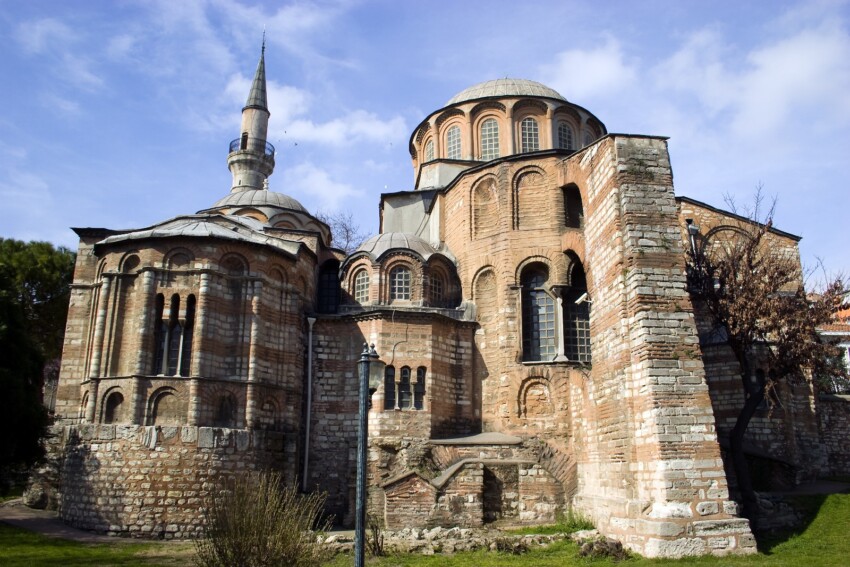
Now that it operates as a mosque, admission is free, subject to certain guidelines. The Church of the Holy Saviour in Chora is open daily from 09:00 to 19:00 in the summer season (April–September) and from 09:00 to 16:30 in winter.
The Church of the Holy Saviour in Chora can be reached by tram using the T1 line and getting off at the Pazartekke stop. Alternatively, it is possible to walk there from the Egyptian Bazaar, a fifty-minute walk through the neighbourhoods of Fener and Balat.
The Church of the Holy Saviour in Chora is located in the Edirnekapi area, with the name meaning "Gate of Edirne" in Turkish – one of the city's historic entrances. The religious building lies 4 km from the Egyptian Bazaar and 5.5 km from Hagia Sophia.
City Card allow you to save on public transport and / or on the entrances to the main tourist attractions.


 Hotel
Hotel  Budget accommodations
  Apartments
  Family Hotel
  Luxury Hotel