Venus Suite Hotel
Pamukkale - Pamukkale Mah. Sümbül Sokak No:7 Pamukkale
Book now
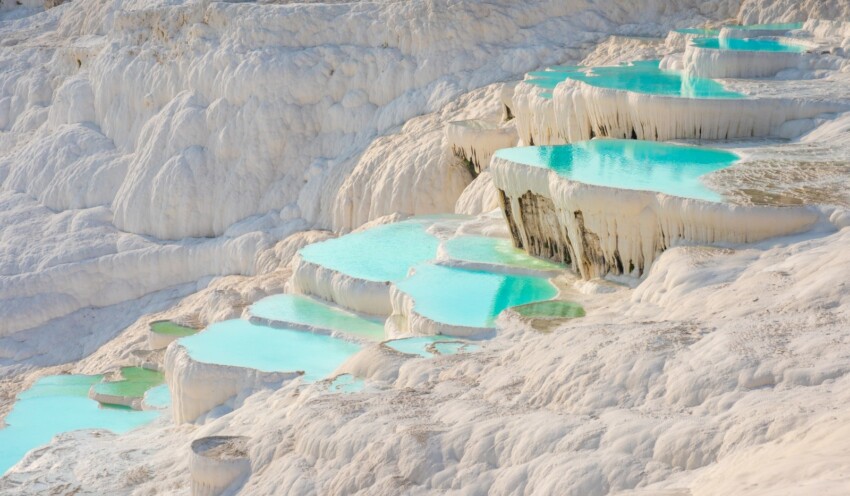
Pamukkale is a natural site located in south-western Turkey, renowned for its stunning natural landscapes featuring brilliant white travertine terraces. The town of Pamukkale is a peaceful destination characterised by a bustling centre filled with restaurants, shops and accommodation options welcoming numerous visitors keen to see the famous Pamukkale pools situated on the hillside facing the town. Indeed, Pamukkale means “cotton castle” in Turkish, a name derived from the calcium carbonate mineral released by thermal water flowing down the slope, creating distinctive white formations that resemble cotton.
Not far from Pamukkale lies the ancient Greek city of Hierapolis, which now hosts an archaeological site featuring the ancient thermal centre and other significant monuments from the Greek period. Due to their natural beauty and historical importance, Pamukkale and Hierapolis were designated UNESCO World Heritage Sites in 1988.
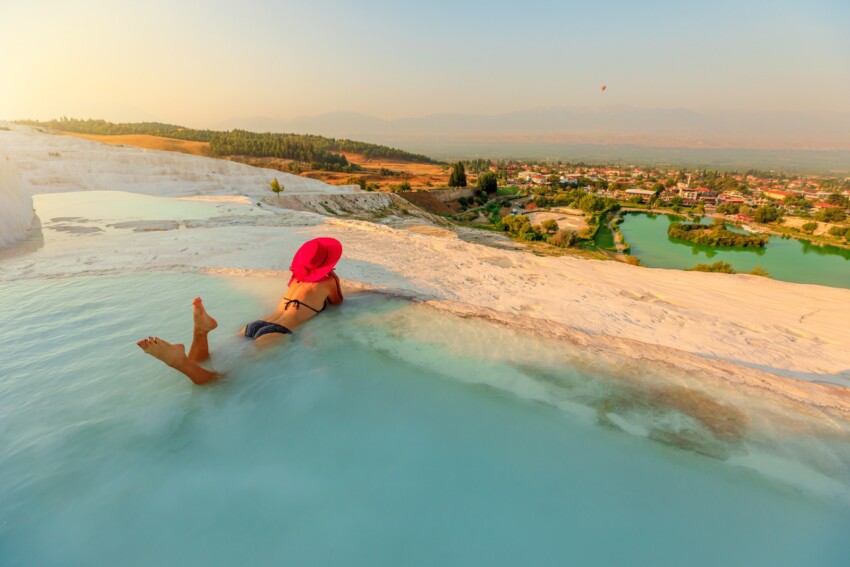
The celebrated Pamukkale terraces are located on a hillside overlooking the town centre, easily reached by a short walk. Pathways lead visitors through these spectacular travertine pools, which have made this destination world-famous. Since ancient times, the area has been blessed with thermal springs releasing mineral-rich waters, including calcium bicarbonate, which deposit limestone and travertine as they flow down the slope. These minerals create distinctive white formations that, when cooled, resemble soft cotton—the very inspiration for the name “Pamukkale”, meaning “cotton castle”.
The waters here emerge at temperatures of around 30–35°C and, owing to their mineral composition, are believed to possess significant therapeutic properties. Historically, the pools served as a wellness and healing centre. Over time, however, it became clear that this is a fragile ecosystem, and the former intensive exploitation combined with mass tourism caused considerable damage. As a result, access to the natural pools is now restricted. For visitors, alternative white pools have been created where guests can bathe in the thermal waters for relaxation. Additionally, pathways through the terraces must now be traversed barefoot to prevent damage to the delicate ground.
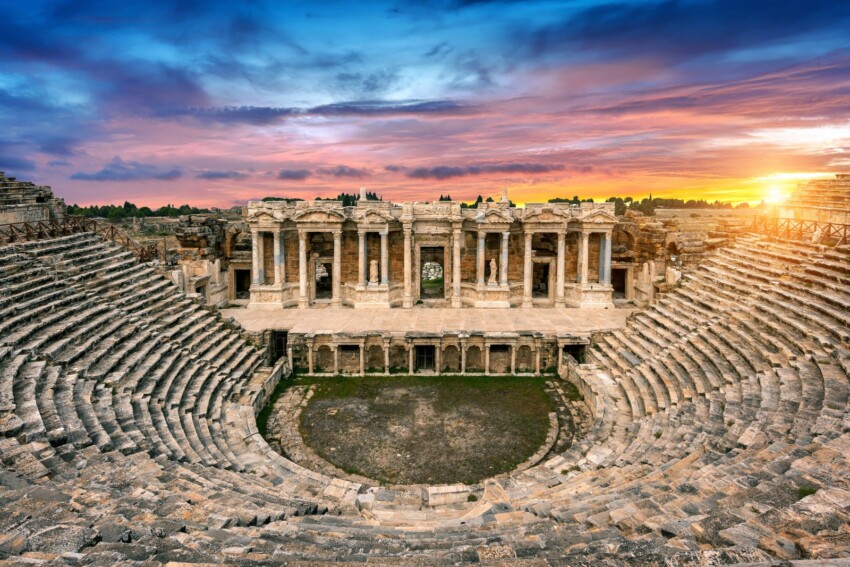
Close to Pamukkale stands Hierapolis, a once-thriving city renowned since the 2nd century BC for its thermal springs, which led to the development of an important centre. Subsequently, the city came under Greek and then Roman rule. The Romans not only continued to regard it as a celebrated health and wellness centre but also built a substantial urban settlement here. Today, visitors can explore the Hierapolis archaeological site, which preserves ruins spanning two thousand years, along with several churches constructed around the 9th century.
The Grand Theatre, capable of accommodating up to 15,000 spectators, is not to be missed, as is the ancient Cleopatra’s Pool, reportedly gifted by General Mark Antony to the queen and celebrated for its mineral-rich waters said to be genuinely beneficial. The Hierapolis Archaeological Park Museum offers further insight, with displays chronicling the region’s history and numerous artefacts unearthed from excavations in the area.
Pamukkale is undoubtedly the finest choice for a base from which to explore the famous travertine pools that have made the area celebrated. Staying here offers the chance to observe these formations directly from your room at unusual hours such as dawn or dusk, provided you select one of the numerous hotels with north-east-facing rooms. The area once boasted many accommodation options positioned directly adjacent to the pools, utilising their waters as thermal centres, but these have since been closed to preserve the site.
Flying appears to be the best way to reach Pamukkale, thanks to the small yet efficient Denizli Airport, which welcomes daily flights from both Istanbul and other Turkish cities. The airport lies less than 70 km from the town centre, accessible by taxi or shuttle bus services.
Those travelling by car should note that the journey from Istanbul to Pamukkale typically takes 6 to 8 hours. Public buses are also available, though they take 11–12 hours. Denizli has a railway station, but there are no direct connections from Istanbul, making the total journey potentially 12–13 hours due to necessary transfers.
Other major cities nearby are Antalya and Izmir, both roughly 250 km from Pamukkale and connected by buses taking approximately three and a half hours to reach Denizli; from there, you’ll need to change buses for Pamukkale.
What's the weather at Pamukkale? Below are the temperatures and the weather forecast at Pamukkale for the next few days.
 Hotel
Hotel  Budget accommodations
  Apartments
  Family Hotel
  Luxury Hotel