Topkapi Palace Skip-the-Line-Tickets & Audio Guide
4.764 reviews
Buy now
From 69,00€ per person
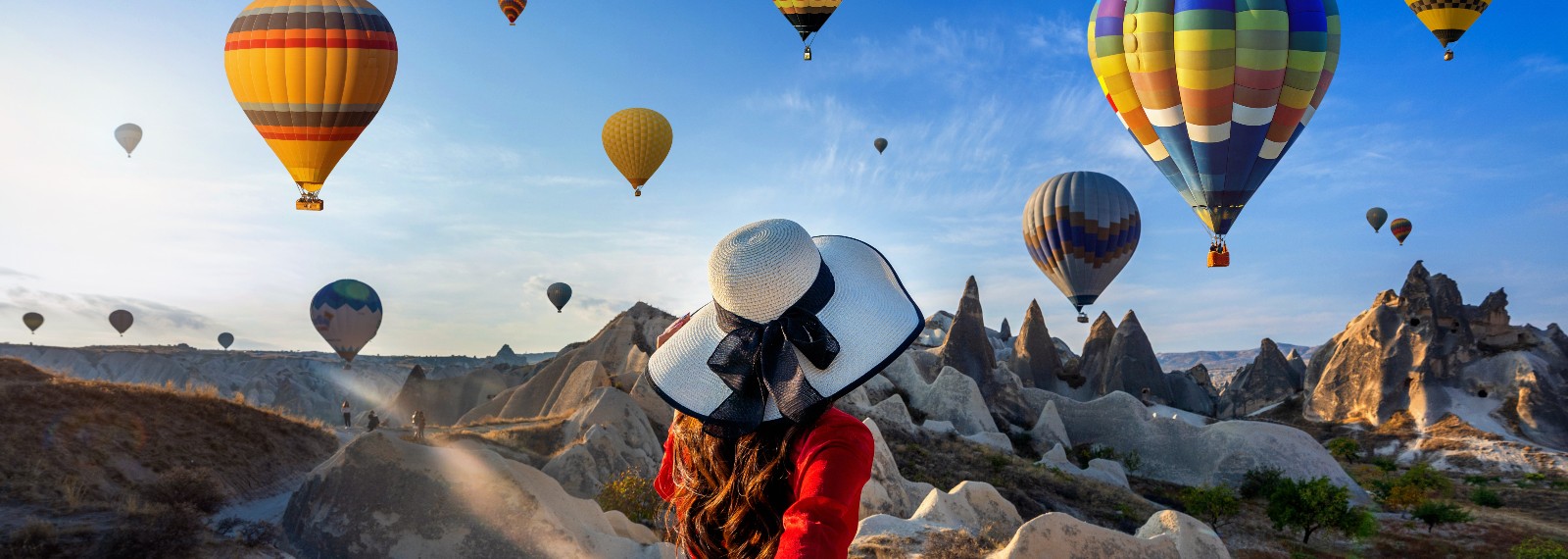
Turkey is a wonderful destination that combines ancient archaeological sites, historic religious buildings and numerous museums alongside stunning natural landscapes. Add to this magnificent beaches bathed in crystal-clear waters, perfect for a relaxing seaside break, and mountain ranges that appeal to trekking and hiking enthusiasts alike.
Often pressed for time, most visitors limit themselves to exploring Istanbul and its main attractions, but Turkey is genuinely a country waiting to be discovered. With a little more time, you can explore the landscapes of Cappadocia and the Black Sea, or arrange cultural trips to the historic sites of Ephesus and Troy. Don’t overlook Turkey’s rich gastronomic heritage either – its numerous dishes are guaranteed to delight every palate.
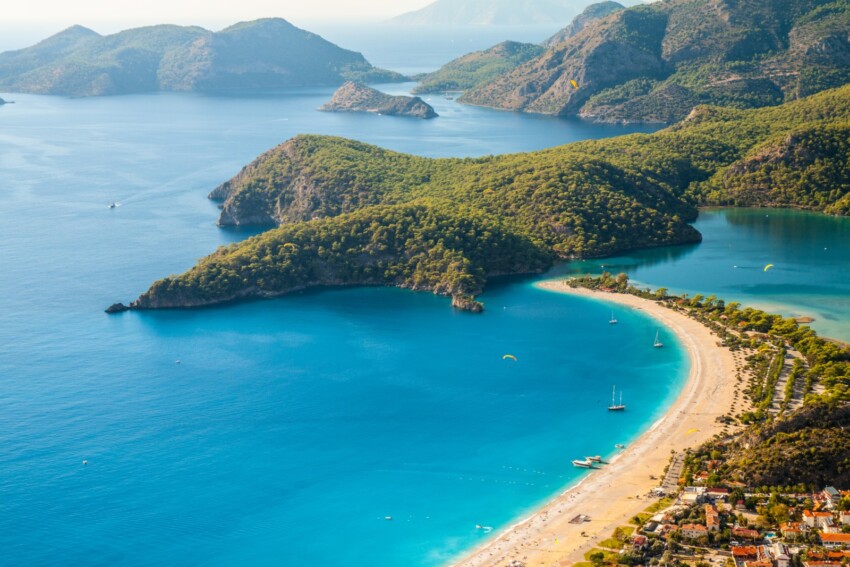
Turkey is a vast country with different climate zones, making it an ideal destination during various times of year – it simply depends on the type of holiday you’re after. Generally speaking, the best months to visit are during the shoulder seasons. Spring is a season of “renewal” and is particularly suited to visiting cities and archaeological sites, as mild temperatures and lengthening days encourage outdoor exploration. Autumn similarly offers travellers cooler temperatures and freedom from excessive heat.
Summer is when many cities host outdoor events and is perfect for a beach holiday. For some, however, exploring cities can be challenging during this season, as high temperatures and humidity can make sightseeing difficult. Winter, meanwhile, is generally cold with minimum temperatures varying by region – they can even drop below freezing with occasional snowfall when Arctic air masses move through. Along the western coast, bathed by the Mediterranean Sea, winter weather is less harsh but often rainier.
Another important detail to consider when planning a trip to Turkey is Ramadan, a significant festival for Muslims usually falling in the ninth month according to the lunar calendar. Turkey remains a predominantly Islamic nation, so during Ramadan some attractions may have altered opening hours, and certain restaurants may be closed at lunchtime as believers observe fasting from dawn to dusk.
History, art, architecture, nature and relaxation – Turkey offers visitors a genuinely multifaceted journey that caters to different types of traveller. The country is celebrated for Istanbul, the city straddling two continents, but other Turkish destinations are equally noteworthy for their historical and architectural heritage.
Alongside internationally appealing cities such as Istanbul and the capital Ankara, Turkey boasts many places and attractions to visit, including picturesque towns and charming villages that have retained their timeless appeal, such as the beautiful Safranbolu or the villages of Cappadocia. There are also renowned coastal destinations like Antalya and Bodrum, also known as “the Saint Tropez of Asia Minor”.
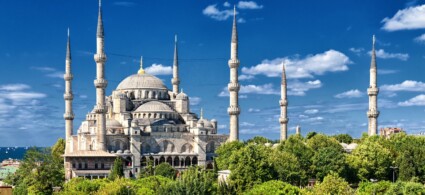
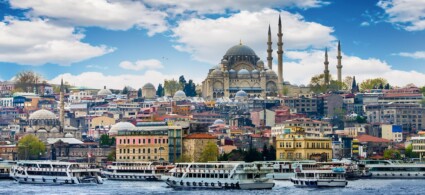
For many, the first stop in Turkey is Istanbul, a city with a thousand-year history situated in the Bosphorus Strait between Europe and Asia. Envisioned by the Emperor Constantine as a “new Rome”, Istanbul preserves important testimony to three great civilisations: Roman, Byzantine and Ottoman. The heart of the ancient city is undoubtedly the Sultanahmet district, home to the most significant monuments, including Hagia Sophia (a church later converted into a mosque), the stunning Blue Mosque and the Hippodrome.
Given the number of tourists visiting these attractions daily, we recommend booking entrance tickets online for the main attractions well in advance.
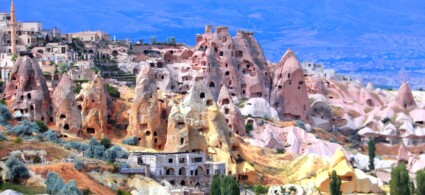
Famous for its stunning natural landscapes, Cappadocia is a region in north-western Turkey located on the Anatolian peninsula. Here you can admire distinctive volcanic rock formations created thousands of years ago, known as Fairy Chimneys because they resemble towers or chimneys rising into the air. According to some legends, they were inhabited by fairies and other mythical creatures. Over time, Christian hermits adapted these rock formations into places of meditation and prayer. Today the Fairy Chimneys lie within the Göreme National Park, designated a UNESCO World Heritage Site several years ago.
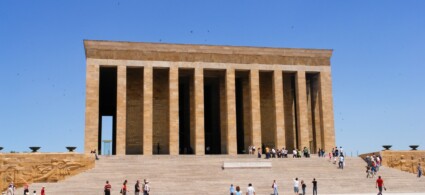
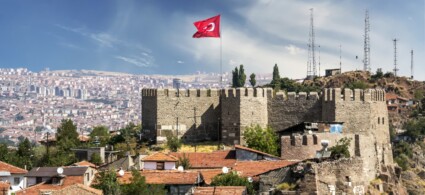
Turkey’s capital since the early 20th century, Ankara is a city rich in museums that allow you to explore the origins and history of this region. Among the most important museum sites are: the Museum of Anatolian Civilisations, which houses an extensive collection of artefacts from different periods, Ankara’s Fine Arts Museum, the Museum of Anatolian Civilisations and the Natural History Museum of Ankara.
Ankara is also home to the Mausoleum of Atatürk, dedicated to Mustafa Kemal Atatürk (1881–1938), which contains a tomb and a museum documenting the life and works of Turkey’s first president.
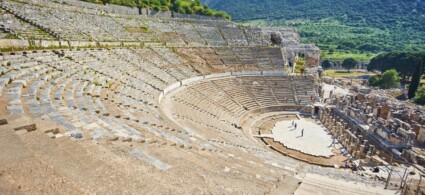
Ephesus is renowned as one of Turkey’s oldest and most important archaeological sites, telling the story of a city that played a crucial strategic role for many centuries. From ancient Greece through Roman dominance to Byzantine rule, Ephesus was always coveted territory.
The ancient city actually comprised a large agora and two main districts – one devoted to entertainment and leisure, the other reserved for political and religious life. Among the best-preserved monuments still visible on the site are undoubtedly the Library of Celsus, the Odeon, the Agora, the Theatre and the Temple of Hadrian.
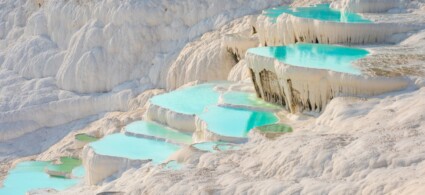
In the Aegean region (south-western Turkey) you’ll find the beautiful natural pools of Pamukkale, considered a true masterpiece of nature – so much so that many regard this location as the eighth wonder of the world.
Deep thermal springs here release mineral-rich waters that deposit limestone and travertine on the hillside, creating a white layer resembling cotton. This “white covering” is precisely where the name “Pamukkale” comes from – a Turkish term meaning “cotton castle”.
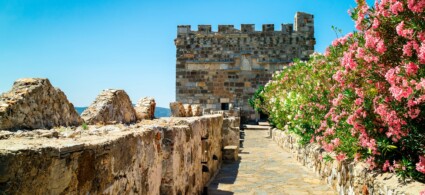
Turkey boasts not only ancient historical and architectural heritage but also beautiful locations for relaxing, sunbathing and enjoying a vibrant nightlife. Among the most famous coastal towns is Bodrum, also known as the “Saint Tropez of Asia Minor” because, thanks to its amenities, stunning coastline and chic, elegant atmosphere, it attracts many celebrities.
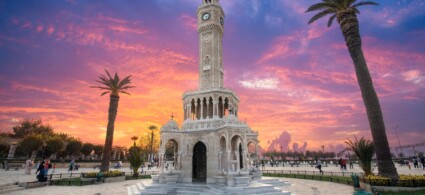
Turkey’s third-largest city (after Istanbul and Ankara), Izmir is an important port on the Aegean Sea that was originally founded by the ancient Greeks.
The city has experienced several periods of rule, including Roman, Byzantine and finally Ottoman dominance, during which Izmir grew significantly as a commercial hub – earning it the nickname “Infidel Izmir” due to the high percentage of non-Muslim residents living in the city.
Given its position and the abundance of connections available, flying is undoubtedly the best way to reach Turkey. Istanbul has two airports: the smaller Istanbul-Sabiha Gökçen Airport on the Asian side and the Istanbul International Airport, which opened in 2018 on the European shore of the Black Sea. Various airlines including Pegasus Airlines and Turkish Airlines offer direct flights from Istanbul to many European cities including London, Paris, Frankfurt and other major international destinations.
Istanbul-Sabiha Gökçen Airport is primarily served by airlines such as Pegasus Airlines, Air Arabia, Qatar Airways, SunExpress and AnadoluJet, with direct connections to various European airports. Particularly during summer season, flights are also increased to other Turkish cities such as Izmir, Bodrum and Antalya. Domestic flights within the country are also very active and affordable, allowing you to travel between different Turkish cities quickly and economically.
As an alternative to flying, some reach Turkey by train, as Istanbul is connected via rail lines to countries such as Greece, Bulgaria and Germany. Another option is to arrive by ship, though this journey can be extremely scenic with considerably lengthy travel times. Additionally, during certain times of year, some cruise companies offer the opportunity to reach Turkey by sailing the Mediterranean and then visiting Greek islands.
Finally, driving is also a possibility, though this requires a journey of several days. There are two alternatives depending on your starting point: from northern Europe you can drive through the Balkans and then Greece to reach Turkey, or you can take a ferry from ports such as Ancona or Brindisi to Greece and then continue by car towards Turkish territory.



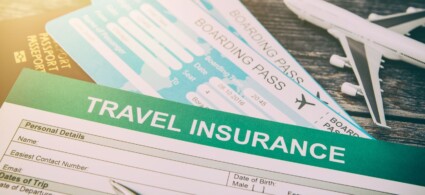
Taking out travel insurance before you head to Turkey will protect you from any issues that might arise during your stay in the country. Whilst we always hope every holiday runs smoothly, unfortunately unforeseen problems can crop up at any time.
In Europe, our health insurance cards grant unlimited access to all public hospital facilities. It’s a genuinely useful safeguard, though it doesn’t apply to Turkey since the country isn’t part of the European Union. For this reason, travelling with active insurance will shield you from the substantial medical costs that could otherwise spoil your holiday and more.
Turkey’s international telephone dialling code is +90, so if you want to call a Turkish number from abroad you need to dial +90 followed by the number. If you’re in Turkey and want to call a number abroad, you’ll need to dial the appropriate international code (for example +44 for the UK) before the number.
Turkey doesn’t observe the switch between daylight saving time and standard time as some other countries do. For this reason, in winter the time zone is UTC/GMT +3, whilst in the summer months Turkey observes UTC/GMT +2.
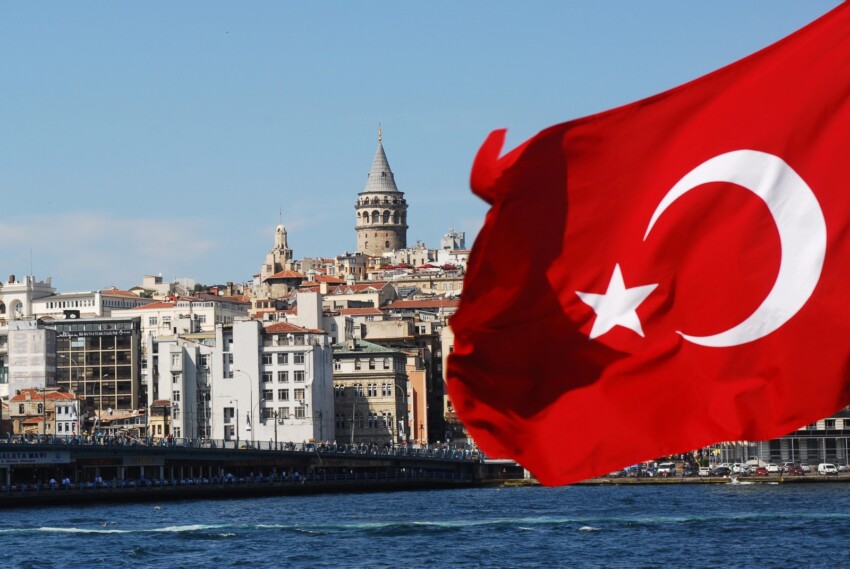
The Turkish flag, known in Turkish as Ay Yıldız, meaning “moon and star”, has a long history dating back to the Ottoman Empire era. Today the flag is red, a colour reflecting the blood shed during the Turkish War of Independence (1919-1921), featuring a white crescent moon and a white five-pointed star.
The official currency is the Turkish lira (₺), which comes in banknotes of 5, 10, 20, 50, 100 and 200 ₺. Coins, known as kuruş (kr), are available in denominations of 1 kr (rare), 5 kr, 10 kr, 25 kr, 50 kr and 1 ₺ (one Turkish lira). You’ll find numerous currency exchange offices at airports and in the country’s main cities, so changing euros to Turkish lira is straightforward—though bear in mind that airport exchange desks typically offer the least favourable rates.
Turkey is a transcontinental country that spans both Asia and Europe. The country is bordered by the Black Sea to the north and the Aegean Sea to the west, with Bulgaria and Greece to the north-west, the Mediterranean Sea, Syria and Iraq to the south, and Iran, Armenia and Georgia to the east.
Turkish electrical outlets are compatible with those used in the UK and most of Europe: both Turkey and the UK use the same European standard (types C and F), with 220-230V voltage and 50Hz frequency.


 Hotel
Hotel  Budget accommodations
  Apartments
  Family Hotel
  Luxury Hotel